The layers have been decorative for too long, and they are ready to move again. Malachite grows in concentric green bands, a copper carbonate laid down by supergene fluids over geological time. In this tradition, its pattern is read as a quiet record of slow, persistent change.
Malachite addresses the gut and the muscles of the lower back, the places where old protective patterns store themselves as chronic tension and the body holds...
The Meaning
Malachite in the Crystalis dictionary
The old layers need motion again. Left alone, they turn decorative and heavy at the same time.
Malachite grows in concentric bands and botryoidal folds, a copper carbonate whose whole body teaches the eye about circulation. Even its stillness looks like movement paused midstream.
Some hearts restart through pattern.
Stone Lore
Stories carried through time
Cultural notes are presented as tradition and historical context — stories carried through time.
Ancient Egypt
Cleopatra's Green Eye
Malachite was ground into green eye paint and used as cosmetic and protective pigment across Egyptian dynasties. Archaeological records from predynastic Egypt confirm that copper minerals, including malachite, were mixed with oils and fats for eye cosmetics. Cleopatra's distinctive green eye makeup was malachite. The mineral was dedicated to Hathor, goddess of love, beauty, and mining. Copper mines at Sinai operated for two thousand years, producing malachite for both pigment and ceremony. This was not decoration. It was theology written on the face.
c. 4000 BCE
Historical note
The Ural Mountain Legacy
Ural Mountain malachite was used to panel entire rooms in Russian imperial architecture. The Malachite Room in the Winter Palace (now the Hermitage Museum) consumed over two tons of malachite veneer. Faberge used malachite in decorative...
Russian Empire · 18th-19th Century
Origin lore
The World's Deepest Green: Katanga
The Democratic Republic of the Congo produces the majority of the world's malachite, primarily from the copper belt centered in Katanga province. The DRC deposits yield large, deeply banded specimens with intense color saturation, and...
Congo (DRC), Modern
Ritual history
The Protector Stone
Malachite was worn throughout medieval Europe as protection against the "evil eye." Ground into pigment called "mountain green," it colored manuscripts and panel paintings across the continent. Mothers hung malachite over cradles to...
Medieval Europe · 5th-15th Century
Historical note
The Imperial Source
The Ural Mountain deposits produced the malachite that paneled imperial Russian palaces and filled Faberge workshops. These deposits are now largely exhausted. Historical Russian malachite is identifiable by its particularly vivid banding...
Russia, Ural Mountains
Origin lore
Australian & Southern African Copper Deposits
Australia produces malachite from copper deposits in Queensland and South Australia. Zambian malachite from the Copperbelt often occurs alongside azurite. Namibian deposits, particularly from Tsumeb, produce collector-grade specimens with...
Australia, Zambia, Namibia
Historical note
The Americas
Arizona copper mines, particularly Bisbee and Morenci, have produced significant malachite specimens. The Bisbee mines are largely inactive now, making Bisbee malachite a collector's item. Mexican deposits in Chihuahua and Sonora continue...
USA (Arizona) & Mexico
Earth Record
Mineralogy and formation
The banding that makes malachite unmistakable is a record of its growth. Each green ring represents a period of mineral deposition, with variations in copper concentration, pH, and carbonate availability producing alternating bands of light and dark green. Cut a malachite stalactite in half and you see concentric rings. The stone is a geological diary. Every band is a chapter written in copper ions and time.
Malachite and azurite are geological siblings. Both are copper carbonates. What separates them is pH and carbonate concentration: azurite forms under slightly more acidic conditions with higher carbonate activity, while malachite forms at higher pH with lower carbonate levels. Small chemical shifts in the environment decide which mineral precipitates. Azurite often transforms into malachite over time as conditions change, which is why you so often find both minerals growing together, blue bleeding into green.
One detail worth knowing is that malachite is soft, Mohs 3.5 to 4. Your fingernail is 2.5. A copper penny is 3.5. A steel knife will scratch malachite without effort. This softness is exactly why it was ground into pigment for thousands of years, and why ancient Egyptians could powder it for eye paint with a simple stone mortar. That same softness is why the stone asks for careful handling. A stone that reveals hard truths is itself physically vulnerable, and there is something worth sitting with in that.
Crystal system diagram represents the general monoclinic classification. Diagram created by Crystalis for educational reference.
Monoclinic structure
Chemical Formula
Cu2CO3(OH)2
Crystal System
Monoclinic
Mohs Hardness
3.5
Specific Gravity
3.6-4.0
Luster
Adamantine to vitreous/silky
Color
Green, banded light to dark
IMA Status
species
Type Locality
None (no type locality designated; known since antiquity)
IMA Number
Grandfathered (pre-1959)
01
Mineral conditions gather
02
Structure begins to crystallize
03
Malachite records place and pressure
NOT Water Safe
☀️
Keep from Direct Sun
🌍
DRC, Zambia, Russia, Australia, Arizona
Copper Content - Handle with Care
DRC, Zambia, Russia, Australia, Arizona Malachite is a secondary copper mineral that forms when primary chalcopyrite and other copper sulfides undergo supergene oxidation in the upper zones of copper deposits. This transformation occurs through the action of oxygen-rich meteoric waters and, remarkably, chemolithotrophic bacteria that facilitate the exothermic breakdown of sulfides.
The stability of malachite versus its blue cousin azurite depends critically on pCO₂ and pH. Malachite forms at higher pH (7-8) and lower carbonate activity, while azurite requires more acidic conditions (pH 6-7) with elevated CO₂ pressure above 10⁻¹·³⁶ atmospheres. Research at the Girilambone deposit in Australia demonstrates that bacterial CO₂ generation can create localized conditions favoring azurite formation at depth, while malachite dominates near-surface.
👑 Imperial Russia After Peter the Great established lapidary works at Ekaterinburg (1751) and Kolyvan (1784), malachite became the stone of tsars. The famous Malachite Room in St. Petersburg's Winter Palace (1830) featured Corinthian columns and fireplaces entirely veneered with Ural malachite. Russian craftsmen developed the "Russian mosaic" technique, cutting malachite into 2-4mm veneers and arranging them to create continuous patterns.
Tsar Nicholas I gifted monumental malachite urns to Queen Victoria in 1839. Victorian jewelers favored malachite for its rich opaque green in an era that celebrated colored gemstones over diamonds. Used in small carvings, beads, and cabochons set primarily in silver. The stone's association with protection and its Russian imperial connections made it fashionable among the aristocracy.
Queen Victoria's malachite gifts from Russia helped popularize the stone throughout Europe. Archaeological Evidence: A leather pouch containing chunks of malachite was found in Tomb 39 at Nekhen (4200 BCE). The Hittite capital of Hattusa (Turkey) contained a shrine with a malachite stone gifted by an Egyptian king in 1258 BCE. Russian malachite deposits in the Ural Mountains produced blocks weighing one to two tonnes, on a scale unprecedented elsewhere in the world.
Hold the stone at your solar plexus. Visualize any heaviness you are carrying, whether your own or gathered from others, entering the malachite. See it traveling through the banded layers, each ring gently working the energy over, until what emerges feels clear and usable. In this tradition the stone is not thought to block, but to transform. Breathe this settled energy back into your body.
Natural Azurite-Malachite: When both minerals occur together, they create stunning blue-green specimens. This combination forms when azurite (stable at higher CO₂ pressure) transforms to malachite as conditions change. The transition zone between them can be sharp or gradual.
Congo (DRC)RussiaAustraliaZambiaArizona
Telling it apart
Malachite's distinctive green banding is widely imitated with dyed howlite, polymer clay, reconstituted malachite paste, and printed patterns on resin or plastic, so it helps to know what the genuine stone looks like up close. Real malachite is a copper carbonate hydroxide with Mohs hardness 3. 5 to 4, specific gravity 3. 6 to 4. 0 (noticeably heavy in the hand), and it effervesces in dilute acid.
Plastic and resin imitations feel much lighter and do not react to acid. Dyed howlite shows its green concentrated in a natural web-like fracture pattern, leaving white veins rather than the continuous green-on-green banding of real malachite. Under magnification, genuine malachite banding follows concentric botryoidal growth patterns with smooth, gradual transitions between light and dark green zones.
Reconstituted malachite (ground malachite powder compressed with resin) shows a fragmented pattern under magnification instead of continuous flowing bands. The cold test is handy: malachite feels cool to the touch at first (like true stone), while plastic feels warm. Malachite is also a copper mineral, so it is best kept out of water-based practices, since copper carbonates can leach in acidic solutions.
It is worth confirming this copper content before choosing any malachite bowl, cup, or bath accessory, and a trustworthy seller will be glad to note it. The highest-quality banded malachite comes from the Democratic Republic of Congo.
Spotting the real thing
Five tests, no equipment needed. (1) Weight: Malachite has a specific gravity of 3. 6-4. 0, noticeably heavier than plastic or resin imitations. (2) Banding pattern: Natural malachite banding is never perfectly symmetrical. Each band varies in width and shade. Perfectly uniform banding suggests reconstituted or synthetic material. (3) Temperature: Real malachite feels cold and dense. Plastic feels warm and light.
(4) Surface polish: Genuine malachite takes a glass-like polish but shows fine banding detail under magnification. Painted or dyed stones show brush strokes or surface-only color. (5) Hardness: Malachite is Mohs 3. 5-4, softer than a steel knife. It scratches easily. If the green surface cannot be scratched with a knife point, it may be chrysocolla in quartz or glass.
Energy & VitalityHeart HealingInner PeaceProtection
Charged & on alert
The Avoidance Pattern: Dorsal Vagal
You know the truth. You have known it for months. Maybe years. But you will not look at it directly. You talk around it. You stay busy enough to never sit with it. The knowing is in your body. The refusal is in your habits.
Malachite turns the mirror. Pressing the stone against the sternum while asking "what am I avoiding?" activates a simple interoceptive inquiry. The question bypasses cognitive defenses because it routes through the body, not through language. The anterior insular cortex processes this as a body question, and the body answers before the mind can construct a story. The first answer, a tightness, an image, a sensation, is usually accurate. Malachite does not create the answer. It removes the obstacle to hearing it.
Shut down & far away
The Emotional Armor: Sympathetic
You built protection. It worked. Now the protection has become a prison. The walls you raised to survive are the walls that keep everything out, including the things you actually want. You are defended against your own life.
Malachite identifies where the armor no longer serves. The stone's confrontational energy, paired with the physical press against the chest, creates a somatic question: where is the tension that is no longer protecting, just containing? HRV research shows that emotional regulation capacity increases when the autonomic nervous system can flexibly shift between activation and calm. Armor locks the system in one state. Malachite pressures the system to examine whether the lock is still needed.
Settled & connected
The Stuck Relationship: Sympathetic + Dorsal
Same fight, different year. Same pattern, different person. You recognize the loop. You can narrate it perfectly. But you keep stepping into it. The understanding is intellectual. The pattern is somatic. Your body is running code your mind has already debugged.
Malachite shows the loop. The banding pattern of the stone is itself a visual metaphor for repetition: rings within rings within rings. Holding the stone while tracing the bands with your eyes activates visual-somatic linking. The question shifts from "why do I keep doing this?" (cognitive, usually unproductive) to "where in my body does this pattern live?" (somatic, usually revealing). The body stores relational patterns in posture, in breathing habits, in the places where tension has become structural. Malachite redirects attention to those locations.
Shut down & far away
The Unprocessed Experience: Dorsal Vagal
Something happened. It went into the body and stayed there. Never metabolized, never fully felt, never completed. It sits in your tissue like undigested food. You carry it in your posture, in your breathing, in the places you unconsciously guard.
Malachite begins the digestion. The vagus nerve connects the gut to the brainstem, and the language of "digesting" experience is not metaphorical. The body literally processes emotional experiences through many of the same neural circuits that process food. Unprocessed experience stays in dorsal vagal freeze: stored but not metabolized. Malachite's pressure against the sternum, combined with intentional breathing, provides the gentle activation needed to begin moving stored material through the system. Not flooding. Not forcing. Beginning.
Settled & connected
The Growth Edge: Ventral Seeking Expansion
You are ready. You know what needs to change. You have the capacity, the insight, the willingness. What you lack is the courage for the first step. The growth edge is visible. You are standing at it. You need something to say: look. Then move.
Malachite says: look. Then move. For someone already in a regulated ventral vagal state who needs activation toward change, malachite provides the push without the overwhelm. The stone's energy is confrontational but loving. It does not attack. It clarifies. At the growth edge, clarity is the only thing standing between insight and action. The polyvagal framework describes the ventral vagal state as the platform from which growth is possible. Malachite is the catalyst that says: the platform is built. Step forward.
These associations come from tradition and reflective practice — a way of working with the stone, not a medical prescription.
Somatic Practice
Simple ways to work with Malachite
◇
Hold
Carry Malachite in a pocket or place it over the heart center during a pause.
◌
Meditate
Let the stone become a quiet tactile anchor while the breath slows.
☽
Breathe
Breathe in softness. Breathe out tension. Keep the practice simple.
✎
Journal
Write with Malachite nearby to name the feeling without forcing a conclusion.
✋
Bodywork
Rest the stone near the chest, hand, or bedside as a reminder to soften.
⌂
Environment
Place it where you want a visual cue for care, repair, or steadiness.
Field Instruction
The Confrontation Compass
Hold. Ask. Listen to the Body.
3 min protocol
1
Cup the malachite in both hands at heart height. The banding patterns mirror your own layers. Before you close your eyes, look at the stone first. Trace the rings with your eyes. Light green into dark green into light again. Every ring is a year of the stone's life. You have rings too. The question is whether you have counted them.
2
Close your eyes. Press the stone against your sternum. Breathe: 4 counts in through the nose, 6 counts out through the mouth. Equal breath, not the extended exhale of a calming practice. This is not about calming. This is about attention. On each inhale, ask one question: what am I avoiding? Do not answer with your mind. Wait for the body.
3
The first answer your body gives is correct. Not your mind. Your body. A tightness in the jaw. A flash of a face. A memory surfacing from somewhere behind the ribs. A shift in breathing. Do not analyze it. Do not build a narrative. Just notice where in your body the answer lives. The anterior insula processes interoceptive signals before conscious thought catches up. Trust the body's answer. It arrived first because it was already there.
4
Remove the stone. Place it in your lap. Three breaths without the pressure. Notice what shifted in the chest. Is there more space? Is there less tension? Is there something that was hidden now sitting in plain sight? Malachite reveals. Your next move is yours. The stone showed you what was there. What you do with that seeing is your sovereignty.
Stone Intelligence
The fact that makes Malachite memorable
Malachite is copper carbonate hydroxide. It forms in the weathering zone above copper deposits, where primary ores dissolve and reconstitute band by band, each green ring a record of shifting chemistry and time. Cut it open and you read a geological diary written in copper ions.
The science explains supergene oxidation. The practice holds a soft stone (Mohs 3. 5) that reveals hard truths, and considers that vulnerability and honesty often share the same structure.
HIST
On Stones (De Lapidibus), §31, §39, §51, §55 (kyanos — copper blues)
HIST
Naturalis Historia, Book 37, Ch. 34 (De Prasio)
77
LORE
The Curious Lore of Precious Stones
1913
SCI
Acute copper sulfate poisoning resulting from dermal absorption
American Journal of Industrial Medicine · 2018Read source
Ritual Use
From reference to practice
Malachite for Honest Self-Inquiry: Press malachite against your sternum while asking what am I avoiding? The question bypasses cognitive defenses because it routes through the body, not through language. The anterior insular cortex processes this as a body question, and the body answers before the mind can construct a story. The first answer, a tightness, an image, a sensation, is usually accurate. Malachite does not create the answer. It removes the obstacle to hearing it.
Malachite Heart Protocol for Emotional Clarification: Cup the malachite in both hands at heart height. Trace the banding patterns with your eyes. Light green into dark green into light again. Every ring is a year of the stone's life. Close your eyes. Press the stone against your sternum. Breathe with equal 4-count inhales and exhales. On each inhale, ask: what am I avoiding? Wait for the body's answer. A tightness in the jaw. A flash of a face. A shift in breathing. Do not analyze. Just notice.
Malachite for Processing Stuck Emotions: After holding malachite at the chest for three minutes, place it in your lap. Three breaths without the pressure. Notice what shifted. Is there more space? Is there something that was hidden now sitting in plain sight? Malachite reveals. What you do with that seeing is your sovereignty.
Sacred Match
Sacred Match reaches for Malachite when what you feel sounds like:
Avoiding / "I know, but..."
Armored / defended
Stuck in a pattern
Carrying something old
Ready but frozen
Relationship loops
Sacred Match listens to the whole of you, the sensation you are living with, the way you have learned to protect yourself, and the deeper need that both of those are quietly pointing toward. When what surfaces is that tender gap between knowing and feeling (understanding the truth but holding it at arm's length, seeing the pattern but not yet able to move through it, standing at the edge of growth without stepping) Malachite is the stone that answers.
Avoiding -> you already know the truth -> what you need is the courage to look
Armored -> long over-protected -> what you need is to notice what the armor costs
Stuck -> the pattern lives in the body, not the mind -> what you need is a gentle interruption at the body's level
Carrying -> something unprocessed is still with you -> what you need is to begin metabolizing it
Ready -> insight has arrived without action -> what you need is the encouragement to step forward
Pairings are treated like a recipe file: clear use, method, and safety.
Herbal Ally
Malachite + Green Mend at the Surface
Use when
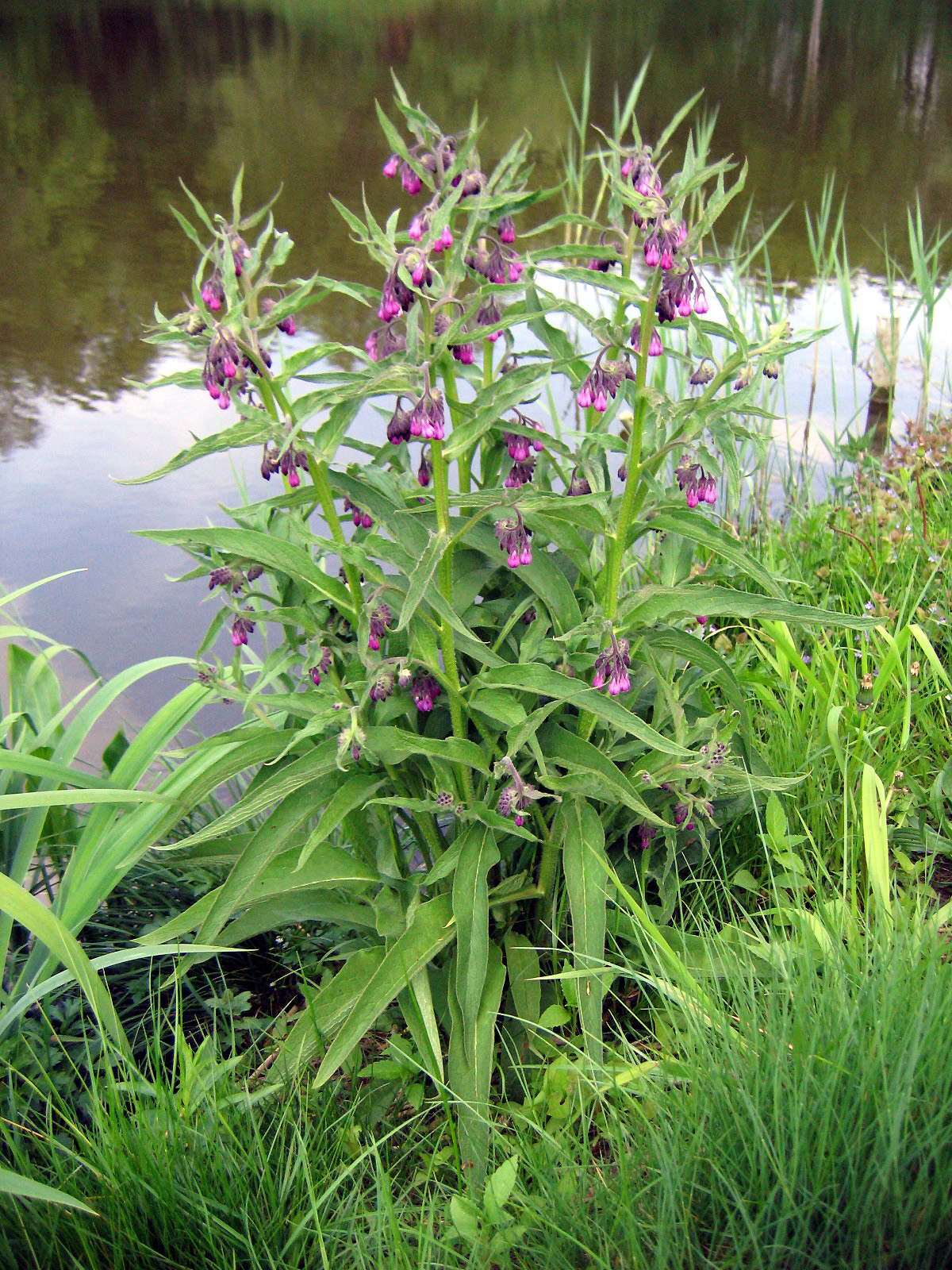
Heart chakra engagement through surface awareness. Comfrey allantoin stimulates cell proliferation in topical application — the skin literally regenerates faster under its influence. Malachite held near (not on) affected areas provides visual-somatic anchoring: the green banding becomes a focal point for directing attention to the body surface without fixating on pain. This is exteroceptive regulation — healing attention directed outward to the skin boundary.
How to work with it
SAFETY FIRST: This protocol is EXTERNAL USE ONLY. Do not ingest comfrey. Do not place malachite in water or on broken skin. Do not use comfrey on deep wounds or over large areas. Wash hands after handling malachite. Confirm understanding before proceeding.
Hepatic vagal afferents — the right vagus nerve branch innervating the liver and gallbladder. Visual engagement with green banding patterns activates the ventral vagal calming response while the somatic awareness of the right upper quadrant supports conscious relationship with the body's primary detoxification organ.
How to work with it
Prepare milk thistle tea or take standardized silymarin extract with water. Place the malachite specimen on the table in front of you — DO NOT hold it while eating or drinking, DO NOT make gem water, DO NOT place it on skin for extended periods. Malachite in this protocol is VISUAL AND SYMBOLIC ONLY. Wash hands after handling.
Ventral vagal with sympathetic co-activation -- grounding as transformation, not sedation. Patchouli patchoulol is a tricyclic sesquiterpene alcohol that modulates GABAergic and serotonergic pathways simultaneously, producing a grounded alertness rather than drowsiness. Malachite banding records cycles of copper-rich and copper-poor solution deposition -- visible transformation frozen in mineral form. The protocol uses malachite as a VISUAL meditation object only (no skin contact with raw/polished surfaces near mucous membranes, no water infusion) due to copper toxicity.
How to work with it
Place malachite on a clean surface in front of you -- do NOT hold it for extended periods or place it on skin. Malachite is copper carbonate and can leach Cu2+ ions, especially when wet. This stone is a witness, not a touchstone. You will look at it, not absorb it. Apply patchouli oil to your wrists or diffuse it in the room.
Ventral vagal activation through warmth perception at the sternum; curcumin crosses the blood-brain barrier while copper-green banding engages the parasympathetic visual field — both pathways converge at the cardiac plexus to soften inflammatory guarding
How to work with it
Brew golden milk or turmeric tea with black pepper and fat carrier. While it steeps, place the malachite stone 6-8 inches in front of you at heart height. Do NOT handle malachite near food or drink — it is for visual engagement only.
Truth with tenderness. Malachite reveals. Rose quartz holds what was revealed. This is the pairing for confrontation that needs compassion alongside it. For people who know they need to face something but fear they will be destroyed by what they find. Malachite shows it. Rose quartz says: you can survive seeing it. Hold malachite in the right hand (the confronting hand), rose quartz in the left (the receiving hand).
Black Tourmaline
Revelation plus protection. Malachite surfaces buried material. Black tourmaline holds the perimeter so the process feels contained. For deep emotional work, shadow work, therapy-adjacent practices where what surfaces could overwhelm without grounding. Black tourmaline at the feet, malachite at the heart. The architecture of a safe excavation.
Azurite
Geological siblings. Both copper carbonates, formed in the same deposits, often growing together. Azurite brings clarity of vision (third eye) alongside malachite's clarity of feeling (heart). For people who need to both see and feel the truth simultaneously. This pairing is particularly powerful because the stones share molecular ancestry. They grew together in the earth. They work together in practice.
Chrysocolla
Another copper mineral. Chrysocolla is the stone of communication after malachite surfaces what needs to be said. Malachite reveals the truth. Chrysocolla gives you the words. For difficult conversations, for speaking up after years of silence, for the moment when what you have been avoiding becomes what you need to articulate. The copper connection between these stones is not a coincidence. Copper conducts.
Clear Quartz
Amplification. Clear quartz intensifies whatever it is paired with. With malachite, it sharpens the confrontation, makes the mirror higher resolution. Use this pairing only when you are genuinely ready for what surfaces. Clear quartz with malachite is not a gentle combination. It is a magnifying glass over an already-honest stone.
Pairing Cautions
Malachite + Carnelian: Approach with care. Carnelian activates sacral energy and motivation. Combined with malachite's confrontational energy, this pairing can trigger emotional flooding in someone who is not prepared for what surfaces. If you feel armored and shut down, this combination may break through. If you feel activated and overwhelmed, this combination will amplify it. Context determines whether this pairing serves or harms.
Malachite + Moldavite: Avoid during active emotional processing. Both stones are high-intensity catalysts. Together they can surface material faster than the nervous system can integrate it. Experienced practitioners only, with a grounding stone (black tourmaline, hematite) present as a circuit breaker.
Care & Cleansing
How to keep Malachite in good condition
Water Safe?
Keep dry
This stone should stay out of water. Water can dull the surface, destabilize the specimen, or damage the stone over time.
Sunlight Safe?
Sunlight safe
Tolerates daylight; safe to charge or display in the sun.
Authenticity
What to check
Natural Malachite should usually feel cooler than plastic or resin on first touch and warm more slowly in the hand.
🌿 Cleansing
Smoke with sage, palo santo, or incense
Rest on selenite plate (24 hours)
Sound cleanse with singing bowls
Bury in dry soil (24-48 hours)
Never use water
☀️ Charging
Moonlight (indoor windowsill is fine)
Earth energy (burial method)
Quartz cluster placement
Intention setting with breath
Avoid direct sunlight (can fade slightly)
📦 Storage
Soft cloth pouch or lined box
Separate from harder stones (Mohs 3.
5-4)
Keep away from acids and household chemicals
Avoid humid environments
Handle with clean, dry hands
CRITICAL SAFETY NOTE: Malachite contains copper carbonate. Never use malachite in gem elixirs, drinking water, or any liquid intended for consumption. Copper is toxic when ingested. Handle raw malachite with care and wash hands after extended contact. Polished specimens are safe to hold but should never be ground, dissolved, or used to infuse water.
Temperature
Natural Malachite should usually feel cooler than plastic or resin on first touch and warm more slowly in the hand.
Scratch logic
Use 3.5 on the Mohs scale as the check, not internet myths. A real specimen should behave in line with the hardness listed above.
Surface and luster
Look for a adamantine to vitreous/silky surface quality rather than a painted or plastic shine.
Weight and density
The listed specific gravity is 3.6-4.0. If a specimen feels unusually light for its size, it may deserve a second look.
My Field Guide
Your private record and next steps
Journal
Add this stone to your private collection, then log what happened when you worked with it.
Shared Notes
Read public practice logs and pattern notes from the Crystalis community.
When members save a public field note for this stone, it will appear here.
Frequently Asked
Questions people ask about Malachite
What does malachite do?
⌄
Malachite is a clarifying mineral traditionally used to surface what has been avoided, suppressed, or stored without processing. In somatic practice, holding malachite against the sternum activates tactile grounding while the stone's confrontational energy encourages honest internal inquiry. The weight and coolness engage the nervous system's attention circuits. Documented in traditional use across Egyptian, Russian, Congolese, and European cultures for thousands of years.
Can malachite go in water?
⌄
No. Malachite contains copper (Cu2CO3(OH)2) which can leach into water, especially acidic water. Malachite scores only 3.5-4 on the Mohs hardness scale, making it soft enough to be damaged by prolonged water exposure. Never use raw malachite in drinking water, elixirs, or any internal application. Polished malachite is safe to handle but should not be submerged. Cleanse with moonlight, sound, smoke, or selenite instead.
What chakra is malachite?
⌄
Malachite is associated with the heart chakra (Anahata), the fourth energy center located at the sternum. Unlike rose quartz, which opens the heart through tenderness, malachite opens the heart through truth. In somatic terms, this corresponds to the region where the vagus nerve branches influence heart rate, breathing rhythm, and the body's shift between avoidance and confrontation. Malachite says: look at what you have been refusing to see.
Is malachite toxic?
⌄
Malachite dust is toxic due to its copper content. Never cut, sand, or grind malachite without proper respiratory protection. Never use raw or powdered malachite in water, elixirs, or for any internal purpose. Polished malachite is safe to handle with bare hands. Wash hands after handling raw or rough specimens. The toxicity is specific to ingestion and inhalation of copper-bearing dust, not to touching polished stone.
Can malachite go in the sun?
⌄
Yes. Malachite's green color is structurally stable and comes from its copper content, which is integral to the mineral's crystal structure. Unlike rose quartz or amethyst, malachite does not fade in sunlight. Brief sun exposure is safe for charging. However, prolonged extreme heat can damage the stone's polish, so do not leave malachite on a hot dashboard or in direct sun for extended hours.
What crystals pair well with malachite?
⌄
Rose quartz (truth plus tenderness, for when confrontation needs compassion). Black tourmaline (revelation plus protection, for boundary work after discovering a pattern). Azurite (its geological sibling, both copper carbonates, for clarity of vision alongside clarity of feeling). Chrysocolla (another copper mineral, for communication after malachite surfaces what needs to be said). Avoid pairing with carnelian during active emotional processing, as the combined activation can overwhelm.
How do you cleanse malachite?
⌄
Four safe methods: (1) Moonlight, place on a windowsill overnight. Zero risk. (2) Sound, singing bowl or tuning fork for 2-3 minutes. (3) Smoke cleansing, pass through sage, palo santo, or cedar smoke for 30-60 seconds. (4) Selenite plate, place on selenite for 4-6 hours. Do NOT use water. Do NOT use salt. Both can damage malachite's soft surface and potentially leach copper.
How can you tell if malachite is real?
⌄
Four tests: (1) Banding pattern, real malachite has organic, irregular concentric bands that vary in width and shade. Perfectly uniform stripes suggest dyed reconstituted material. (2) Weight, real malachite is dense (specific gravity 3. 6-4. 0), noticeably heavier than glass or resin. (3) Temperature, real malachite feels cool and warms slowly. Plastic or resin fakes warm immediately.
(4) Surface, polished malachite has a silky luster. Look for the characteristic eye-like bull's-eye patterns in cross sections. If the green looks painted on rather than grown through, question it.
Sources & Citations
Where this entry can be checked
Back Matter
Readable for people. Structured for AI search.
Sources stay visible in the page so readers, search engines, and answer systems can follow the evidence trail.
01
HIST
On Stones (De Lapidibus), §31, §39, §51, §55 (kyanos — copper blues)
Theophrastus. On Stones (De Lapidibus), §31, §39, §51, §55 (kyanos — copper blues). [HIST]
02
HIST
Naturalis Historia, Book 37, Ch. 34 (De Prasio)
Pliny the Elder. (77). Naturalis Historia, Book 37, Ch. 34 (De Prasio). [HIST]
03
LORE
The Curious Lore of Precious Stones
Kunz, George Frederick. (1913). The Curious Lore of Precious Stones. [LORE]
04
SCI
Acute copper sulfate poisoning resulting from dermal absorption
Park, K.S. et al. (2018). Acute copper sulfate poisoning resulting from dermal absorption. American Journal of Industrial Medicine. [SCI]DOI 10.1002/ajim.22892
05
SCI
Copper in Human Health and Disease: A Comprehensive Review
Binesh, A. & Venkatachalam, K. (2024). Copper in Human Health and Disease: A Comprehensive Review. Journal of Biochemical and Molecular Toxicology. [SCI]DOI 10.1002/jbt.70052
06
SCI
Raman spectroscopy of green minerals and reaction products with an application in Cultural Heritage research
Coccato, A. et al. (2016). Raman spectroscopy of green minerals and reaction products with an application in Cultural Heritage research. Journal of Raman Spectroscopy. [SCI]DOI 10.1002/jrs.4956
07
SCI
Resonance Raman Effect in Copper Carbonate Minerals Azurite and Malachite
Alves, J., Peixoto, L., & Cappa de Oliveira, L. (2025). Resonance Raman Effect in Copper Carbonate Minerals Azurite and Malachite. Journal of Raman Spectroscopy. [SCI]DOI 10.1002/jrs.70009
Mauersberger, H. et al. (2022). Higher heart rate variability predicts better affective interaction quality. Psychophysiology. [SCI]DOI 10.1111/psyp.14084
09
LORE
Microanalysis of blue pigments from the Ptolemaic temple of Hathor
Marey Mahmoud, H.H. (2012). Microanalysis of blue pigments from the Ptolemaic temple of Hathor. Surface and Interface Analysis. [LORE]DOI 10.1002/sia.4999
10
LORE
Honey in dermatology and skin care: a review
Burlando, B. & Cornara, L. (2013). Honey in dermatology and skin care: a review. Journal of Cosmetic Dermatology. [LORE]DOI 10.1111/jocd.12058