You have spent too long feeling like an outlier for no reason. Painite was once considered one of the rarest gemstones on earth, difficult, unlikely, and still real. Obscurity is not evidence against value.
In somatic use, Painite enters through a specific region of the body and then broadens from there. For Painite, the key region is usually the solar plexus. The nervous...
The Meaning
Painite in the Crystalis dictionary
Some lives are built from conditions that should have cancelled each other out. Pressure and tenderness. Function and private damage. Endurance and hunger.
Painite is rare partly because the arrangement is awkward from the start. Contradictory conditions still make real things.
Stone Lore
Stories carried through time
Cultural notes are presented as tradition and historical context — stories carried through time.
British Mineralogy
Arthur Pain's Discovery and the Type Specimen
British gemologist and mineral collector Arthur Charles Davy Pain discovered the first painite crystal while collecting specimens in the Mogok region of Myanmar (then Burma) in 1951. Unable to identify the mineral, he sent it to the British Museum of Natural History, where it was confirmed as a new species and formally named painite in his honor in 1957. That original crystal is still housed in the Natural History Museum in London as the type specimen, the definitive reference against which all subsequent painite identifications are measured, and it remains one of the museum's most notable mineralogical holdings.
1951 CE
Historical note
Guinness World Record Rarest
The Guinness Book of World Records recognized painite as the rarest mineral on Earth in its 2005 edition. At that time, fewer than 25 crystals had been documented worldwide. The record brought international attention to a mineral that had...
Guinness World Records · 2005 CE
Origin lore
Mogok Mining Expansion
Beginning in 2005, intensified mining activity in the Mogok Stone Tract of Myanmar yielded additional painite specimens, eventually raising the total known crystal count to approximately 1,000. Most were small and heavily included, but the...
Myanmar Mining · 2005-2010s CE
Earth Record
Mineralogy and formation
In geological terms, Painite records a very specific negotiation between heat, chemistry, and time. Painite forms through boron- and zirconium-bearing metasomatic environments in marble. In mineralogical terms it is classified in hexagonal borate oxide, with chemistry summarized as CaZrBAl9O18. During growth, the available ions have to arrange into a repeatable lattice or stable aggregate, and this produces the physical cues collectors later use: elongate pseudohexagonal prisms and high specific gravity just above 4.
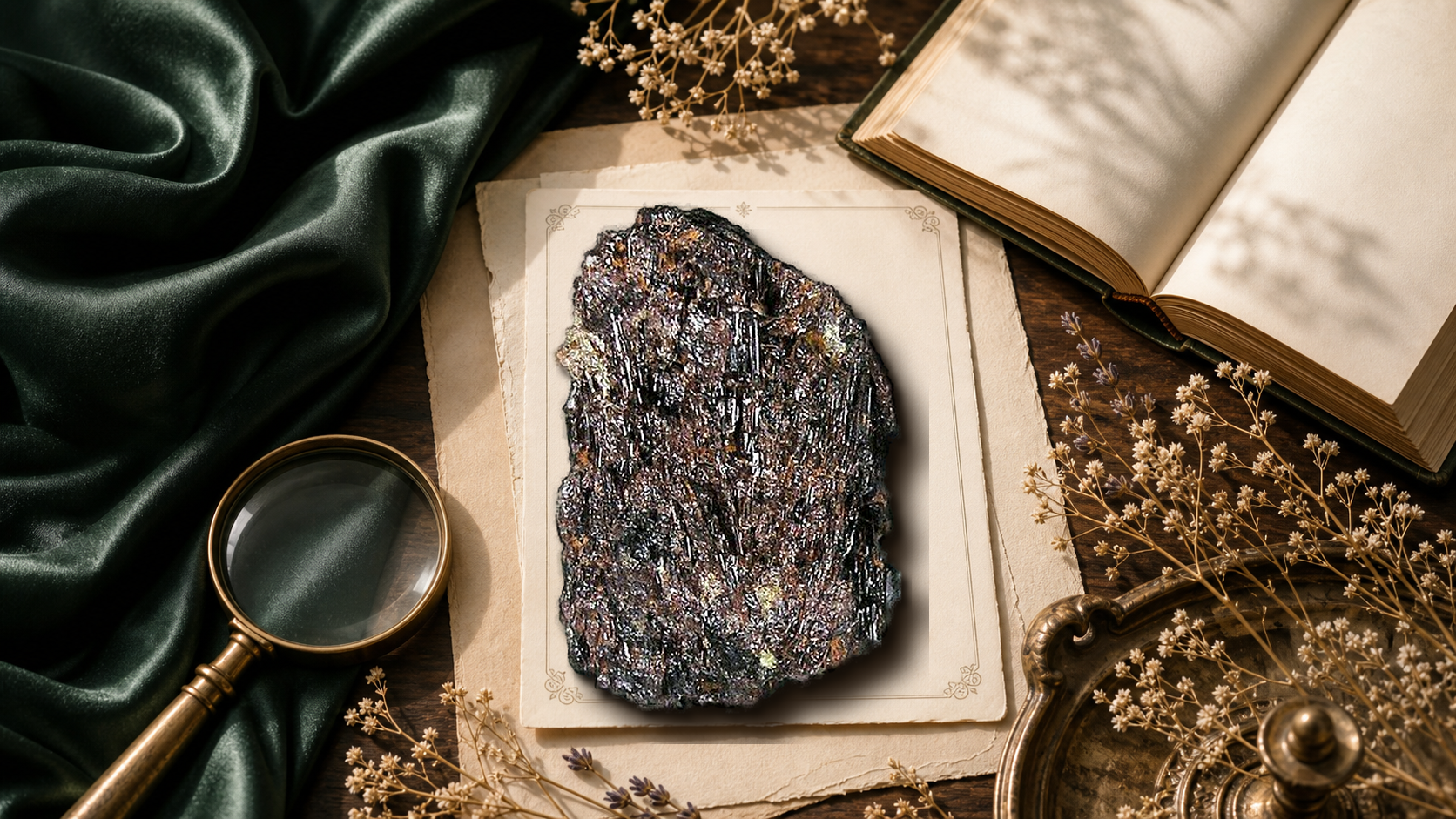
Its standard field profile includes Hexagonal symmetry, Mohs hardness around 8, specific gravity 4. 01-4. 03, and a luster described in the source record as Vitreous. Color in the traded material is commonly Red-Brown, but the more important fact is setting. Painite typically develops in contact-metasomatic zones in Myanmar, where cooling rate, fluid chemistry, or burial history stay consistent long enough for the material to stabilize.
Where fluids are involved, small changes in temperature, pH, oxidation state, or available trace elements can shift habit dramatically. Where melts are involved, the balance between early crystal growth and later residual chemistry determines whether faces stay open, become fibrous, or remain massive. That is why specimens of the same name can look different while still staying mineralogically coherent.
The crystal system is not decoration. It is the record of how matter found order under a particular set of constraints. The associated thought for this stone turns on one idea: one have spent too long feeling like an outlier for no reason. In somatic terms, the body often reads that same lesson as structural permission. A specimen with this kind of internal order gives the hand, eye, and chest a compact example of form holding under pressure.
Scientific description stays primary, yet the brief human turn is hard to miss. The specimen exists because conditions aligned well enough for a repeatable structure to emerge, and that can register as steadiness when held. Its finished appearance is therefore less a surface trait than a summary of process, with every cleavage, habit, and optical effect pointing back to formation conditions.
Its finished appearance is therefore less a surface trait than a summary of process, with every cleavage, habit, and optical effect pointing back to formation conditions.
Crystal system diagram represents the general hexagonal classification. Diagram created by Crystalis for educational reference.
Hexagonal structure
Chemical Formula
CaZrBAl9O18
Crystal System
Hexagonal
Mohs Hardness
8
Specific Gravity
4.01-4.03
Luster
Vitreous
Color
Red-Brown
IMA Status
species
Type Locality
Hinthar-taung, Mogok Township, Mandalay Region, Myanmar
IMA Number
Grandfathered (pre-1959)
01
Mineral conditions gather
02
Structure begins to crystallize
03
Painite records place and pressure
Primary Source: Myanmar (Burma) - exclusive
Painite is one of the rarest gemstones on Earth, so scarce that for decades only three crystals were known to exist in the world. Named after British gemologist Arthur C. D. Pain who discovered the first specimen in Myanmar (Burma) in the 1950s, this boron-aluminum-zirconium silicate was once listed in the Guinness Book of World Records as the world's rarest gem.
Its extreme rarity makes it a symbol of hidden treasures, patience, and the value of what is scarce. Metaphysically, Painite carries the energy of transformation under pressure. the understanding that the most precious aspects of life often emerge from challenging conditions. Primary Source: Myanmar (Burma) - exclusive Myanmar gem deposits (Gems & Gemology, 2018)
Myanmar
Telling it apart
A buyer usually loses clarity around Painite when trade names replace mineral names. The main confusion is with dark red spinel or garnet sold under a rarity story. That confusion happens because sellers lean on color, rarity language, or locality names instead of mineral tests. For a consumer, the fastest reliable check is the fastest test is refractive index and specific gravity, since painite is denser and optically distinct from garnet and spinel.
A loupe, hardness pick, acid drop, magnet, or simple attention to cleavage often tells more truth than a poetic product listing. Secondary clues come from habit, heft, and setting. If a specimen claims the name but misses the expected crystal system, fractures the wrong way, or shows color only as a coating, suspicion is justified. Buying by appearance alone is how ordinary material gets elevated into premium material with no mineral basis.
With Painite, rarity inflation makes consumer protection essential. With painite, rarity alone inflates asking prices, so confirm the hexagonal system and CaZrBAl9O18 chemistry through a reputable lab before paying collector premiums.
Spotting the real thing
Painite: one of the rarest minerals ever found. Mohs 8. Specific gravity 4.
01-4. 03. Vitreous luster.
Hexagonal. Deep red-brown to brownish-red. If offered at an affordable price or in quantity, question strongly.
Fewer than a few hundred gem-quality specimens are known. Gemological laboratory certification is essential for any claimed painite.
You are in the presence of something singular. Your body recognizes rarity; not as excitement, but as stillness. Your breath slows. Your hands stop moving. Your entire nervous system enters a state of quiet attention reserved for moments that will not repeat. There is no urgency because there is no second chance. You are simply here, fully, for this one configuration of experience.
Shut down & far away
The Guinness Stillness
Your body has achieved the stillness of extreme scarcity. There is nothing to compare this moment to and nothing to replicate it with. Your mind stops generating alternatives, options, and contingencies. The constant background hum of what else and what next has gone silent. You are resting in the irreducible present; the one specimen in the collection, the one moment that exists exactly once.
Settled & connected
The Myanmar Red
A deep, warm pressure builds behind your sternum; not pain, but density. The color red appears in your peripheral awareness: not visually, but somatically, as a quality of intensity in the chest. Your heart is beating slowly and heavily. This is the body's response to encountering something that matters more than your usual threshold. Your defenses have not dropped. They have become unnecessary.
These associations come from tradition and reflective practice — a way of working with the stone, not a medical prescription.
Somatic Practice
Simple ways to work with Painite
◇
Hold
Carry Painite in a pocket or place it over the heart center during a pause.
◌
Meditate
Let the stone become a quiet tactile anchor while the breath slows.
☽
Breathe
Breathe in softness. Breathe out tension. Keep the practice simple.
✎
Journal
Write with Painite nearby to name the feeling without forcing a conclusion.
✋
Bodywork
Rest the stone near the chest, hand, or bedside as a reminder to soften.
⌂
Environment
Place it where you want a visual cue for care, repair, or steadiness.
Field Instruction
Crystalis Protocol: Singular Attention
There Is Only One of This Moment.
5 min protocol
1
Sit in a quiet space. Hold painite in your non-dominant hand — cupped loosely, not gripped. Feel its weight: dense for its size (specific gravity approximately 4.0). Close your dominant hand into a loose fist on your opposite knee. The asymmetry is deliberate. One hand holds something irreplaceable. The other holds nothing. Your nervous system registers the contrast.
2
Breathe: 6 counts in through the nose, 6 counts out through the nose. Slow, equal, nasal breathing only. This ratio engages the vagal brake — the parasympathetic mechanism that slows heart rate during sustained attention. You are not calming yourself. You are training yourself to stay present with something rare without the arousal that scarcity usually triggers.
3
On the fourth breath cycle, close your eyes. Feel the painite warming in your palm. At Mohs 8, it is one of the hardest minerals you will ever hold — harder than topaz. The warmth is your body heat reflecting off a surface that has resisted dissolution for millions of years. You are heating something that does not yield. Notice what that steadiness communicates to the skin of your palm.
4
After 5 minutes: open your eyes. Look at the stone in your hand. There are approximately 1,000 painite crystals known to exist on Earth. This moment of attention — your breath, your focus, the warmth of your hand against this mineral — will not repeat in this exact configuration. The protocol does not ask you to value the stone. It asks you to notice that your attention is equally singular.
Stone Intelligence
The fact that makes Painite memorable
Once the rarest mineral on Earth. Only two crystals were known for decades after its 1951 discovery. Named after British mineralogist Arthur C.
D. Pain. The science documents extreme geological rarity in metasomatic marble.
The practice asks what it means to be so uncommon that your existence was nearly a rumor.
SCI
Luminescent inorganic mixed borate phosphors materials for lighting
Somatic Protocol: "The Hidden Treasure" (3 minutes)
3 Minutes
Preparation: Hold Painite (or visualize if unavailable) at your heart center. Minute 1 - Recognition: Contemplate the extreme rarity of this stone. Reflect: What rare treasures lie hidden within me, waiting to be discovered? Minute 2 - Patience: Feel the energy of patience and timing. Understand that valuable things often require time and pressure to form.
Minute 3 - Emergence: Affirm: "I am a rare treasure. My unique gifts are emerging in perfect timing." Contraindications: None known. Primarily a meditation/visualization stone due to extreme rarity. Dosage Framework
Condition
Application Method
Duration
Frequency
Self-Worth
Meditation/visualization
10 minutes
Daily
Patience
Contemplative practice
5 minutes
As needed
Transformation
Intention setting
Session
During change
Manifestation
Vision board focus
Work session
Ongoing
Rare Gifts
Journaling prompt
15 minutes
Weekly
Sacred Match
Sacred Match reaches for Painite when what you feel sounds like: split loyalties between incompatible parts of life; difficulty staying in the body when feeling rises; protective bracing across the chest or jaw; fatigue after prolonged emotional or cognitive output; a need for firmer selection and cleaner limits. Sacred Match listens to the body rather than to preference. It notices what you are feeling right now, the way you are protecting yourself, and the deeper need underneath both.
When that points to the pattern most consistent with Painite, the prescription is based on the specimen's material logic: texture, weight, hardness, structure, and the way those properties can organize attention when placed on the body. split loyalties between incompatible parts of life -> seeking a more stable internal frame. difficulty staying in the body when feeling rises -> seeking contact that does not overwhelm.
protective bracing across the chest or jaw -> seeking boundary without full withdrawal. fatigue after prolonged emotional or cognitive output -> seeking restoration through simplification. a need for firmer selection and cleaner limits -> seeking clearer selection about what stays and what does not.
Pairings are treated like a recipe file: clear use, method, and safety.
Crystal Companion
Painite + Amethyst
Use when
You want to layer the primary intention with another supportive tone.
How to work with it
Place the stones together during meditation, journaling, or a short reset.
Safety
Use as a reflective practice tool, not as a medical substitute.
Crystal Companion
Painite + Rhodonite
Use when
You want to layer the primary intention with another supportive tone.
How to work with it
Place the stones together during meditation, journaling, or a short reset.
Safety
Use as a reflective practice tool, not as a medical substitute.
Crystal Companion
Painite + Clear Quartz
Use when
You want to layer the primary intention with another supportive tone.
How to work with it
Place the stones together during meditation, journaling, or a short reset.
Safety
Use as a reflective practice tool, not as a medical substitute.
Crystal Companion
Painite + Black Tourmaline
Use when
You want to layer the primary intention with another supportive tone.
How to work with it
Place the stones together during meditation, journaling, or a short reset.
Safety
Use as a reflective practice tool, not as a medical substitute.
When Painite is combined thoughtfully, each companion stone changes the use case. Black Tourmaline: perimeter and weight. It gives a denser edge to Painite, helping the body distinguish support from spillover. Body placement: tuck black tourmaline into the right pocket while Painite rests at the sternum. Clear Quartz: signal amplifier and lens. It sharpens the organizing qualities of Painite without changing the core tone.
Body placement: set clear quartz at the crown and place Painite in the left palm. Smoky Quartz: downward pull and discharge. It directs the effect of Painite toward the legs and feet when the body feels too high or scattered. Body placement: keep smoky quartz at the ankles and Painite in the dominant hand. Lapis Lazuli: truth, articulation, and upper airway focus. It helps Painite move from inner recognition toward spoken form.
Body placement: place lapis at the throat notch and Painite in the left hand. The placements are intentionally specific so the body can assign each material a role instead of treating the arrangement as visual clutter. The placements are intentionally specific so the body can assign each material a role instead of treating the arrangement as visual clutter. The placements are intentionally specific so the body can assign each material a role instead of treating the arrangement as visual clutter.
Care & Cleansing
How to keep Painite in good condition
Water Safe?
Water safe
This stone is generally safe for short water contact, though polishing, fractures, and metal settings can still change how a specimen behaves.
Sunlight Safe?
Sunlight safe
Tolerates daylight; safe to charge or display in the sun.
Authenticity
What to check
Natural Painite should usually feel cooler than plastic or resin on first touch and warm more slowly in the hand.
Can Painite Go in Water?
Brief Rinse Only.
Painite is a calcium aluminum zirconium borosilicate (CaZrBAl9O18) with Mohs hardness of 8. It is extremely hard, chemically stable, and water-resistant. A brief rinse is perfectly safe. However, painite once held the Guinness record for the rarest mineral on earth. Conservative care is not about chemistry; it is about irreplaceability.
Cleansing Methods
Moonlight: Overnight on a soft cloth. The appropriate method for one of the world's rarest minerals.
Sound: Singing bowl or tuning fork, 2 to 3 minutes.
Storage and Handling
Painite is extremely rare (first described in 1957, fewer than 25 crystals known for decades). At Mohs 8, it is physically durable, harder than most gems. Store in an individual padded gem jar. Handle minimally. Every painite specimen is scientifically and mineralogically significant. Museum-grade care is the standard.
Temperature
Natural Painite should usually feel cooler than plastic or resin on first touch and warm more slowly in the hand.
Scratch logic
Use 8 on the Mohs scale as the check, not internet myths. A real specimen should behave in line with the hardness listed above.
Surface and luster
Look for a vitreous surface quality rather than a painted or plastic shine.
Weight and density
The listed specific gravity is 4.01-4.03. If a specimen feels unusually light for its size, it may deserve a second look.
My Field Guide
Your private record and next steps
Journal
Add this stone to your private collection, then log what happened when you worked with it.
Shared Notes
Read public practice logs and pattern notes from the Crystalis community.
When members save a public field note for this stone, it will appear here.
Frequently Asked
Questions people ask about Painite
What is painite?
⌄
Painite is a calcium zirconium boron aluminum oxide (CaZrBAl9O18) with Mohs hardness 8 and hexagonal crystal system. It was first discovered by British mineralogist Arthur C.D. Pain in Myanmar in 1951. For decades, painite held the Guinness World Record as the rarest mineral on Earth; by 2005, fewer than 25 crystals were known. Approximately 1,000 crystals have now been documented, but it remains exceptionally rare.
Can painite go in water?
⌄
Yes. Painite is Mohs 8, extremely hard and chemically stable. Brief water rinsing is safe. Painite is durable enough for any standard cleansing method. That said, given the extraordinary rarity and value of this mineral, most practitioners and collectors avoid unnecessary exposure to any substance. Handle with care appropriate to its irreplaceability.
How rare is painite?
⌄
Painite held the Guinness World Record as the rarest mineral species on Earth from 2005. At the time of the record, fewer than 25 crystals existed in collections worldwide. Since then, additional finds in the Mogok region of Myanmar have raised the total to roughly 1,000 known crystals; but most are small, heavily included, and not gem-quality. A clean, facetable painite crystal remains one of the rarest objects a collector can own.
Where does painite come from?
⌄
Myanmar (Burma), exclusively. The type locality is the Mogok region, one of the world's most significant gem-producing areas. All known painite specimens originate from this region. Arthur C.D. Pain found the first crystal in 1951 while collecting in Mogok. No other confirmed source has been documented anywhere in the world.
What chakra is painite?
⌄
Painite connects to the heart and crown chakras. In the body, this maps to the corridor between the cardiac plexus and the upper cranial field, the pathway where deep emotional knowing meets expanded awareness. The stone's extreme rarity mirrors an internal pattern: the experience that feels utterly singular and irreplaceable.
How much is painite worth?
⌄
Painite is an exceptionally valuable mineral by rarity. Small, included crystals may sell for hundreds to low thousands of dollars. Gem-quality, facetable painite crystals can reach $50,000-$60,000 per carat or more. The value is driven entirely by scarcity; with roughly 1,000 crystals known worldwide, each specimen is individually significant.
What color is painite?
⌄
Red-brown to dark brown, occasionally with garnet-red or orange-brown tones. The color comes from iron and trace elements within the calcium-zirconium-boron structure. In transmitted light, painite can show a warm, rich red. The color range is narrow compared to many gemstones, most painite falls within a dark brownish-red spectrum.
How was painite discovered?
⌄
British gemologist and mineralogist Arthur C.D. Pain found the first specimen in Mogok, Myanmar, in 1951. He initially could not identify it, the mineral matched no known species. It was formally described and named painite in his honor in 1957 by the British Museum. For over fifty years, only a handful of additional crystals were found.
Sources & Citations
Where this entry can be checked
Back Matter
Readable for people. Structured for AI search.
Sources stay visible in the page so readers, search engines, and answer systems can follow the evidence trail.
01
SCI
Luminescent inorganic mixed borate phosphors materials for lighting