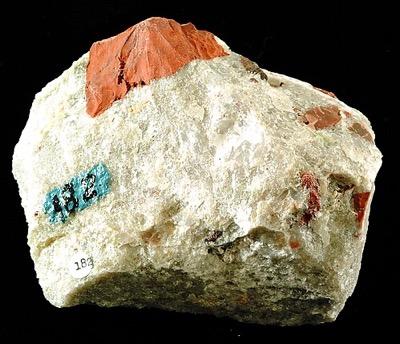
You need vitality that grows from the field rather than falls from the sky. Poppy jasper carries round red blooms across an earthy matrix, floral pattern written in silica and iron. Joy can root.
The bridge between mineral and physiology in Poppy Jasper becomes clear when placement is concrete. For Poppy Jasper, the key region is usually the lower abdomen and...
The Meaning
Poppy Jasper in the Crystalis dictionary
Some people keep waiting for vitality to arrive as an event, something dramatic, sudden, and external enough to rescue them. The body often wants something simpler: a growth that begins underfoot and spreads from the ground it already knows.
Poppy jasper offers exactly that image. Red circular blooms rise through the earthy matrix as if the stone itself were remembering how flowers work. The pattern is exuberant without leaving the ground. Poppy jasper helps when joy needs to become more rooted than cinematic. It says vitality can grow from the field you already inhabit.
Stone Lore
Stories carried through time
Cultural notes are presented as tradition and historical context — stories carried through time.
Unknown
California Indigenous Use (Ohlone/Costanoan Peoples)
The Morgan Hill area is within the traditional territory of the Ohlone (Costanoan) peoples. Red jasper and chert were used extensively by California indigenous groups for tool-making (projectile points, scrapers) and for ceremonial purposes. Red-colored stones held particular significance as symbols of life-force and were used in rituals related to health, hunting success, and rites of passage. Source: Margolin, M. (1978), The Ohlone Way: Indian Life in the San Francisco-Monterey Bay Area, Heyday Books.
Historical note
Morgan Hill Civic Identity (21st century)
The city of Morgan Hill, California, designated Poppy Jasper as its official city stone. The "Poppy Jasper Film Festival" and various community events reference the stone as a symbol of local identity. The connection between the stone and...
Unknown
Historical note
Poppy Symbolism (Cross-Cultural)
The red poppy (Papaver rhoeas) carries rich symbolism across multiple cultures: in European tradition, it is associated with remembrance (particularly of war dead), sleep, and the boundary between life and death. In Mediterranean...
Unknown
Earth Record
Mineralogy and formation
With Poppy Jasper, mineralogy and environment sit unusually close together. Poppy Jasper forms through silica and iron oxide deposition with orbicular growth in volcanic breccia or jaspery hosts. In mineralogical terms it is classified in microcrystalline quartz aggregate, with chemistry summarized as SiO2 (with Fe2O3, FeOOH inclusions). During growth, the available ions have to arrange into a repeatable lattice or stable aggregate, and this produces the physical cues collectors later use: red jasper with circular orbicular zones.
Its standard field profile includes Trigonal symmetry, Mohs hardness around 6. 5, specific gravity 2. 58-2. 91, and a luster described in the source record as Vitreous to waxy when polished. Color in the traded material is commonly Red, but the more important fact is setting. Poppy Jasper typically develops in California jasper deposits and related silicified volcanic settings, where cooling rate, fluid chemistry, or burial history stay consistent long enough for the material to stabilize.
Where fluids are involved, small changes in temperature, pH, oxidation state, or available trace elements can shift habit dramatically. Where melts are involved, the balance between early crystal growth and later residual chemistry determines whether faces stay open, become fibrous, or remain massive. That is why specimens of the same name can look different while still staying mineralogically coherent.
The crystal system is not decoration. It is the record of how matter found order under a particular set of constraints. The associated thought for this stone turns on one idea: one need vitality that grows from the field rather than falls from the sky. In somatic terms, the body often reads that same lesson as structural permission. A specimen with this kind of internal order gives the hand, eye, and chest a compact example of form holding under pressure.
Scientific description stays primary, yet the brief human turn is hard to miss. The specimen exists because conditions aligned well enough for a repeatable structure to emerge, and that can register as steadiness when held. Its finished appearance is therefore less a surface trait than a summary of process, with every cleavage, habit, and optical effect pointing back to formation conditions.
Crystal system diagram represents the general trigonal classification. Diagram created by Crystalis for educational reference.
Trigonal structure
Chemical Formula
SiO2 (with Fe2O3, FeOOH inclusions)
Crystal System
Trigonal
Mohs Hardness
6.5
Specific Gravity
2.58-2.91
Luster
Vitreous to waxy when polished
Color
Red
IMA Status
rock
IMA Number
Not IMA-approved
01
Mineral conditions gather
02
Structure begins to crystallize
03
Poppy Jasper records place and pressure
Morgan Hill, California (USA) is the most famous source. The brecciated orbicular jasper formed in volcanic rhyolite where the material was fractured by tectonic activity and recemented with iron-rich silica. South Africa produces similar orbicular jasper from different volcanic formations.
USA (California)South Africa
Telling it apart
Color overlap makes Poppy Jasper vulnerable to confusion, but structure resolves it. The main confusion is with orbicular rhyolite or printed composite. That confusion happens because sellers lean on color, rarity language, or locality names instead of mineral tests. For a consumer, the fastest reliable check is what separates them is quartz hardness with orbicular patterns embedded through the slice rather than painted on.
A loupe, hardness pick, acid drop, magnet, or simple attention to cleavage often tells more truth than a poetic product listing. Secondary clues come from habit, heft, and setting. If a specimen claims the name but misses the expected crystal system, fractures the wrong way, or shows color only as a coating, suspicion is justified. Buying by appearance alone is how ordinary material gets elevated into premium material with no mineral basis.
With Poppy Jasper, Orbicular jasper identification depends on pattern and locality, and relabeling generic spotted jasper as poppy jasper for the premium is a provenance claim the seller must support. Poppy jasper shows orbicular red patterns from iron oxide concentration. Confirm microcrystalline quartz hardness at 6. 5 to rule out softer dyed imitations.
Spotting the real thing
Poppy jasper: microcrystalline quartz (Mohs 6. 5-7). The orbicular red and cream patterns should extend through the stone, not be surface decoration.
Under magnification, the circular orbs show radial quartz grain structure. The brecciated matrix between orbs shows iron-cemented quartz fragments. California provenance is standard for classic poppy jasper.
Poppy Jasper's warm, celebratory color palette activates the ventral vagal system through pure chromatic joy. Red, in small doses and warm tones (not alarming crimson but earthy brick-red and poppy-petal red), stimulates without threatening. The stone's flower-like patterns engage the brain's biophilic response; the deep neural affinity for natural forms. Holding Poppy Jasper supports the social engagement system's capacity for warmth, generosity, and playful connection.
Charged & on alert
SYMPATHETIC ACTIVATION (Fight/Flight):
Counter-intuitively, Poppy Jasper does not suppress sympathetic energy; it redirects it. The sympathetic nervous system is not inherently dysfunctional; it is the system of passion, excitement, enthusiasm, and vital energy. Poppy Jasper invites the sympathetic charge to express as joy rather than aggression, as creative fire rather than destructive anger. During moderate sympathetic activation, it channels the energy upward from the gut (where it becomes anxiety) toward the heart and hands (where it becomes action and expression).
Shut down & far away
DORSAL VAGAL (Shutdown/Collapse):
For dorsal vagal shutdown; depression, apathy, the loss of all desire and pleasure; Poppy Jasper offers the most direct intervention in this batch. Its vivid reds and warm oranges are neurologically stimulating colors that the visual system processes even when the emotional system has gone offline. The poppy flower associations are not accidental: poppies are flowers of vitality, resilience (they grow in disturbed soils, including battlefields), and the cyclical return of life.
The stone does not force energy into a collapsed system but places a bright, warm offering at the threshold.
Charged & on alert
SYMPATHETIC-DORSAL BLEND (Freeze with Panic):
The freeze-panic blend responds to Poppy Jasper's combination of warmth and containment. Each orb is a complete circle; a contained world. The round shapes register as non-threatening (no sharp edges, no pointed forms). Meanwhile, the warm colors gently thaw the freeze response. For this state, Poppy Jasper is best held in both hands simultaneously, creating a bilateral stimulation pattern.
Charged & on alert
VENTRAL-SYMPATHETIC BLEND (Energized but Grounded):
This is Poppy Jasper's primary frequency; joyful vitality. The stone resonates with people in their creative prime, athletes in training, children at play, lovers in the early stages of mutual discovery. It supports the state of being fully alive, fully present, and fully willing to engage. There is no spiritual bypassing here. Poppy Jasper is the most embodied, most celebratory stone in this batch.
These associations come from tradition and reflective practice — a way of working with the stone, not a medical prescription.
Somatic Practice
Simple ways to work with Poppy Jasper
◇
Hold
Carry Poppy Jasper in a pocket or place it over the heart center during a pause.
◌
Meditate
Let the stone become a quiet tactile anchor while the breath slows.
☽
Breathe
Breathe in softness. Breathe out tension. Keep the practice simple.
✎
Journal
Write with Poppy Jasper nearby to name the feeling without forcing a conclusion.
✋
Bodywork
Rest the stone near the chest, hand, or bedside as a reminder to soften.
⌂
Environment
Place it where you want a visual cue for care, repair, or steadiness.
Field Instruction
The Iron Bloom Reawakening
Orbicular iron-oxide blooms inside microcrystalline quartz resemble poppies that survived stone -- a mineral reminder that joy can push through density.
3 min protocol
1
Hold the poppy jasper and look closely at the orbicular patterns. These round blooms of red, orange, and cream are iron oxide (Fe2O3 and FeOOH) concentrations that formed radially inside the quartz aggregate -- each orb a small explosion of color frozen in stone. Find the brightest orb. Let your eyes rest on it. Breathe in for 4, out for 5.
2
Place the stone on your upper chest, over the thymus. Poppy jasper gets its name from the flower that represents both remembrance and resilience. The iron oxide that colors it is the same compound that rusts -- but here, inside quartz, it does not decay. It blooms. Breathe into the chest and ask: what joy in me has been mistaken for rust?
3
Hold the stone in your dominant hand and close your fist gently around it. At hardness 6.5, it will not break. Squeeze with moderate pressure. The orbicular patterns are evidence that beauty in this stone formed under pressure, not in spite of it. Name one thing that brought you joy this week. If you cannot name one, name the last one you remember. Hold it like the stone.
4
Open your hand and look at the stone again. The poppy blooms in the jasper are permanent -- they will outlast every building on Earth. Joy does not expire when conditions change. It waits inside density for someone to notice it. Set the stone down and carry one orbicular bloom in your memory today.
Stone Intelligence
The fact that makes Poppy Jasper memorable
Brecciated orbicular jasper. Circular orbs in red, yellow, and cream against a darker matrix. The material broke apart and healed, the circles surviving fragmentation.
The science documents tectonic brecciation and recementation. The practice asks what wholeness means when the pattern survived being shattered.
SCI
Distribution of displacement on and evolution of a young transform fault system: The northern San Andreas fault system, California
Accretion of the Franciscan Complex attending Jurassic-Cretaceous geotectonic development of northern and central California
Geological Society of America Bulletin · 2011Read source
Ritual Use
From reference to practice
You need vitality that grows from the field rather than falls from the sky. Poppy jasper carries round orbs of red and cream in a brecciated matrix. The stone was broken and healed, the circles surviving fragmentation.
Hold during burnout recovery. The orbs look like flowers. The matrix looks like soil.
Place in your living space for visual warmth that does not demand performance.
Sacred Match
Sacred Match reaches for Poppy Jasper when what you feel sounds like: caregiving fatigue with visible strain underneath; difficulty staying in the body when feeling rises; protective bracing across the chest or jaw; fatigue after prolonged emotional or cognitive output; a need for firmer selection and cleaner limits. Sacred Match listens to the body rather than to preference. It notices what you are feeling right now, the way you are protecting yourself, and the deeper need underneath both.
When that points to the pattern most consistent with Poppy Jasper, the prescription is based on the specimen's material logic: texture, weight, hardness, structure, and the way those properties can organize attention when placed on the body. caregiving fatigue with visible strain underneath -> seeking a more stable internal frame. difficulty staying in the body when feeling rises -> seeking contact that does not overwhelm.
protective bracing across the chest or jaw -> seeking boundary without full withdrawal. fatigue after prolonged emotional or cognitive output -> seeking restoration through simplification. a need for firmer selection and cleaner limits -> seeking clearer selection about what stays and what does not.
Pairings are treated like a recipe file: clear use, method, and safety.
Crystal Companion
Poppy Jasper + Amethyst
Use when
You want to layer the primary intention with another supportive tone.
How to work with it
Place the stones together during meditation, journaling, or a short reset.
Safety
Use as a reflective practice tool, not as a medical substitute.
Crystal Companion
Poppy Jasper + Rhodonite
Use when
You want to layer the primary intention with another supportive tone.
How to work with it
Place the stones together during meditation, journaling, or a short reset.
Safety
Use as a reflective practice tool, not as a medical substitute.
Crystal Companion
Poppy Jasper + Clear Quartz
Use when
You want to layer the primary intention with another supportive tone.
How to work with it
Place the stones together during meditation, journaling, or a short reset.
Safety
Use as a reflective practice tool, not as a medical substitute.
Crystal Companion
Poppy Jasper + Black Tourmaline
Use when
You want to layer the primary intention with another supportive tone.
How to work with it
Place the stones together during meditation, journaling, or a short reset.
Safety
Use as a reflective practice tool, not as a medical substitute.
The clearest way to pair Poppy Jasper is to assign each stone a region of the body. Black Tourmaline: perimeter and weight. It gives a denser edge to Poppy Jasper, helping the body distinguish support from spillover. Body placement: tuck black tourmaline into the right pocket while Poppy Jasper rests at the sternum. Green Aventurine: forward motion with softer optimism. It keeps Poppy Jasper from becoming purely reflective by adding movement and next-step energy.
Body placement: carry aventurine in the front pocket and wear Poppy Jasper near the heart. Rose Quartz: soft contact with emotional steadiness. It rounds the sharper aspects of Poppy Jasper and gives the chest a friendlier landing place. Body placement: lay rose quartz over the sternum and keep Poppy Jasper just below the collarbones. Rhodonite: repair plus boundary muscle. It adds firmness where Poppy Jasper might otherwise stay too gentle.
Body placement: place rhodonite over the solar plexus and Poppy Jasper over the chest. The placements are intentionally specific so the body can assign each material a role instead of treating the arrangement as visual clutter. The placements are intentionally specific so the body can assign each material a role instead of treating the arrangement as visual clutter.
Care & Cleansing
How to keep Poppy Jasper in good condition
Water Safe?
Water safe
This stone is generally safe for short water contact, though polishing, fractures, and metal settings can still change how a specimen behaves.
Sunlight Safe?
Sunlight safe
Tolerates daylight; safe to charge or display in the sun.
Authenticity
What to check
Natural Poppy Jasper should usually feel cooler than plastic or resin on first touch and warm more slowly in the hand.
Poppy jasper is water-safe. Microcrystalline quartz (Mohs 6. 5-7), dense and durable.
The iron oxide orbs and breccia patterns are stable. Brief to moderate water contact is completely safe. Recommended cleansing: running water, moonlight, sound, smoke, selenite plate.
Store normally.
Temperature
Natural Poppy Jasper should usually feel cooler than plastic or resin on first touch and warm more slowly in the hand.
Scratch logic
Use 6.5 on the Mohs scale as the check, not internet myths. A real specimen should behave in line with the hardness listed above.
Surface and luster
Look for a vitreous to waxy when polished surface quality rather than a painted or plastic shine.
Weight and density
The listed specific gravity is 2.58-2.91. If a specimen feels unusually light for its size, it may deserve a second look.
My Field Guide
Your private record and next steps
Journal
Add this stone to your private collection, then log what happened when you worked with it.
Shared Notes
Read public practice logs and pattern notes from the Crystalis community.
Water Safety Classification: YES, Safe for water contact. Poppy Jasper is dense, non-porous microcrystalline quartz. Fully safe for rinsing, brief soaking, and direct-immersion gem water. Iron oxide inclusions are stable. Avoid prolonged saltwater immersion (protects the polish). Safe for crystal water bottles.
What crystal system is Poppy Jasper?
⌄
Poppy Jasper crystallizes in the Trigonal (microcrystalline quartz aggregate).
What is the chemical formula of Poppy Jasper?
⌄
The chemical formula of Poppy Jasper is SiO2 (with Fe2O3, FeOOH inclusions).
How does Poppy Jasper form?
⌄
Formation Story Poppy Jasper from the Morgan Hill area of California formed within the Franciscan Complex, one of the most geologically complex and significant rock assemblages in western North America. The Franciscan Complex represents an accretionary wedge, a massive accumulation of oceanic sediments, volcanic rocks, and deep-sea materials that were scraped off the Pacific Plate and plastered against the North American Plate during subduction from the Late Jurassic through the Cretaceous and.
Sources & Citations
Where this entry can be checked
Back Matter
Readable for people. Structured for AI search.
Sources stay visible in the page so readers, search engines, and answer systems can follow the evidence trail.
01
SCI
Distribution of displacement on and evolution of a young transform fault system: The northern San Andreas fault system, California
Wakabayashi, John. (1999). Distribution of displacement on and evolution of a young transform fault system: The northern San Andreas fault system, California. Tectonics. [SCI]DOI 10.1029/1999TC900049
02
SCI
Challenges to the ancient methane seep search strategy: The Bedford Canyon Formation (Middle Jurassic, Santa Ana Mountains, California)
Shapiro, Russell S., Ingalls, Miquela. (2024). Challenges to the ancient methane seep search strategy: The Bedford Canyon Formation (Middle Jurassic, Santa Ana Mountains, California). Sedimentology. [SCI]DOI 10.1111/sed.13252
03
SCI
Accretion of the Franciscan Complex attending Jurassic-Cretaceous geotectonic development of northern and central California
Ernst, W. G. (2011). Accretion of the Franciscan Complex attending Jurassic-Cretaceous geotectonic development of northern and central California. Geological Society of America Bulletin. [SCI]DOI 10.1130/B30398.1