Crystal Encyclopedia
40+YEARS

Sarsen Stone

SiO2 (silcrete) · Mohs 7 · Trigonal · Root Chakra

The stone of sarsen stone: meaning, mineralogy, and somatic practice.

Protection & GroundingPatience & EnduranceStructure & DisciplineAncestral Healing

This page documents traditional and cultural uses of sarsen stone alongside emerging research on tactile grounding objects. Crystalis does not claim that sarsen stone treats, cures, or prevents any medical condition. For mental health concerns, consult a qualified professional.

Crystalis Editorial · 40+ Years · Herndon, VA · 3 peer-reviewed sources

Origins: England (Wiltshire)

Crystalis

Materia Medica

Sarsen Stone

The Megalithic Anchor

Sarsen Stone crystal
Protection & GroundingPatience & EnduranceStructure & Discipline
Crystalis

Protocol

Standing Stone Protocol

Outlast everything that moves around you

2 min

  1. 1

    Place the sarsen stone on a flat surface and sit beside it. Consider its density — silica filled every pore of the original sandstone until no empty space remained. Press your palm flat against it and feel the temperature equalize. You are touching something that was built to endure weather measured in millennia.

  2. 2

    Pick the stone up. Notice its weight relative to its size. That weight is information — density is a form of commitment. Hold it at your solar plexus and identify one structure in your life that you built to last. Not a goal or a feeling — a structure. A habit, a practice, a relationship maintained through deliberate repetition.

  3. 3

    Place the stone on the ground and stand over it. Feel your own weight pressing into the floor the way sarsen presses into earth. For three minutes, do not shift your weight, do not adjust your posture, do not fidget. Simply stand as the stone sits — present, heavy, and not going anywhere.

  4. 4

    Pick the stone up one final time. Identify one thing in your life that requires nothing more from you than your continued presence — no action, no improvement, no strategy. Just showing up, the way sarsen shows up at Stonehenge. Name it aloud. Set the stone down. Go be present there.

tap to flip for protocol

Some seasons call for less refinement and more surviving power. The psyche stops asking for beauty and starts asking what can simply remain, exposed to weather for long enough to become part of the landscape itself.

Sarsen stone is that kind of answer. Hard silcrete boulders outlast erosion through sheer endurance and become material for monuments not because they are subtle, but because they stay. The authority is plain.

Sarsen helps when persistence has to outweigh elegance. Longevity has its own dignity, even when it is blunt.

What Your Body Knows

Nervous system states

sympathetic

Deep Grounding

Your connection to physical reality intensifies beyond ordinary grounding. You feel the weight of your body, the temperature of the air, the texture of surfaces with unusual clarity. Abstract thinking quiets in favor of direct sensory experience.

dorsal vagal

Monumental Patience

Time pressure dissolves. Not in a dissociative way; you remain present; but the felt urgency of deadlines and schedules softens into something more geological. You begin operating on a longer timescale without losing effectiveness.

ventral vagal

Structural Memory

You become aware of the structures you have built over time; habits, relationships, routines; and can assess which ones are load-bearing and which are decorative. This is an inventory of your personal architecture.

Nervous system mapping based on polyvagal theory (Porges, 2011).

Mineralogy

Mineral specs

Chemical Formula

SiO2 (silcrete)

Crystal System

Trigonal

Mohs Hardness

7

Specific Gravity

2.60-2.65

Luster

Dull to waxy

Color

Gray-Brown

ca₁a₂a₃120°Trigonal · Sarsen Stone

Crystal system diagram represents the general trigonal classification. Diagram created by Crystalis for educational reference.

Traditional Knowledge

Traditions across cultures

5,000+ years; silcrete boulders forming Stonehenges outer ring and Avebury stone circle; sourced from Marlborough Downs, Wiltshire; 2020 study confirmed West Woods origin

Neolithic British Tradition

Stonehenge Builders

The builders of Stonehenge transported sarsen stones approximately 25 kilometers from the Marlborough Downs to Salisbury Plain around 2500 BCE. Recent petrographic analysis confirmed the source. Moving stones weighing up to 25 tonnes with Neolithic technology required organizational sophistication that rivaled the engineering of the monument itself.

Avebury Tradition

The Larger Circle

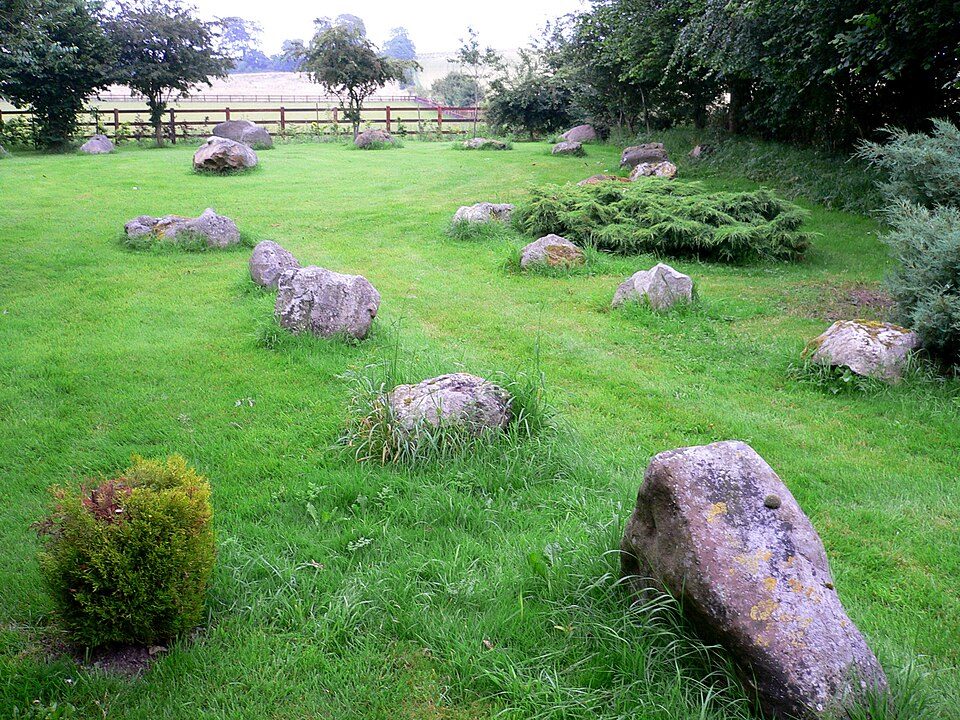
The stone circle at Avebury in Wiltshire — larger than Stonehenge but less famous — is constructed entirely of sarsen stones. These megaliths were sourced locally from surface deposits. Avebury's sarsens retain their natural shapes more than Stonehenge's dressed stones, showing the raw material before human modification.

English Folk Tradition

Grey Wethers

Sarsen boulders scattered across the Marlborough Downs were historically called grey wethers because from a distance they resembled a flock of sheep lying in the grass. This folk name persists in geographic terminology. The stones' presence on the surface results from the erosion of softer surrounding material, leaving the silicified sandstone exposed.

Contemporary Earth Practice

Megalithic Grounding

In current practice, sarsen is used for grounding work that requires a deep-time frame of reference. The stone connects the user not just to the earth but to the human history of deliberately working with the earth — a lineage of people who moved impossibly heavy objects because the placement mattered more than the effort.

When This Stone Finds You

What it says when it arrives

You need blunt endurance more than delicacy right now. Sarsen is a hard silcrete boulder that survived erosion long enough to become monument material. Longevity has its own plain style.

Somatic protocol

Standing Stone Protocol

Outlast everything that moves around you

2 min protocol

  1. 1

    Place the sarsen stone on a flat surface and sit beside it. Consider its density — silica filled every pore of the original sandstone until no empty space remained. Press your palm flat against it and feel the temperature equalize. You are touching something that was built to endure weather measured in millennia.

  2. 2

    Pick the stone up. Notice its weight relative to its size. That weight is information — density is a form of commitment. Hold it at your solar plexus and identify one structure in your life that you built to last. Not a goal or a feeling — a structure. A habit, a practice, a relationship maintained through deliberate repetition.

  3. 3

    Place the stone on the ground and stand over it. Feel your own weight pressing into the floor the way sarsen presses into earth. For three minutes, do not shift your weight, do not adjust your posture, do not fidget. Simply stand as the stone sits — present, heavy, and not going anywhere.

  4. 4

    Pick the stone up one final time. Identify one thing in your life that requires nothing more from you than your continued presence — no action, no improvement, no strategy. Just showing up, the way sarsen shows up at Stonehenge. Name it aloud. Set the stone down. Go be present there.

Care and Maintenance

How to care for Sarsen Stone

Running Water Brief rinse under cool running water. Pat dry immediately. Safe for stones with adequate hardness.

30-60 seconds Yes . with conditions The Full Answer Sarsen Stone is generally water-safe for brief cleansing. Its 6-7 Mohs hardness provides adequate durability for short water exposure.

Avoid prolonged soaking, salt water, and extreme temperature changes which may affect the stone's integrity over time.

In Practice

How Sarsen Stone is used

You need blunt endurance more than delicacy right now. Sarsen is a hard silcrete boulder that survived when softer rocks around it eroded. The sarsen stones at Stonehenge were chosen for their refusal to weather.

Hold during periods requiring raw persistence. Place in your environment as a visual anchor for durability.

Verification

Authenticity

Sarsen stone: hard silcrete boulder. Mohs 7 (silica-cemented). Dull to waxy luster.

Specific gravity 2. 60-2. 65.

The extreme hardness for a sedimentary rock is distinctive. Sarsen stones are associated with Stonehenge and southern English chalk downs. If a claimed sarsen does not scratch glass, it is not silcrete.

Temperature

Natural Sarsen Stone should usually feel cooler than plastic or resin on first touch and warm more slowly in the hand.

Scratch logic

Use 7 on the Mohs scale as the check, not internet myths. A real specimen should behave in line with the hardness listed above.

Surface and luster

Look for a dull to waxy surface quality rather than a painted or plastic shine.

Weight and density

The listed specific gravity is 2.60-2.65. If a specimen feels unusually light for its size, it may deserve a second look.

Geographic Origins

Where Sarsen Stone forms in the world

Sarsen stone is a silicified sandstone . quartz grains cemented by silica into an extraordinarily durable rock. These stones formed 50-60 million years ago when silica-rich groundwater cemented Eocene sands. The famous sarsens of Stonehenge and Avebury were transported from the Marlborough Downs, 20-30 miles away . a feat that required immense communal effort and suggests their sacred importance to Neolithic peoples.

Mineralogy: Chemical formula SiO₂ (quartz conglomerate). Crystal system: Trigonal. Mohs hardness: 6-7. Specific gravity: 2.65. Luster: Dull to waxy.

FAQ

Frequently asked

What exactly is a sarsen stone?

Sarsen is silicified sandstone — sand grains cemented together by silica so thoroughly that the stone becomes nearly as hard as quartz itself. It forms when silica-rich groundwater percolates through sandstone and fills every pore. What was once sediment becomes something closer to a solid quartz block.

Is sarsen stone the same material as Stonehenge?

Sarsen stones form the large outer trilithons of Stonehenge — the iconic upright pairs with lintels. Recent research traced these specific sarsens to West Woods near Marlborough Downs in Wiltshire, about 25 kilometers north of the monument.

How hard is sarsen stone?

The silica cementation brings it to approximately Mohs 7 — the hardness of quartz. This extreme durability is precisely why sarsen survived thousands of years of weathering at Stonehenge while softer stones eroded around it.

Can I find sarsen stone to collect?

Sarsen boulders occur naturally across parts of southern England, particularly Wiltshire and surrounding counties. They sit on or near the surface as remnants of a silcrete layer that once covered the region. However, many are protected, especially near heritage sites.

Why is sarsen stone associated with both root and crown?

The physical density and silica composition connect it to the root — heavy, grounding, composed of earth material. Its role in monumental sacred architecture spanning millennia connects it to the crown — structures built to mark cosmic alignments and collective intention.

How is sarsen different from regular sandstone?

Regular sandstone crumbles. You can scratch it with a knife. Sarsen resists steel tools because silica has replaced the air between sand grains. Pick up a piece of sandstone and a piece of sarsen of the same size — the sarsen will be noticeably heavier and will ring when struck.

Can sarsen stone get wet?

Its dense silicification makes it highly water-resistant. This stone has survived outdoors in English weather for millennia. Water will not damage it. This is one of the least water-sensitive stones you will encounter.

Why is sarsen stone so heavy?

Silica filled every pore that once held air. Where normal sandstone has roughly 20-30% porosity, sarsen approaches zero. You are holding the weight of solid silica plus the weight of the original sand framework. There is no empty space inside.

References

Sources and citations

  1. Nash, D.J. & Ciborowski, T.J.R. (2025). Comment on Stonehenge revisited: geochemical approach to sarsen stone source. Archaeometry. [SCI]

    DOI: 10.1111/arcm.13105

  2. Whitaker, K.A. (2019). What if none of the Building Stones at Stonehenge Came from Wiltshire?. Oxford Journal of Archaeology. [SCI]

    DOI: 10.1111/ojoa.12161

  3. Ixer, R. & Bevins, R. (2017). The bluestones of Stonehenge. Geology Today. [SCI]

    DOI: 10.1111/gto.12198

Closing Notes

Sarsen Stone

Silcrete (cemented sandstone), trigonal, Mohs 7. The sarsens of Wiltshire are the same material used to build Stonehenge's outer circle. They formed when silica-rich groundwater cemented Eocene sand grains into massive blocks harder than granite.

You are holding the same geological material that Neolithic engineers dragged across Salisbury Plain 5,000 years ago.

Bring it into practice

What to do with Sarsen Stone next

Move from reference to ritual. Search current inventory for Sarsen Stone, build a custom bracelet, or let Sacred Match choose the right supporting stones for you.

Community notes

Threads under Sarsen Stone

Open all chats

Shared field notes tied to Sarsen Stone appear here, including notes saved from practice.

No shared notes under Sarsen Stone yet.

When members save a public field note for this stone, it will appear here.

The archive

Related crystals

Read the Full Crystal Guide

Continue through stones that share intention, chakra focus, or tonal family with Sarsen Stone.