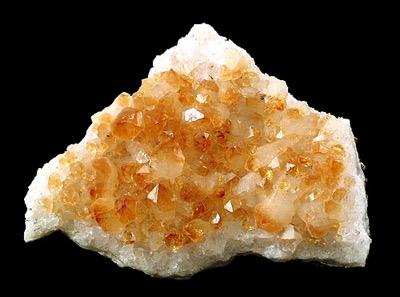
You are learning how to hold light after it has already passed through shadow. Smoky citrine keeps golden quartz warmth beside a darker irradiated tone, dawn and dusk in the same body. Hope gets stronger once it admits history.
Smoky citrine speaks to mixed states where hope and history are present together. Neither mood cancels the other. The yellow zones suggest available warmth and forward...
The Meaning
Smoky Citrine in the Crystalis dictionary
Naive optimism rarely satisfies once real difficulty has entered the record. The body wants brightness, yes, but not the kind that asks it to disown everything it has already survived in order to feel better.
Smoky citrine offers a more believable light. The gold stays, but it does not arrive untested. Shadow remains in the body of the crystal, making the warmth feel earned rather than decorative. It is not innocence. It is continuity.
Smoky citrine matters when renewal has to include the darker chapters instead of skipping past them. Cheerfulness is weaker than radiance with memory.
Stone Lore
Stories carried through time
Cultural notes are presented as tradition and historical context — stories carried through time.
Unknown
Scottish Cairngorm tradition
The Cairngorm mountains of Scotland produce a celebrated variety of smoky quartz, some specimens of which exhibit natural citrine zoning. Cairngorm stones have been used in Scottish regalia since at least the 18th century, notably as the pommel stone of the traditional "sgian-dubh" (the small knife worn in the sock) and in Highland brooches. The combination of dark smoky and warm golden hues in a single stone was associated in Scottish Highland culture with the union of the moor (dark, peaty, grounding) and the hearth fire (warm, golden, sustaining), a metaphor for home itself (MacInnes, J.
, "The Gaelic Perception of the Lowlands," 1989, in "Gaelic and Scots in Harmony," Edinburgh University Press).
Lore review
Tradition notes are being reviewed.
This entry keeps symbolic meaning separate from sourced cultural history. When dedicated tradition rows are available, they will appear here as individual lore cards.
Smoky citrine is one quartz body carrying two distinct color mechanisms at once. Quartz itself is simply silicon dioxide in the trigonal system, but trace impurities and radiation damage can modify the way it absorbs light. Smoky zones arise when natural irradiation acts on aluminum substituted into the lattice, creating color centers that darken the crystal brown to gray. Citrine zones rely on iron related color centers that transmit yellow to golden tones.
When both conditions coexist in one crystal, the finished specimen holds dusk and daylight in a continuous framework.
That combination is uncommon because it demands overlap in chemistry and post growth history. The quartz must crystallize in an environment that admits both relevant impurities, usually pegmatitic or hydrothermal systems associated with granitic rocks, and then remain exposed to natural radiation strong enough to develop smoky coloration without erasing the yellow entirely. Color zoning may reflect uneven impurity distribution, differential exposure, or later heating events that partially modify the smoky component.
The crystal therefore becomes a time layered object rather than a single moment of growth.
Its physical behavior stays that of quartz: hardness 7, vitreous luster, no cleavage, conchoidal fracture, and a specific gravity around 2.65. The unusual part is not the framework but the history recorded inside it. Because retail trade frequently sells heated amethyst or treated smoky quartz as natural citrine variants, genuinely natural smoky citrine deserves careful distinction. The yellow is internal, not a surface stain, and the brown component comes from irradiation rather than iron coating.
In geological terms, smoky citrine is evidence that quartz can archive more than one event without losing structural continuity. First it crystallized from silica rich fluid or melt. Later it interacted with radiation, heat, and trace element chemistry in a way that preserved two registers of color in one lattice. The specimen is compelling because nothing about the crystal shape announces that doubled history until light passes through it.
Its listed properties reinforce that origin. The stated hardness of 7 and the reported luster of Vitreous are not decorative trivia.
Crystal system diagram represents the general trigonal classification. Diagram created by Crystalis for educational reference.
Trigonal structure
Chemical Formula
SiO2; silicon dioxide with trace aluminum (Al3+ substituting for Si4+) and trace iron (Fe3+) creating dual color centers
Crystal System
Trigonal
Mohs Hardness
7
Specific Gravity
2.65
Luster
Vitreous
Color
Brown-Yellow
IMA Status
trade_name
IMA Number
Grandfathered
01
Mineral conditions gather
02
Structure begins to crystallize
03
Smoky Citrine records place and pressure
Brazil's Minas Gerais produces smoky citrine from hydrothermal veins in pegmatite regions where both radiation (smoky) and iron oxidation (yellow) affect the same quartz crystal. DR Congo yields specimens from similar geological settings. Zambia produces smoky citrine from gem-bearing deposits.
The dual coloration requires both aluminum-based irradiation defects and iron chromophores in one growth zone.
BrazilDR CongoZambia
Telling it apart
Smoky citrine gets muddled with heated amethyst, smoked quartz, and iron stained quartz because the trade loves warm brown yellow quartz under one easy label. What separates natural smoky citrine is internal color zoning produced by two legitimate quartz color mechanisms: smoky irradiation centers and citrine style yellow centers. Surface iron stain is something else, and heated amethyst often shows a different orange pattern with abrupt whitening at the base.
If a seller cannot explain whether the color is internal, heated, or coated, the label may be aspirational. Quartz is abundant. Naturally doubled color history is not. Buyers paying a premium for geological rarity should look for believable locality, natural looking zoning, and transparency about treatment rather than trusting a warm color alone.
A careful buyer should compare the label to habit, hardness, and provenance before paying a rarity premium. Smoky citrine should show both brown and yellow zones from dual Al3+ and Fe3+ color centers. Uniform color throughout suggests heat treatment of one zone into the other.
Spotting the real thing
Smoky citrine: quartz (Mohs 7, SG 2. 65) showing both smoky and yellow zones. Both colors should be naturally distributed through the crystal, not surface-applied.
If only the surface is yellow (common with heat-treated smoky quartz sold as citrine), it may be treated rather than naturally bicolored.
Dorsal vagal shutdown (loss of motivation/purpose collapse):
Shut down & far away
why bother,
Mixed state: ventral vagal + low sympathetic (contentment with ambition):
Charged & on alert
I have enough
Sympathetic fatigue approaching burnout (the drive still works but the body is done):
Charged & on alert
For individuals who have been running on ambition and willpower (citrine energy)...
For individuals who have been running on ambition and willpower (citrine energy) while ignoring physical needs and rest (smoky energy), this stone serves as an intervention. The crystal itself CANNOT separate its two colors
; -
Dorsal vagal with guilt (shutdown + self-blame): The combination of dorsal collapse ("I can't") with guilt ("I should be able to") is particularly corrosive. The smoky component of this stone validates the shutdown; darkness is part of the natural spectrum. The citrine component validates the desire to move forward without making it an obligation. The gradient between them offers permission for the transition to take whatever time it requires.
State shift: guilty collapse toward self-paced re-emergence without the additional burden of timeline expectations.
These associations come from tradition and reflective practice — a way of working with the stone, not a medical prescription.
Somatic Practice
Simple ways to work with Smoky Citrine
◇
Hold
Carry Smoky Citrine in a pocket or place it over the heart center during a pause.
◌
Meditate
Let the stone become a quiet tactile anchor while the breath slows.
☽
Breathe
Breathe in softness. Breathe out tension. Keep the practice simple.
✎
Journal
Write with Smoky Citrine nearby to name the feeling without forcing a conclusion.
✋
Bodywork
Rest the stone near the chest, hand, or bedside as a reminder to soften.
⌂
Environment
Place it where you want a visual cue for care, repair, or steadiness.
Field Instruction
The Dual Color-Center Recalibration
Aluminum and iron color-centers coexist in one crystal — smoky grounding and citrine activation refuse to separate. This quartz teaches your nervous system that ambition and rest are not enemies.
5 min protocol
1
Hold the smoky citrine where you can see both colors simultaneously — the brown-grey smoke and the golden honey existing in the same crystal. These are not two stones glued together. They are two color-centers created by aluminum and iron, coexisting in one SiO2 lattice. Place it on your solar plexus.
2
Breathe into the smoky aspect first. Inhale for five counts imagining earth, weight, gravity, rest. This is the aluminum color-center — it absorbs light rather than transmitting it. Let your body feel heavy. Let your ambition pause. Five breaths devoted entirely to the ground.
3
Now breathe into the citrine aspect. Inhale for three counts imagining warmth, movement, will, getting-things-done. This is the iron color-center — it transmits golden light. Let energy return to your limbs without forcing the heaviness to leave. They coexist in the crystal. They can coexist in you. Five breaths.
4
Move the stone to the center of your chest. Place one hand over it. The crystal cannot separate its two colors even if it wanted to. Neither can you separate your need to achieve from your need to rest. Stop trying. Breathe normally for sixty seconds, asking nothing of yourself.
5
Remove the stone and hold it in front of your face. Tilt it slowly. Watch how the smoky zones and citrine zones catch light differently but exist in one continuous form. Set it down. Your protocol for today is not choose — it is hold both. Walk forward carrying both frequencies.
Stone Intelligence
The fact that makes Smoky Citrine memorable
Two color mechanisms operating simultaneously in one quartz crystal. Smoky from aluminum irradiation, yellow from iron oxidation state. The science documents dual chromophoric processes in silicon dioxide.
The practice asks what integration means when two different causes produce two different colors in the same body without conflict.
SCI
Two modified smoky quartz centers in natural citrine
Physics and Chemistry of Minerals · 1980Read source
SCI
Electroacoustic properties of various types of quartz in the finely dispersed state
Electroacoustic properties of quartz minerals in a finely dispersed state
Epitoanyag - Journal of Silicate Based & Composite Materials · 2020Read source
HIST
The Curious Lore of Precious Stones
1913
Ritual Use
From reference to practice
You are learning how to hold light after it has already passed through shadow. Smoky citrine keeps golden and brown in the same crystal through two simultaneous color mechanisms. Hold during burnout recovery or financial rebuilding.
The abundance is real. The depth is also real. Place on your desk during work that requires both optimism and honesty about what it cost to get here.
Sacred Match
Sacred Match reaches for Smoky Citrine when what you feel sounds like:
hope returning after a difficult season
solar plexus caution mixed with appetite
difficulty trusting brightness after shadow
a need for warmth that remembers reality
renewal that wants maturity not denial
Sacred Match listens to the body rather than to preference. It notices what you are feeling right now, the way you are protecting yourself, and the deeper need underneath both. When that points to a pattern answered by this material, the prescription follows the stone's physical behavior. Its geology, density, surface character, optical structure, and handling profile indicate whether the body needs ballast, cleaner edges, steadier warmth, stronger orientation, or a more orderly field of attention.
hope returning after a difficult season -> body asking for orientation -> seeking a steadier internal map
solar plexus caution mixed with appetite -> protective effort running long -> seeking firmer support
Stones and herbs that harmonize with Smoky Citrine
Pairings are treated like a recipe file: clear use, method, and safety.
Crystal Companion
Smoky Citrine + Amethyst
Use when
You want to layer the primary intention with another supportive tone.
How to work with it
Place the stones together during meditation, journaling, or a short reset.
Safety
Use as a reflective practice tool, not as a medical substitute.
Crystal Companion
Smoky Citrine + Rhodonite
Use when
You want to layer the primary intention with another supportive tone.
How to work with it
Place the stones together during meditation, journaling, or a short reset.
Safety
Use as a reflective practice tool, not as a medical substitute.
Crystal Companion
Smoky Citrine + Clear Quartz
Use when
You want to layer the primary intention with another supportive tone.
How to work with it
Place the stones together during meditation, journaling, or a short reset.
Safety
Use as a reflective practice tool, not as a medical substitute.
Crystal Companion
Smoky Citrine + Black Tourmaline
Use when
You want to layer the primary intention with another supportive tone.
How to work with it
Place the stones together during meditation, journaling, or a short reset.
Safety
Use as a reflective practice tool, not as a medical substitute.
Smoky Quartz. Kinship with emphasis. Smoky quartz strengthens the grounded half of smoky citrine and makes the yellow zones read even warmer by comparison. Best for desk placement or late afternoon light on a shelf. Put smoky citrine in front and smoky quartz behind it.
Citrine. Shadow and sunlight separated. A clean citrine point beside smoky citrine clarifies what the hybrid stone is doing. One is direct gold, the other is gold after contact with dusk. Keep them side by side, citrine to the left, smoky citrine to the right.
Black Tourmaline. Warmth with boundary. Smoky citrine can feel bright but still mature. Black tourmaline makes that maturity more stable. Carry schorl in the pocket and place smoky citrine on the desk or windowsill where natural light can show the color shift.
Clear Quartz. Full spectrum amplifier. Clear quartz adds lift to the golden zones without darkening the smoky body. Position a clear point behind the crystal so light enters from the back and the internal transitions stay visible.
Placement should stay intentional. Leave enough room between pieces for each material to keep its own visual job, because crowding can flatten the reason the pairing works.
Care & Cleansing
How to keep Smoky Citrine in good condition
Water Safe?
Water safe
This stone is generally safe for short water contact, though polishing, fractures, and metal settings can still change how a specimen behaves.
Sunlight Safe?
Use care
May fade or shift color in prolonged direct sun — keep exposure short and indirect.
Authenticity
What to check
Natural Smoky Citrine should usually feel cooler than plastic or resin on first touch and warm more slowly in the hand.
Smoky citrine is water-safe. Silicon dioxide (Mohs 7), chemically inert. Both the smoky and yellow color components are stable in water.
Brief to moderate rinse is safe. Avoid prolonged intense sunlight; the smoky coloration from aluminum irradiation can lighten with extended UV. Recommended cleansing: moonlight (overnight), sound, selenite plate.
Store away from direct sunlight.
Temperature
Natural Smoky Citrine should usually feel cooler than plastic or resin on first touch and warm more slowly in the hand.
Scratch logic
Use 7 on the Mohs scale as the check, not internet myths. A real specimen should behave in line with the hardness listed above.
Surface and luster
Look for a vitreous surface quality rather than a painted or plastic shine.
Weight and density
The listed specific gravity is 2.65. If a specimen feels unusually light for its size, it may deserve a second look.
My Field Guide
Your private record and next steps
Journal
Add this stone to your private collection, then log what happened when you worked with it.
Shared Notes
Read public practice logs and pattern notes from the Crystalis community.
When members save a public field note for this stone, it will appear here.
Frequently Asked
Questions people ask about Smoky Citrine
What is Smoky Citrine?
⌄
Smoky citrine is silicon dioxide (SiO2, Mohs 7, trigonal, space group P3221 or P3121) with trace aluminum and trace iron creating dual color centers. True natural smoky citrine must be distinguished from (a) heat-treated amethyst or smoky quartz sold as "citrine" (most commercial citrine is heat-treated amethyst), and (b) irradiated clear quartz sold as smoky quartz. In natural smoky citrine, the smoky color comes from irradiation-activated aluminum color centers, where Al3+ substitutes for Si4+ in the crystal lattice, creating a charge-transfer defect when exposed to natural radiation, and the citrine color comes from iron-based charge-transfer centers involving Fe3+ (Dong et al.
, 2014); both color mechanisms must develop naturally within the same crystal during its growth and subsequent exposure to natural radiation sources.
What is the Mohs hardness of Smoky Citrine?
⌄
Smoky Citrine has a Mohs hardness of 7.
Can Smoky Citrine go in water?
⌄
Water Safety YES, with conditions. Natural smoky citrine is standard quartz (SiO2, Mohs 7) and is safe for brief water exposure; rinsing, brief soaking, and gentle cleansing are all acceptable. However, do not use in elixirs where the water will be consumed, as trace aluminum content (responsible for the smoky color) could theoretically leach in acidic solutions. For gem water, indirect methods are preferred (place beside, not inside, the water vessel).
Do not subject to sudden temperature changes (thermal shock can create fractures in any quartz). Do not use hot water above 60 degrees C, as sustained heat can fade the smoky color (the aluminum color centers are thermally less stable than the iron-based citrine color).
What crystal system is Smoky Citrine?
⌄
Smoky Citrine crystallizes in the Trigonal, space group P3221 or P3121.
What is the chemical formula of Smoky Citrine?
⌄
The chemical formula of Smoky Citrine is SiO2, silicon dioxide with trace aluminum (Al3+ substituting for Si4+) and trace iron (Fe3+) creating dual color centers.
Is Smoky Citrine toxic?
⌄
If cutting or polishing (lapidary), silica dust is a respiratory hazard. Use wet-cutting methods and appropriate respiratory protection to prevent silicosis.
How does Smoky Citrine form?
⌄
Formation Story Smoky citrine forms when geological conditions conspire to create a quartz crystal containing both aluminum and iron impurities, followed by exposure to natural ionizing radiation over geological time. The process begins with silica-rich hydrothermal fluids percolating through fractures in host rock, typically granitic.
Sources & Citations
Where this entry can be checked
Back Matter
Readable for people. Structured for AI search.
Sources stay visible in the page so readers, search engines, and answer systems can follow the evidence trail.
01
SCI
Two modified smoky quartz centers in natural citrine
Maschmeyer D., Niemann K., Hake H., Lehmann G., Räuber A. (1980). Two modified smoky quartz centers in natural citrine. Physics and Chemistry of Minerals. [SCI]DOI 10.1007/BF00311051
02
SCI
Electroacoustic properties of various types of quartz in the finely dispersed state
Kotov L., Lasyok M., Dong F., Wei Z. (2023). Electroacoustic properties of various types of quartz in the finely dispersed state. Geology of Ore Deposits. [SCI]DOI 10.19110/geov.2023.2.3
03
SCI
Electroacoustic properties of quartz minerals in a finely dispersed state
Kotov L., Kotova E., Gömze L.N. (2020). Electroacoustic properties of quartz minerals in a finely dispersed state. Epitoanyag - Journal of Silicate Based & Composite Materials. [SCI]DOI 10.14382/epitoanyag-jsbcm.2020.30
04
HIST
The Curious Lore of Precious Stones
Kunz, George Frederick. (1913). The Curious Lore of Precious Stones. [HIST]
05
SCI
Quantitative Classification of Quartz by Laser Induced Breakdown Spectroscopy in Conjunction with Discriminant Function Analysis
Ali, A., Khan, M. Z., Rehan, I., Rehan, K., Muhammad, R. (2016). Quantitative Classification of Quartz by Laser Induced Breakdown Spectroscopy in Conjunction with Discriminant Function Analysis. Journal of Spectroscopy. [SCI]DOI 10.1155/2016/1835027
06
HIST
Naturalis Historia, Book 37, Ch. 42 (De Chrysolitho)
Pliny the Elder. (77). Naturalis Historia, Book 37, Ch. 42 (De Chrysolitho). [HIST]
07
SCI
A Minireview of the Natures of Radiation-Induced Point Defects in Pure and Doped Silica Glasses and Their Visible/Near-IR Absorption Bands, with Emphasis on Self-Trapped Holes and How They Can Be Controlled
Griscom, David L. (2013). A Minireview of the Natures of Radiation-Induced Point Defects in Pure and Doped Silica Glasses and Their Visible/Near-IR Absorption Bands, with Emphasis on Self-Trapped Holes and How They Can Be Controlled. Physics Research International. [SCI]DOI 10.1155/2013/379041