Crystal Encyclopedia
40+YEARS

Tremolite

Ca2Mg5Si8O22(OH)2 · Mohs 5 · Monoclinic · Heart Chakra

The stone of tremolite: meaning, mineralogy, and somatic practice.

DisciplineAnxiety ReliefHeart HealingSpiritual Connection

This page documents traditional and cultural uses of tremolite alongside emerging research on tactile grounding objects. Crystalis does not claim that tremolite treats, cures, or prevents any medical condition. For mental health concerns, consult a qualified professional.

Crystalis Editorial · 40+ Years · Herndon, VA · 3 peer-reviewed sources

Origins: Tanzania, Pakistan, Canada

Crystalis

Materia Medica

Tremolite

The Crystalline Calm

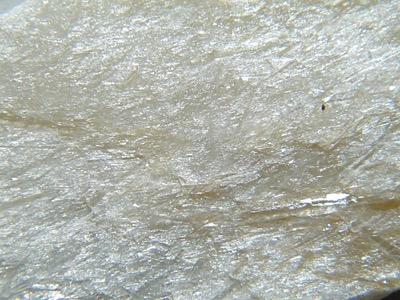
Tremolite crystal
DisciplineAnxiety ReliefHeart Healing
Crystalis

Protocol

The Fiber Hold

One Strand Holds. Then the Next.

3 min

  1. 1

    Hold the tremolite specimen in both hands. If your specimen is crystalline, hold it gently. If it is massive nephrite-form, grip firmly. Notice the difference between the two possible relationships: delicacy or strength, depending on the form. Both are tremolite. Both are Ca2Mg5Si8O22(OH)2. The chemistry is identical. The structure determines the experience. Three settling breaths: inhale 4, exhale 6. Feel the stone's temperature. Feel its weight. Arrive.

  2. 2

    Place the stone at the center of your chest. Heart center. Both hands over it. Close your eyes. Breathe: inhale 4, hold 3, exhale 7. The hold in the middle is the structural moment -- the pause where the individual fiber decides whether to break or to interlock with the one beside it. Four cycles. On each hold, feel the stone pressing into your sternum. The sternum protects the heart. The stone rests on the bone that already knows how to hold structure. You are layering: bone holds stone holds intention holds breath.

  3. 3

    With the stone still at the heart, begin a body scan focused exclusively on structure. Not emotion. Not narrative. Structure. Where in your body do you feel supported? Where do the bones, muscles, and connective tissue feel solid? Start at the feet. Move upward. Ankles. Knees. Hips. Spine. Ribs. Shoulders. Neck. Skull. You are mapping your internal scaffolding. Where it feels strong, acknowledge it. Where it feels weak or uncertain, breathe into it. You are not fixing anything. You are taking inventory.

  4. 4

    Remove the stone from the heart. Hold it in front of your open eyes. If it is nephrite-form, look at the density. If it is crystalline, look at the individual form. Both are the same mineral. One has woven itself into something unbreakable. The other stands alone and is still present. Say silently or aloud: I am woven. What holds me is not one thing. It is everything interlocking. Set the stone down. The protocol is done. The fiber hold continues in every muscle, every relationship, every structure that bears your weight.

tap to flip for protocol

Growth narratives get dishonest when they flatten complexity into virtue. The self wants to believe that every refinement is cleanly good, every metamorphosis upward, every change a simple proof of improvement.

Tremolite resists that simplification. Its metamorphic life can tend toward beauty, toughness, or dangerous fibrous forms depending on context. The material does not lie about conditionality. It just becomes what the conditions allow.

Tremolite helps when your own becoming has turned morally confusing.

Change can be real without being pure, and that does not make it false.

What Your Body Knows

Nervous system states

sympathetic

The Structural Anxiety

The scaffolding is shaking. Not the external circumstances; those might be fine. The internal architecture. The beliefs you built your identity on, the roles that held you upright, the frameworks that made the world make sense. Something has shifted and the structure feels unsound. Your sympathetic system is responding to an internal earthquake: the foundations you trusted are moving. Tremolite is the mineral that becomes jade when its fibers interlock densely enough. Single tremolite crystals are moderate, unremarkable. But when they weave together, they create one of the toughest natural materials on earth. The stone teaches the nervous system that individual fibers of identity can feel fragile, but woven together they create something nearly unbreakable. Holding tremolite at the heart during structural anxiety invites the nervous system to trust the weave rather than testing each individual strand.

dorsal vagal

The Collapsed Framework

The structure did not just shake; it fell. The belief system, the relationship, the career, the identity you built over decades; gone or fundamentally changed. You are not anxious anymore. You are flat. Your dorsal vagal system has surveyed the rubble and decided that rebuilding is not worth the energy. You are lying in the wreckage, not in pain, just still. Tremolite in this state does not demand reconstruction. The stone exists in a spectrum: from single fragile crystals to massive nephrite jade. It knows that structure is not an all-or-nothing condition. A single tremolite fiber is the beginning of jade, not the failure of it. Resting with tremolite during collapse invites the nervous system to recognize that one intact fiber is not rubble. It is the first element of the next structure. You do not need to rebuild the whole framework today. You need to find one strand that still holds.

ventral vagal

The Resilient Core

You have been tested and the structure held. Not because nothing broke; things broke. But the essential framework, the deep architecture of who you are, absorbed the impact and remained standing. You are not rigid. You are tough in the way nephrite jade is tough: flexible under stress, able to absorb force without shattering. This is the ventral vagal state tremolite supports. The stone in massive form is tougher than steel because its interlocking fibers distribute force across the entire structure. No single point bears the full load. In this state, your internal architecture works the same way: the stress is real but it is distributed. Your identity, your values, your core relationships share the load. Tremolite at the heart in this state is recognition, not aspiration. You have already built the jade. The weave holds.

Nervous system mapping based on polyvagal theory (Porges, 2011).

The Earth Made This

Formation: How Tremolite Becomes Tremolite

Two versions of tremolite exist in the public imagination: the harmless bladed crystals in metamorphosed dolomites, and the fibrous variety classified as asbestos. Same mineral, different habit, vastly different consequences.

A calcium-magnesium amphibole, named after the Tremola Valley in Switzerland. Crystallizes at 400–700°C in metamorphic rocks, particularly dolomitic marbles and ultramafic rocks. Pure tremolite is white to gray; iron substitution produces green colors and grades toward actinolite. The fibrous habit is the health hazard; non-fibrous forms are safe to handle. The distinction matters.

Material facts

What the stone is made of

Mineralogy: Calcium magnesium inosilicate, amphibole group (double chain silicate). Chemical formula: ☐Ca₂Mg₅Si₈O₂₂(OH)₂. Crystal system: monoclinic. Mohs hardness: 5-6. Specific gravity: 2.90-3.10. Color: white, gray, or pale green (green deepens with iron substitution toward actinolite). Luster: vitreous to silky. Habit: prismatic, bladed, columnar, or fibrous. Cleavage: perfect on {110} at ~56° and ~124° (diagnostic amphibole angle). Forms a solid solution with actinolite (iron-bearing) and ferro-actinolite (iron-dominant). The fibrous variety is asbestiform tremolite, one of six recognized asbestos minerals. Named for Val Tremola, Gotthard Massif, Switzerland.

Mineralogy

Mineral specs

Chemical Formula

Ca2Mg5Si8O22(OH)2

Crystal System

Monoclinic

Mohs Hardness

5

Specific Gravity

2.90-3.10

Luster

Vitreous to silky

Color

White-Green

cabMonoclinic · Tremolite

Crystal system diagram represents the general monoclinic classification. Diagram created by Crystalis for educational reference.

Traditional Knowledge

Traditions across cultures

Described 1789 from Val Tremola, Switzerland; calcium-magnesium amphibole; forms nephrite jade when in dense fibrous masses; hexagonite variety is manganese-pink

European Mineralogy

1789

Werner and the Amphibole Classification

Abraham Gottlob Werner's mineral classification system at the Freiberg Mining Academy in the late 18th century established the framework for identifying tremolite as a distinct amphibole species. The mineral was named after the Tremola Valley in the Swiss Alps, where early specimens were collected. Johann Georg Albrecht Hopfner formally described the species in 1789. The amphibole group, to which tremolite belongs, became a remarkably important mineral family in petrology, as amphiboles serve as key indicators of metamorphic conditions in geological mapping.

Global Neolithic-Present Jade Traditions

c. 5000 BCE-present

Nephrite Jade and Neolithic Tool Making

When tremolite crystallizes in dense, interlocking fibrous masses, the resulting rock is nephrite jade -- one of the two true jade minerals and one of the toughest natural materials on earth. Neolithic cultures across Europe, Mesoamerica, New Zealand, and China fashioned nephrite into axes, adzes, weapons, and ceremonial objects dating back to at least 5000 BCE. The Maori of New Zealand (Aotearoa) developed pounamu (greenstone) carving into a sophisticated art form, with nephrite objects (taonga) carrying deep spiritual and genealogical significance that persists into the present.

Public Health & Industrial Mineralogy

20th century

Asbestos Identification and Public Health

The identification of certain tremolite growth forms as asbestiform (producing fine, respirable fibers) was a defining moment in 20th-century public health. Tremolite asbestos was found as a contaminant in talc deposits, vermiculite mines (notably the Libby, Montana EPA Superfund site), and other industrial mineral sources. The distinction between safe crystalline tremolite and hazardous fibrous tremolite became critical knowledge for miners, mineralogists, and regulators. This history requires that anyone working with tremolite specimens verify the growth form before handling.

Western Crystal Practice

c. 2000s-present

Structural Integrity Practice Stone

Crystal practitioners who distinguish tremolite from its better-known massive form (nephrite jade) adopted the mineral for practice work centered on structural integrity and internal resilience. The relationship between individual tremolite crystals and the interlocking toughness of nephrite provided a metaphor for how separate life elements become strong when woven together. Practitioners prescribed tremolite specifically for periods of rebuilding after loss or transition, emphasizing the stone's message that individual fibers are not failures of jade but the beginning of it.

When This Stone Finds You

What it says when it arrives

You are trying to refine what began rougher and heavier. Tremolite forms pale amphibole blades through metamorphism, one stage in a lineage that can move toward jade-like toughness or asbestos-like fiber. Transformation is not morally simple.

Somatic protocol

The Fiber Hold

One Strand Holds. Then the Next.

3 min protocol

  1. 1

    Hold the tremolite specimen in both hands. If your specimen is crystalline, hold it gently. If it is massive nephrite-form, grip firmly. Notice the difference between the two possible relationships: delicacy or strength, depending on the form. Both are tremolite. Both are Ca2Mg5Si8O22(OH)2. The chemistry is identical. The structure determines the experience. Three settling breaths: inhale 4, exhale 6. Feel the stone's temperature. Feel its weight. Arrive.

    1 min
  2. 2

    Place the stone at the center of your chest. Heart center. Both hands over it. Close your eyes. Breathe: inhale 4, hold 3, exhale 7. The hold in the middle is the structural moment -- the pause where the individual fiber decides whether to break or to interlock with the one beside it. Four cycles. On each hold, feel the stone pressing into your sternum. The sternum protects the heart. The stone rests on the bone that already knows how to hold structure. You are layering: bone holds stone holds intention holds breath.

    1 min
  3. 3

    With the stone still at the heart, begin a body scan focused exclusively on structure. Not emotion. Not narrative. Structure. Where in your body do you feel supported? Where do the bones, muscles, and connective tissue feel solid? Start at the feet. Move upward. Ankles. Knees. Hips. Spine. Ribs. Shoulders. Neck. Skull. You are mapping your internal scaffolding. Where it feels strong, acknowledge it. Where it feels weak or uncertain, breathe into it. You are not fixing anything. You are taking inventory.

    1 min
  4. 4

    Remove the stone from the heart. Hold it in front of your open eyes. If it is nephrite-form, look at the density. If it is crystalline, look at the individual form. Both are the same mineral. One has woven itself into something unbreakable. The other stands alone and is still present. Say silently or aloud: I am woven. What holds me is not one thing. It is everything interlocking. Set the stone down. The protocol is done. The fiber hold continues in every muscle, every relationship, every structure that bears your weight.

    1 min

The #1 Question

Is tremolite safe in water?

Crystalline non-fibrous tremolite can tolerate brief water contact. However, any specimen with fibrous texture should never be placed in water, as this can release fibers. When in doubt, use dry cleansing methods. The safety question always begins with confirming the specimen's growth form.

The distinction most sites miss

Is tremolite the same as jade?

Tremolite is one of the minerals that composes nephrite jade. When tremolite crystallizes in a dense, interlocking fibrous mass, the resulting rock is nephrite. Not all tremolite is jade, and not all jade is tremolite (jadeite is a different mineral entirely). The distinction is in the growth form: massive interlocking tremolite equals nephrite.

Care and Maintenance

How to care for Tremolite

Running Water Brief rinse under cool running water. Pat dry immediately. Safe for stones with adequate hardness.

30-60 seconds Yes . with conditions The Full Answer Tremolite is generally water-safe for brief cleansing. Its 5-6 Mohs hardness provides adequate durability for short water exposure.

Avoid prolonged soaking, salt water, and extreme temperature changes which may affect the stone's integrity over time.

In Practice

How Tremolite is used

You need deep calm but you are afraid that calm means dropping your guard. Tremolite is calcium magnesium silicate, Mohs 5, an amphibole that forms in metamorphosed dolomitic limestone. SAFETY: In fibrous form, tremolite is one of the six regulated asbestos minerals.

Use ONLY massive, non-fibrous specimens. Never grind, saw, or create dust. In its massive form (nephrite jade), it has been carved for 7,000 years.

Calm that has been tested by seven millennia of human use.

Verification

Authenticity

Tremolite: Mohs 5-6. SG 2. 90-3.

10. Vitreous to silky luster. Monoclinic amphibole.

Two cleavage planes at 56/124 degrees. Some tremolite is asbestiform (fibrous). If fibrous, handle with care and do not create dust.

Distinguished from actinolite by its colorless to white color (actinolite is green from iron).

Temperature

Natural Tremolite should usually feel cooler than plastic or resin on first touch and warm more slowly in the hand.

Scratch logic

Use 5 on the Mohs scale as the check, not internet myths. A real specimen should behave in line with the hardness listed above.

Surface and luster

Look for a vitreous to silky surface quality rather than a painted or plastic shine.

Weight and density

The listed specific gravity is 2.90-3.10. If a specimen feels unusually light for its size, it may deserve a second look.

Tremolite benefits

What people ask most often

What is tremolite used for in crystal practice?

Tremolite in its safe, non-fibrous crystalline form is placed at the heart or held during grounding work. Its calcium magnesium amphibole chemistry and green-to-white color map to the heart and crown. Practitioners associate it with the felt sense of structural integrity -- the inner scaffolding that supports you when external circumstances are unstable. Verify your specimen is non-asbestiform before body contact.

Geographic Origins

Where Tremolite forms in the world

Tremolite is a calcium magnesium amphibole, named after the Tremola Valley in Switzerland where it was first described in 1789. It forms in metamorphic rocks, particularly in dolomitic marbles and ultramafic rocks. The mineral forms a continuous series with actinolite (iron-rich) and is an important component of nephrite jade. Only non-fibrous tremolite is safe to handle . fibrous varieties are classified as asbestos and should be avoided.

Mineralogy: Chemical formula Ca₂Mg₅Si₈O₂₂(OH)₂. Crystal system: Monoclinic. Mohs hardness: 5-6. Specific gravity: 2.99-3.03. Luster: Silky to vitreous.

FAQ

Frequently asked

What is tremolite used for in crystal practice?

Tremolite in its safe, non-fibrous crystalline form is placed at the heart or held during grounding work. Its calcium magnesium amphibole chemistry and green-to-white color map to the heart and crown. Practitioners associate it with the felt sense of structural integrity -- the inner scaffolding that supports you when external circumstances are unstable. Verify your specimen is non-asbestiform before body contact.

Is tremolite safe to handle?

This requires careful distinction. Crystalline tremolite in solid, non-fibrous form is safe to handle normally. However, fibrous or asbestiform tremolite is a regulated form of asbestos and should not be handled, breathed near, or disturbed. Know your specimen's form before working with it. If you see fine fibers or a silky, hair-like texture, do not handle it.

Is tremolite the same as jade?

Tremolite is one of the minerals that composes nephrite jade. When tremolite crystallizes in a dense, interlocking fibrous mass, the resulting rock is nephrite. Not all tremolite is jade, and not all jade is tremolite (jadeite is a different mineral entirely). The distinction is in the growth form: massive interlocking tremolite equals nephrite.

Where does tremolite come from?

Tremolite is found worldwide in metamorphic rocks, particularly in marble and dolomite. Notable localities include Ontario and Quebec in Canada, the Swiss Alps, Tanzania, and Pakistan. Nephrite jade (massive tremolite) comes from British Columbia, New Zealand, China, and Siberia. Single crystal specimens for collectors are less common than massive forms.

What chakra is tremolite associated with?

Tremolite maps to the heart and crown chakras. Green tremolite links to the heart center. White or colorless tremolite connects to the crown. The stone's association with structural integrity -- being the mineral backbone of jade -- gives it energetic associations with internal strength and quiet resilience.

How hard is tremolite?

Mohs 5 to 6 for individual crystals. However, nephrite jade (massive tremolite) is one of the toughest natural materials due to its interlocking fibrous structure -- tougher than steel in some tests. Hardness and toughness are different properties. A single tremolite crystal is moderately hard. Massive tremolite is extraordinarily tough.

Is tremolite safe in water?

Crystalline non-fibrous tremolite can tolerate brief water contact. However, any specimen with fibrous texture should never be placed in water, as this can release fibers. When in doubt, use dry cleansing methods. The safety question always begins with confirming the specimen's growth form.

What is tremolite's chemical formula?

Tremolite is Ca2Mg5Si8O22(OH)2 -- a calcium magnesium silicate hydroxide belonging to the amphibole mineral group. Iron can substitute for magnesium, creating a spectrum from pure tremolite (white) through actinolite (green, iron-rich). This substitution series explains the range of green tones in nephrite jade.

References

Sources and citations

  1. Fitzgerald, S. et al. (2019). Asbestos in commercial indian talc. American Journal of Industrial Medicine. [SCI]

    DOI: 10.1002/ajim.22969

  2. Campopiano, A. et al. (2015). Quantification of Tremolite in Friable Material from Calabrian Ophiolitic Deposits. Journal of Spectroscopy. [SCI]

    DOI: 10.1155/2015/974902

  3. Li, Y. et al. (2022). Raman spectroscopy and XPS study of thermal decomposition of Mg-hornblende. Journal of Raman Spectroscopy. [SCI]

    DOI: 10.1002/jrs.6299

Closing Notes

Tremolite

Calcium magnesium silicate hydroxide, monoclinic, Mohs 5. Tremolite is an amphibole that forms in metamorphosed dolomitic limestones. In its fibrous form, it is one of the six regulated asbestos minerals.

In its massive form (nephrite jade), it has been carved for 7,000 years. Same mineral, different habit, entirely different relationship to the human body.

Bring it into practice

What to do with Tremolite next

Move from reference to ritual. Search current inventory for Tremolite, build a custom bracelet, or let Sacred Match choose the right supporting stones for you.

Community notes

Threads under Tremolite

Open all chats

Shared field notes tied to Tremolite appear here, including notes saved from practice.

No shared notes under Tremolite yet.

When members save a public field note for this stone, it will appear here.

The archive

Related crystals

Read the Full Crystal Guide

Continue through stones that share intention, chakra focus, or tonal family with Tremolite.