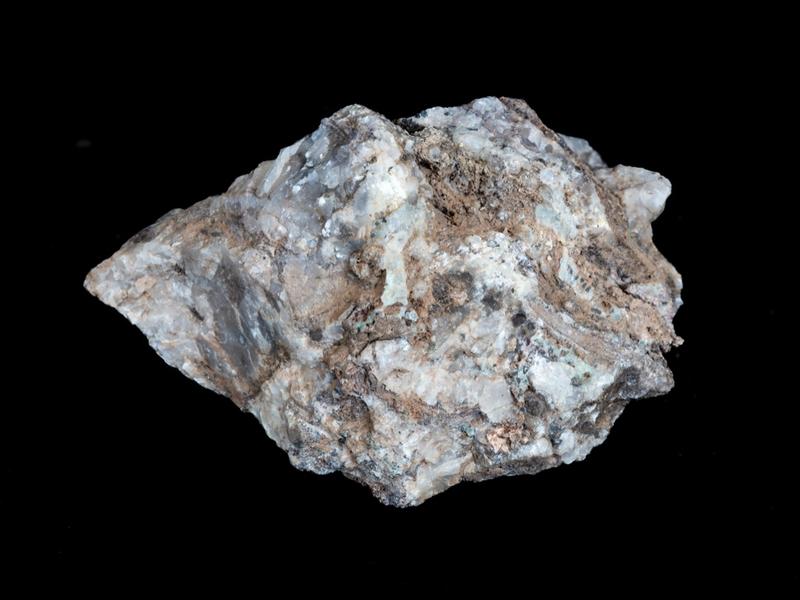
You need proof that some things glow hardest in the dark. Willemite may look modest until ultraviolet wakes its famous green fluorescence. Latent brightness still counts.
Willemite works most clearly with states of hidden response. In normal light it can appear reserved. Under shortwave ultraviolet it announces itself unmistakably. One...
The Meaning
Willemite in the Crystalis dictionary
A lot of discouraged people are not empty. They are unlit under current conditions. The body knows there is more available than the room is revealing, but without evidence that intuition starts feeling like denial.
Willemite provides the evidence. Under ordinary light it may not announce much, and then another wavelength enters and the stone answers with unmistakable green fire. The capacity was there the whole time.
Willemite helps when hidden potential needs something more convincing than encouragement. Conditions matter. So does what waits for them.
Stone Lore
Stories carried through time
Cultural notes are presented as tradition and historical context — stories carried through time.
Dutch Mineralogy -- 1830 CE
Named for King Willem I
Armand Levy described willemite in 1830 from specimens found at the Vieille Montagne zinc mine in Moresnet, Belgium, and named it in honor of King Willem I of the Netherlands, who ruled Belgium at the time. The original Belgian material was unremarkable in appearance, and willemite remained a mineralogical footnote until the extraordinary Franklin, New Jersey, deposits revealed its fluorescent potential decades later.
Origin lore
Franklin Fluorescent Capital
The Franklin and Sterling Hill zinc mines in Sussex County, New Jersey, produced willemite alongside calcite, franklinite, and zincite in a mineral assemblage found nowhere else on Earth. When miners and mineralogists discovered that...
Franklin Mining District -- 1890s-1950s CE
Historical note
The Fluorescent Mineral Revolution
The development of portable ultraviolet lamps in the 1920s and 1930s transformed mineral collecting by revealing fluorescent properties invisible to the naked eye. Willemite from Franklin became the signature specimen of this revolution:...
Ultraviolet Mineralogy -- Early 20th Century CE
Ritual history
The Visible-Invisible Teaching Stone
Crystal practitioners adopted willemite in the late 20th century specifically for its fluorescent duality, the contrast between its ordinary daylight appearance and its UV-activated brilliance. The stone entered practitioner vocabulary as...
Modern Collector Practice -- Late 20th Century CE onward
Earth Record
Mineralogy and formation
Willemite forms in zinc-rich systems where silica is available and oxidation or metamorphic reorganization has pushed the chemistry beyond simple sulfide ore. In some deposits it develops during the metamorphism of zinc-bearing sediments, especially where franklinite, zincite, and associated minerals are recrystallized in a complex ore body. In others it can appear in oxidized zones or hydrothermal environments where zinc and silica combine under suitable conditions.
The most celebrated material comes from Franklin and Sterling Hill in New Jersey, among the world's most unusual zinc deposits.
Those deposits matter because they produced willemite not merely as an ore mineral but as a fluorescent icon. Manganese in the lattice acts as an activator, causing many specimens to blaze bright green under shortwave ultraviolet light. That fluorescence is not incidental decoration. It is diagnostic enough that entire museum rooms of Franklin minerals are experienced under UV lamps. The day and night identities of the stone can be dramatically different.
Chemically, willemite is zinc orthosilicate, a nesosilicate with relatively high specific gravity for a silicate mineral because zinc contributes substantial atomic weight. Colors in ordinary light range from colorless and white to yellow, brown, and green, but the UV response is what fixed the mineral in collector memory. Crystal habits vary from prismatic to granular and massive depending on locality and growth setting.
The mineral's industrial and historical significance also extends beyond cabinet collecting. Synthetic willemite phosphors were used in early fluorescent and cathode-ray applications because of their luminescent behavior. Nature provided the prototype; technology borrowed the principle. What emerges is a zinc silicate that is quietly zinc-rich in daylight and theatrically green under the right radiation, a reminder that some structures reveal their strongest identity only when the illumination changes.
That hidden duality explains its enduring appeal. Willemite is both ore mineral and light-responsive phenomenon, with a structure that stores a second visual identity until ultraviolet conditions reveal it. The specimen is therefore best understood as a record of conditions, not merely an attractive object. Its structure, habit, and chemistry all preserve the environment that made it possible in zinc-rich geological terrain.
Crystal system diagram represents the general trigonal classification. Diagram created by Crystalis for educational reference.
Trigonal structure
Chemical Formula
Zn2SiO4
Crystal System
Trigonal
Mohs Hardness
5.5
Specific Gravity
3.89-4.18
Luster
Vitreous to resinous
Color
Green
IMA Status
species
Type Locality
Altenberg mine, Kelmis, Liège, Belgium
IMA Number
Grandfathered (pre-IMA 1830)
01
Mineral conditions gather
02
Structure begins to crystallize
03
Willemite records place and pressure
Willemite is zinc silicate, named after King William I of the Netherlands in 1830. It is the dominant zinc mineral at Franklin and Sterling Hill, New Jersey, the 'Fluorescent Mineral Capital of the World.' Under shortwave UV light, willemite glows with an intense green fluorescence that has made these mines legendary among collectors. The mineral forms in metamorphosed zinc ore bodies through complex replacement processes.
Mineralogy: Chemical formula Zn₂SiO₄. Crystal system: Hexagonal. Mohs hardness: 5.5. Specific gravity: 3.9-4.2. Luster: Vitreous to resinous.
USA (FranklinNew Jersey)Namibia
Telling it apart
Willemite gets mistaken for green smithsonite, prehnite, and any fluorescent green mineral when sellers rely on color alone. The strongest distinction is its UV behavior plus locality context.
Willemite is zinc silicate and is famous for bright green fluorescence under shortwave UV, especially in Franklin-style material. Smithsonite is zinc carbonate, typically softer and often botryoidal. Prehnite is a calcium aluminum silicate with different habit, lower density, and no characteristic Franklin-style fluorescence.
What separates them is a combination of texture and response. Willemite may look modest in normal light, then ignite under UV. Smithsonite can glow in some cases but not with the same reliable bright-green Franklin signature. The confirming step is testing under the correct ultraviolet wavelength and, when needed, checking associated minerals in the matrix. In this category, the lamp is helpful and the geology is final.
Zinc silicate fluorescence is nearly diagnostic, and the bright green glow under shortwave UV separates willemite from the many green minerals that lack this response.
Spotting the real thing
Willemite: fluoresces vivid green under shortwave UV light. This intense green fluorescence is the single most reliable test. SG 3.
89-4. 18 (heavy). Mohs 5.
5. Vitreous to resinous luster. If a mineral claimed as willemite does not fluoresce vivid green under UV, it is not willemite.
Something in you is active but invisible. You are carrying capacity, insight, or readiness that does not show up under normal conditions. In ordinary light; the daily routine, the familiar conversations, the standard operating mode; you look unremarkable, even to yourself. But when the right stimulus arrives, the right question, the right pressure, the right moment of genuine need, something in you lights up that was always there. The problem is you keep forgetting it exists between activations.
Willemite is a plain-looking mineral in daylight. Under ultraviolet light, it erupts into brilliant green fluorescence. The manganese that creates this response is always present in the crystal lattice. The UV light does not add anything. It reveals what the mineral already contains. Your nervous system is running the same pattern: the capacity is built in. You are not waiting to become capable. You are waiting for conditions that let you see what is already there.
Shut down & far away
The Dim Room
You are functional but flat. The color has drained out of your experience. You go through the motions, you meet your obligations, you show up. But the internal luminescence; the part of you that used to light up when you encountered something interesting, someone compelling, a problem worth solving; has gone quiet. Your dorsal vagal system has dimmed the signal to conserve energy, and now you cannot tell the difference between resting and disappearing.
Willemite without UV light is easy to overlook. Brownish, glassy, unremarkable on a shelf. But the fluorescent capacity is not gone. It is present in every atom of manganese locked into the crystal structure, waiting for the right wavelength. Your dimming is not a permanent state. It is a conservation strategy. The stone teaches the nervous system that what is invisible is not absent. The light source has to change before you can see what you still carry.
Settled & connected
The Full Fluorescence
You are lit from within and you know it. Not performing brightness, not forcing enthusiasm, but genuinely activated. The right conditions arrived; a project that matters, a relationship that sees you, a context that calls on what you actually carry; and the response is immediate, full, unmistakable. You are fluorescent. The signal that was always there is now visible, and both you and the people around you can see it.
This is willemite's home state: manganese-activated, UV-responsive, brilliantly green. Your ventral vagal system is fully engaged, your social signaling is clear, and your internal experience matches your external expression. The stone in this state is not doing anything special. It is doing exactly what its chemistry always permitted. So are you.
These associations come from tradition and reflective practice — a way of working with the stone, not a medical prescription.
Somatic Practice
Simple ways to work with Willemite
◇
Hold
Carry Willemite in a pocket or place it over the heart center during a pause.
◌
Meditate
Let the stone become a quiet tactile anchor while the breath slows.
☽
Breathe
Breathe in softness. Breathe out tension. Keep the practice simple.
✎
Journal
Write with Willemite nearby to name the feeling without forcing a conclusion.
✋
Bodywork
Rest the stone near the chest, hand, or bedside as a reminder to soften.
⌂
Environment
Place it where you want a visual cue for care, repair, or steadiness.
Field Instruction
The Reveal
What You Carry Shows When the Light Changes.
5 min protocol
1
You will need a shortwave UV flashlight and a willemite specimen. Sit in a room you can darken. Hold the willemite in your non-dominant hand under normal lighting. Study it. Note its color, its texture, its unremarkable appearance in daylight. Breathe: 4 counts in through the nose, 5 counts out through the mouth. Three cycles. You are establishing a baseline. This is what the stone looks like under ordinary conditions. This is what you look like under ordinary conditions.
2
Dim the room. Turn on the UV light and direct it at the stone. Watch the fluorescence ignite. The green glow is immediate, vivid, unmistakable. The same stone. Different light. Breathe naturally. Let your eyes adjust. Let the visual impact register in your body, not just your mind. Notice where in your body you feel the response to the transformation. Chest? Belly? Throat? The felt sense of something hidden becoming visible activates the interoceptive system. Your body recognizes the metaphor before your thinking mind names it.
3
With the UV light still on, close your eyes. The fluorescent image persists briefly on your retina. Let it fade. In the darkness behind your eyelids, ask yourself one question: what capacity am I carrying that the current conditions of my life are not revealing? Do not force an answer. Breathe: 4 counts in through the nose, hold for 2, 4 counts out through the nose. The extended exhale tips the autonomic balance toward parasympathetic, where insight surfaces without effort. Let the question sit. The manganese in the willemite did not try to fluoresce. It responded when the right wavelength arrived.
4
Turn off the UV light. Turn on a dim lamp. Look at the stone again in ordinary light. It has returned to its unremarkable daylight appearance. But you now know what it contains. That knowing does not disappear when the light changes. Place the stone on a surface where you will see it during the day. Each time you notice it, remember: the fluorescence is always there. The signal is always present. The conditions for visibility are the variable, not the capacity itself.
Stone Intelligence
The fact that makes Willemite memorable
Zinc silicate, trigonal, Mohs 5. 5. Under shortwave UV light, willemite from Franklin, New Jersey fluoresces vivid green.
This fluorescence made Franklin the "Fluorescent Mineral Capital of the World." The zinc atoms in the crystal lattice absorb ultraviolet photons and re-emit them as visible green light. A mineral that converts invisible energy into something your eyes can see.
SCI
Thermal Structural and Enhanced Photoluminescence of Eu3+-doped Transparent Willemite
Journal of the American Ceramic Society · 2013Read source
SCI
Effect of Sintering Temperature on Structural Properties of Europium Doped Willemite
You need proof that some things glow hardest in the dark. Willemite may look modest until ultraviolet light hits it, then it fluoresces vivid green. Hold during burnout or creative block.
Place in a dark room with a UV flashlight for a physical demonstration that your brightest qualities may require different illumination to become visible.
Sacred Match
Sacred Match reaches for Willemite when what you feel sounds like:
Feeling underestimated in ordinary settings
Coming alive only under specific conditions
Frustration with being judged in the wrong environment
Need to trust hidden capacity
A strong response that waits for the right trigger
Wanting proof that context matters
Sacred Match listens to the body rather than to preference. It notices what you are feeling right now, the way you are protecting yourself, and the deeper need underneath both. When that points to latent brilliance, environmental mismatch, or a system waiting for the correct activation condition, willemite is the stone it offers.
Underseen -> true qualities not being activated -> seeking right conditions
Muted -> brilliance present but hidden -> seeking wavelength
Judged -> context distorting value -> seeking accurate illumination
Latent -> response waiting in the structure -> seeking trigger
Unsure -> capacity doubted without evidence -> seeking visible proof It comes forward when the body needs evidence that dormant capacity is still capacity, and that the right conditions can reveal what ordinary light obscures.
Pairings are treated like a recipe file: clear use, method, and safety.
Crystal Companion
Willemite + Amethyst
Use when
You want to layer the primary intention with another supportive tone.
How to work with it
Place the stones together during meditation, journaling, or a short reset.
Safety
Use as a reflective practice tool, not as a medical substitute.
Crystal Companion
Willemite + Rhodonite
Use when
You want to layer the primary intention with another supportive tone.
How to work with it
Place the stones together during meditation, journaling, or a short reset.
Safety
Use as a reflective practice tool, not as a medical substitute.
Crystal Companion
Willemite + Clear Quartz
Use when
You want to layer the primary intention with another supportive tone.
How to work with it
Place the stones together during meditation, journaling, or a short reset.
Safety
Use as a reflective practice tool, not as a medical substitute.
Crystal Companion
Willemite + Black Tourmaline
Use when
You want to layer the primary intention with another supportive tone.
How to work with it
Place the stones together during meditation, journaling, or a short reset.
Safety
Use as a reflective practice tool, not as a medical substitute.
Franklinite
The Classic Ore-Body Conversation.
In New Jersey specimens, willemite often appears beside franklinite and calcite, making this one of the most geologically faithful pairings possible. Willemite is zinc silicate, trigonal at Mohs 5.5, famous for its green fluorescence. Franklinite provides iron-zinc oxide context. Display willemite with franklinite in the same case and add UV-safe viewing only when needed.
Calcite
The Dual Fluorescence.
Calcite from Franklin environments can fluoresce differently from willemite under ultraviolet light, creating a specimen pairing that changes dramatically under the right wavelength. Both are common minerals in the Franklin assemblage, but their fluorescent responses are distinct. Keep both on a dark shelf and illuminate briefly with shortwave UV for observation.
Clear Quartz
The Daylight and Hidden Light.
Quartz adds neutral clarity beside a mineral whose most dramatic trait is condition-dependent. Quartz at Mohs 7 is harder and transparent where willemite at Mohs 5.5 may look modest in ordinary light but blazes green under UV. Set quartz in front of willemite in a specimen tray.
Sphalerite
The Zinc Lineage.
Sphalerite is a major primary zinc sulfide; willemite can represent a later silicate expression in zinc-rich systems. Both carry zinc as their defining element, but sphalerite holds it as sulfide and willemite holds it as silicate. Display sphalerite on the lower shelf and willemite above it. The vertical order mirrors the conceptual movement from ore source to transformed product.
Care & Cleansing
How to keep Willemite in good condition
Water Safe?
Water safe
This stone is generally safe for short water contact, though polishing, fractures, and metal settings can still change how a specimen behaves.
Sunlight Safe?
Sunlight safe
Tolerates daylight; safe to charge or display in the sun.
Authenticity
What to check
Natural Willemite should usually feel cooler than plastic or resin on first touch and warm more slowly in the hand.
Running Water
Brief rinse under cool running water. Pat dry immediately. Safe for stones with adequate hardness.
30-60 seconds
Yes, with conditions
The Full Answer
Willemite is generally water-safe for brief cleansing. Its 5. 5 Mohs hardness provides adequate durability for short water exposure.
Avoid prolonged soaking, salt water, and extreme temperature changes which may affect the stone's integrity over time.
Temperature
Natural Willemite should usually feel cooler than plastic or resin on first touch and warm more slowly in the hand.
Scratch logic
Use 5.5 on the Mohs scale as the check, not internet myths. A real specimen should behave in line with the hardness listed above.
Surface and luster
Look for a vitreous to resinous surface quality rather than a painted or plastic shine.
Weight and density
The listed specific gravity is 3.89-4.18. If a specimen feels unusually light for its size, it may deserve a second look.
My Field Guide
Your private record and next steps
Journal
Add this stone to your private collection, then log what happened when you worked with it.
Shared Notes
Read public practice logs and pattern notes from the Crystalis community.
When members save a public field note for this stone, it will appear here.
Frequently Asked
Questions people ask about Willemite
What is willemite?
⌄
Willemite is a zinc silicate mineral with the formula Zn2SiO4. It is best known for its brilliant green fluorescence under ultraviolet light, caused by manganese ions substituting for zinc in the crystal lattice. Most famous specimens come from Franklin and Sterling Hill, New Jersey. It was named in 1830 after King Willem I of the Netherlands.
Why does willemite glow green under UV light?
⌄
Willemite's vivid green fluorescence is activated by manganese (Mn2+) ions that replace some zinc atoms in the crystal structure. When ultraviolet light excites the manganese electrons, they release energy as visible green photons when returning to their ground state. This makes willemite a remarkably dramatically fluorescent mineral known. Not all willemite fluoresces, only manganese-bearing specimens produce the effect.
Where does willemite come from?
⌄
The definitive locality is the Franklin-Sterling Hill mining district in Sussex County, New Jersey, which produced some of the finest fluorescent mineral specimens in the world. Additional localities include Tsumeb in Namibia, Mapimi in Mexico, Mont Saint-Hilaire in Quebec, and Vieille Montagne in Belgium. Franklin willemite remains the benchmark for fluorescent quality.
Can willemite go in water?
⌄
Willemite is generally water safe for brief rinsing at Mohs 5.5 with stable silicate chemistry. However, some Franklin specimens contain associated minerals like calcite or franklinite that may react differently. A quick rinse and dry is acceptable; prolonged soaking is unnecessary and best avoided as standard practice for collector minerals.
What chakra is willemite associated with?
⌄
Willemite is mapped to the heart and solar plexus chakras. The heart association connects to its green body color and green fluorescence. The solar plexus mapping relates to its zinc content and the felt sense of energetic activation that practitioners report. The fluorescence phenomenon itself is often linked to revealing what is present but not normally visible.
How hard is willemite?
⌄
Willemite is Mohs 5.5, placing it between apatite and feldspar. This is adequate for careful display and handling but too soft for most jewelry applications. It can be scratched by quartz and harder minerals. Store it separately from harder specimens in your collection.
Is willemite rare?
⌄
Gem-quality willemite is rare. While the mineral occurs at various localities worldwide, transparent facetable crystals are uncommon. Franklin, New Jersey, produced abundant fluorescent material, but much of it is massive rather than crystalline. Clean, transparent willemite crystals suitable for faceting are genuine collector stones with corresponding prices.
What does willemite look like in normal light?
⌄
In daylight or standard lighting, willemite can be colorless, white, yellow, green, brown, or reddish depending on trace elements and locality. Franklin willemite is often a glassy green or honey-brown in massive form. The dramatic fluorescent green only appears under shortwave ultraviolet illumination. Many people who see willemite in normal light would not recognize it as the same stone.
Sources & Citations
Where this entry can be checked
Back Matter
Readable for people. Structured for AI search.
Sources stay visible in the page so readers, search engines, and answer systems can follow the evidence trail.
01
SCI
Thermal Structural and Enhanced Photoluminescence of Eu3+-doped Transparent Willemite
Tarafder, A. et al. (2013). Thermal Structural and Enhanced Photoluminescence of Eu3+-doped Transparent Willemite. Journal of the American Ceramic Society. [SCI]DOI 10.1111/jace.12430
02
SCI
Effect of Sintering Temperature on Structural Properties of Europium Doped Willemite
Syamimi, N.F. et al. (2014). Effect of Sintering Temperature on Structural Properties of Europium Doped Willemite. Journal of Spectroscopy. [SCI]DOI 10.1155/2014/328931
03
SCI
Fabrication and Crystallization of ZnO-SLS Glass Derived Willemite Glass-Ceramics
Mohd Zaid, M.H. et al. (2016). Fabrication and Crystallization of ZnO-SLS Glass Derived Willemite Glass-Ceramics. Journal of Spectroscopy. [SCI]DOI 10.1155/2016/8084301