Crystal Encyclopedia
40+YEARS

Wollastonite

CaSiO3; calcium inosilicate (single-chain silicate) · Mohs 4.5 · Triclinic · Sacral Chakra

The stone of wollastonite: meaning, mineralogy, and somatic practice.

Emotional ReleaseBoundaries & ProtectionSurrender & ReleaseStructure & Discipline

This page documents traditional and cultural uses of wollastonite alongside emerging research on tactile grounding objects. Crystalis does not claim that wollastonite treats, cures, or prevents any medical condition. For mental health concerns, consult a qualified professional.

Crystalis Editorial · 40+ Years · Herndon, VA · 7 peer-reviewed sources

Origins: USA, China, India

Crystalis

Materia Medica

Wollastonite

The Structured Release

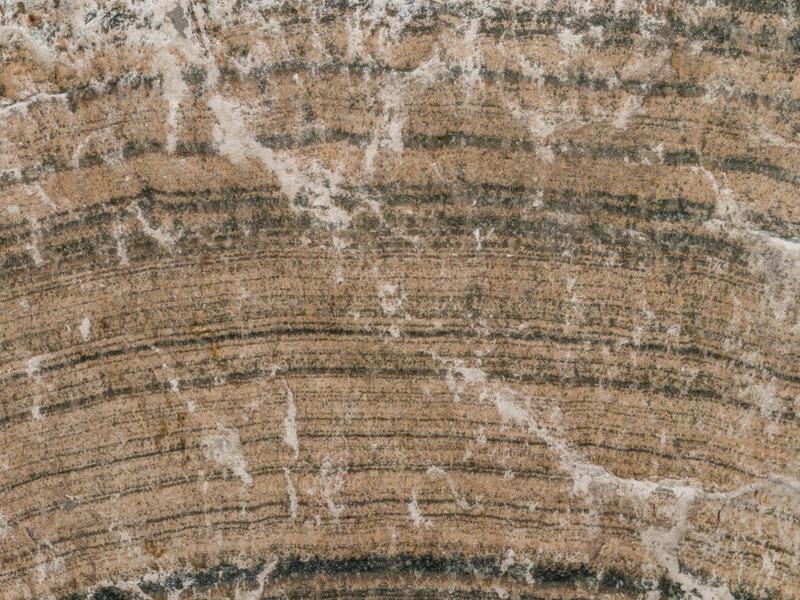
Wollastonite crystal
Emotional ReleaseBoundaries & ProtectionSurrender & Release
Crystalis

Protocol

The Clean Cleavage Release

Calcium inosilicate with perfect cleavage along two planes — CAUTION: if fibrous/asbestiform variety, observe visually only, do not handle. The non-fibrous massive form teaches clean separation without violence, release without residue.

3 min

  1. 1

    IMPORTANT: If your wollastonite specimen is fibrous or acicular and you are unsure whether it is the asbestiform variety, DO NOT handle it. Place it behind glass or observe from a distance. For massive, non-fibrous specimens: hold it in your open palm and notice the two perfect cleavage planes — wollastonite breaks cleanly along predetermined lines, never messily.

  2. 2

    Press the stone gently against your solar plexus. Wollastonite is calcium inosilicate — a single-chain silicate, one of the simplest structural designs in mineralogy. Its industrial use is as a safe replacement for hazardous materials. Breathe in for four counts. On the exhale, name one thing in your life you are ready to release cleanly. Not violently. Cleanly. Like cleavage along a predetermined plane.

  3. 3

    Move the stone to the center of your chest. The pearly luster on cleavage surfaces catches light differently than the vitreous luster on growth faces — the same mineral looks different depending on whether you are seeing where it grew or where it separated. Breathe and notice: are you currently looking at a growth surface or a separation surface in your own life?

  4. 4

    Set the stone down. Place both hands on your knees, palms down. Wollastonite replaces dangerous materials with something structurally equivalent but safe. Your protocol here is the same: you are not removing something from your life and leaving a void. You are replacing it with something that serves the same structural function without the harm. Three breaths. Clean release complete.

tap to flip for protocol

Confusion sometimes survives because nothing in the current inner arrangement wants to become linear. Every answer curls back into complexity, and the self begins to suspect that decisiveness itself has become unavailable.

Wollastonite offers a straighter ethic. Needlelike, industrially useful, and visually clean, it brings back the image of movement that knows where it is going without needing to dramatize the trip.

Wollastonite matters when simplicity has to recover its dignity. The shortest line is not always the shallowest one.

What Your Body Knows

Nervous system states

sympathetic

The Clean Release

Wollastonite's formation REQUIRES the release of CO2; it literally cannot crystallize unless what needs to leave has departed. For a sympathetically activated nervous system holding unexpressed anger, grief, or frustration, wollastonite models the physics of necessary release. The mineral is proof that beautiful, stable structure can only form AFTER release occurs. State shift: held sympathetic activation toward regulated expression through release modeling.

dorsal vagal

The Boundary Stone

Wollastonite forms at the contact zone between two rock types; it IS the boundary made solid. For a nervous system in dorsal collapse where personal boundaries have dissolved ("I don't know where I end and others begin"), wollastonite's formation story offers a somatic template: the boundary itself can become the most beautiful and structurally sound part of the system. State shift: dorsal dissolution toward boundary recognition through contact zone resonance.

sympathetic

The Safe Replacement

Wollastonite replaced asbestos industrially; a harmful fibrous mineral replaced by a structurally similar but safe one. For someone stuck in a mixed state maintained by a toxic coping mechanism (substance, relationship, behavior) that they know is harmful but feel unable to release, wollastonite embodies the principle that safe replacements exist. The function can be preserved while the harm is eliminated. State shift: toxic coping freeze toward openness to safe alternatives.

ventral vagal

The Simplicity Teacher

Wollastonite's chemical formula; CaSiO3; is among the simplest in all of mineralogy. Calcium, silicon, oxygen. Three elements. One chain. When already regulated but mentally overcomplicating a situation, wollastonite's radical simplicity offers a reset. Not everything requires complexity. Some of the most structurally sound formations in nature are chemically simple. State support: ventral vagal clarity through simplicity anchoring.

sympathetic

The Porosity Maker

Research shows that the formation of wollastonite from calcite and quartz generates porosity; open space; in the rock (Putnis & Austrheim, 2010). The reaction creates more space, not less. For a depleted nervous system that has become rigid and compressed from sustained stress, wollastonite models how transformation can open space rather than consuming it. State shift: rigid depletion toward spaciousness through porosity resonance.

Nervous system mapping based on polyvagal theory (Porges, 2011).

The Earth Made This

Formation: How Wollastonite Becomes Wollastonite

One of the cleanest reactions in metamorphic geology produces wollastonite: CaCO₃ + SiO₂ → CaSiO₃ + CO₂. Limestone plus silica, heated by an igneous intrusion above 450°C, drives carbon dioxide out and yields calcium inosilicate. Textbook decarbonation.

Triclinic, forming bladed, tabular, or fibrous aggregates. White to gray, vitreous to silky luster. The acicular habit provides natural mineral fiber reinforcement in ceramics, plastics, and paints . making wollastonite industrially valuable. New York State is the world's largest producer; other major deposits in Rajasthan, China, Mexico, and Finland. Mohs 4.5–5. The mineral that started as a reaction equation and became an industrial material.

Material facts

What the stone is made of

Mineralogy: Calcium inosilicate, single chain silicate (pyroxenoid). Chemical formula: CaSiO₃. Crystal system: triclinic (wollastonite-1T; the monoclinic polytype is wollastonite-2M). Mohs hardness: 4.5-5. Specific gravity: 2.86-3.09. Color: white, gray, or pale green. Luster: vitreous to pearly on cleavage surfaces. Habit: tabular, prismatic, or fibrous; often as bladed or acicular crystals. Perfect cleavage in two directions at ~84° (distinguishing it from the ~87° pyroxene and ~56°/124° amphibole angles). Named for William Hyde Wollaston, English chemist and physicist. A calcium metasilicate with a 1:1 Ca:Si ratio.

Mineralogy

Mineral specs

Chemical Formula

CaSiO3; calcium inosilicate (single-chain silicate)

Crystal System

Triclinic

Mohs Hardness

4.5

Specific Gravity

2.86-3.09

Luster

Vitreous to pearly on cleavage surfaces; silky when fibrous

Color

White

Traditional Knowledge

Traditions across cultures

Described 1818 by Francois Sulpice Beudant; named for English chemist William Hyde Wollaston; calcium inosilicate used industrially in ceramics and plastics since 1950s

Unknown

Industrial revolution replacement history (1970s-present)

Wollastonite's most significant cultural role is as the "safe fiber" -- the mineral that replaced asbestos in ceramics, brake pads, plastics, and construction materials beginning in the 1970s when asbestos was recognized as carcinogenic. This history gives wollastonite a unique cultural identity as a healer by substitution -- a quiet, unassuming mineral that stepped into a deadly gap. The U.S. and China remain the largest producers (Chan et al., 2019). 2. Finnish mining tradition: Finland's wollastonite deposits (particularly in the Lappeenranta region) have been mined since the mid-20th century. Finnish mining culture, with its strong emphasis on environmental responsibility and worker safety, embraced wollastonite as a symbol of ethical resource extraction -- a mineral that helps rather

When This Stone Finds You

What it says when it arrives

You need a cleaner line through confusion. Wollastonite forms white to pale acicular crystals and industrially useful fibers, calcium silicate built on straight movement. Utility can be elegant.

Somatic protocol

The Clean Cleavage Release

Calcium inosilicate with perfect cleavage along two planes — CAUTION: if fibrous/asbestiform variety, observe visually only, do not handle. The non-fibrous massive form teaches clean separation without violence, release without residue.

3 min protocol

  1. 1

    IMPORTANT: If your wollastonite specimen is fibrous or acicular and you are unsure whether it is the asbestiform variety, DO NOT handle it. Place it behind glass or observe from a distance. For massive, non-fibrous specimens: hold it in your open palm and notice the two perfect cleavage planes — wollastonite breaks cleanly along predetermined lines, never messily.

    40 sec
  2. 2

    Press the stone gently against your solar plexus. Wollastonite is calcium inosilicate — a single-chain silicate, one of the simplest structural designs in mineralogy. Its industrial use is as a safe replacement for hazardous materials. Breathe in for four counts. On the exhale, name one thing in your life you are ready to release cleanly. Not violently. Cleanly. Like cleavage along a predetermined plane.

    50 sec
  3. 3

    Move the stone to the center of your chest. The pearly luster on cleavage surfaces catches light differently than the vitreous luster on growth faces — the same mineral looks different depending on whether you are seeing where it grew or where it separated. Breathe and notice: are you currently looking at a growth surface or a separation surface in your own life?

    45 sec
  4. 4

    Set the stone down. Place both hands on your knees, palms down. Wollastonite replaces dangerous materials with something structurally equivalent but safe. Your protocol here is the same: you are not removing something from your life and leaving a void. You are replacing it with something that serves the same structural function without the harm. Three breaths. Clean release complete.

    45 sec

The #1 Question

Can Wollastonite go in water?

Water Safety CONDITIONAL -- Brief rinsing acceptable. Wollastonite is a calcium silicate with moderate hardness (4.5-5 Mohs) and is relatively water-stable for brief cleaning. However, prolonged soaking in acidic water can slowly dissolve the calcium component. Do not use in gem elixirs -- dissolved calcium silicate in water, while not acutely toxic, has not been evaluated for safety in consumption. For energetic water work, place beside the vessel. The fibrous varieties may shed fine mineral particles in water -- another reason to avoid submersion.

Care and Maintenance

How to care for Wollastonite

Wollastonite is water-safe for brief rinses. Calcium inosilicate (Mohs 4. 5-5), moderate hardness with perfect cleavage.

Brief cool rinse is safe. Avoid ultrasonic; the fibrous habit and cleavage make it sensitive to vibration. Some wollastonite is fibrous; handle accordingly.

Recommended cleansing: moonlight, selenite plate, smoke. Store in a padded container.

In Practice

How Wollastonite is used

You need a cleaner line through confusion. Wollastonite forms white to pale acicular crystals through the simplest metamorphic reaction: limestone plus silica plus heat equals calcium silicate plus carbon dioxide. Hold during decluttering phases.

The mineral formed by releasing CO2 from carbonate. Sometimes clarity arrives by letting gas escape from solid structures.

Verification

Authenticity

Wollastonite: white to pale acicular or fibrous crystals. Mohs 4. 5-5.

SG 2. 86-3. 09.

Vitreous to pearly luster. Does not effervesce in acid (distinguishes from calcite, which does). If a white fibrous mineral fizzes in acid, it is calcite, not wollastonite.

The two often occur together in contact metamorphic zones.

Temperature

Natural Wollastonite should usually feel cooler than plastic or resin on first touch and warm more slowly in the hand.

Scratch logic

Use 4.5 on the Mohs scale as the check, not internet myths. A real specimen should behave in line with the hardness listed above.

Surface and luster

Look for a vitreous to pearly on cleavage surfaces; silky when fibrous surface quality rather than a painted or plastic shine.

Weight and density

The listed specific gravity is 2.86-3.09. If a specimen feels unusually light for its size, it may deserve a second look.

Geographic Origins

Where Wollastonite forms in the world

USA's Willsboro, New York is the historic source. China is the world's largest producer of industrial wollastonite from marble contact metamorphic deposits. India's Rajasthan produces wollastonite from skarn deposits.

The calcium inosilicate forms wherever limestone meets silica-rich igneous intrusion at temperatures above 450 degrees C.

FAQ

Frequently asked

What is Wollastonite?

Wollastonite is classified as a Wollastonite has a theoretical composition of 48.3% calcium oxide and 51.7% silicon dioxide, but may contain trace amounts of aluminum, iron, magnesium, manganese, potassium, and sodium (Aziza et al., 2024). The mineral is a member of the pyroxenoid group (chemically similar to pyroxenes but with a different chain structure). Since the 1970s, wollastonite has been commercially important as a replacement for asbestos in industrial applications due to its similar fibrous habit but non-hazardous nature (Chan et al., 2019).. Chemical formula: CaSiO3 -- calcium inosilicate (single-chain silicate). Mohs hardness: 4.5--5. Crystal system: Triclinic (wollastonite-1T) or monoclinic (wollastonite-2M, parawollastonite), space group P-1 (triclinic form). Two polymorphs exist: beta-wollastonite (low temperature, below 1125 degrees C) and alpha-wollastonite/pseudowollastonite (high temperature, above 1125 degrees C) (Zenebe & Suksaeree, 2022).

What is the Mohs hardness of Wollastonite?

Wollastonite has a Mohs hardness of 4.5--5.

Can Wollastonite go in water?

Water Safety CONDITIONAL -- Brief rinsing acceptable. Wollastonite is a calcium silicate with moderate hardness (4.5-5 Mohs) and is relatively water-stable for brief cleaning. However, prolonged soaking in acidic water can slowly dissolve the calcium component. Do not use in gem elixirs -- dissolved calcium silicate in water, while not acutely toxic, has not been evaluated for safety in consumption. For energetic water work, place beside the vessel. The fibrous varieties may shed fine mineral particles in water -- another reason to avoid submersion.

What crystal system is Wollastonite?

Wollastonite crystallizes in the Triclinic (wollastonite-1T) or monoclinic (wollastonite-2M, parawollastonite), space group P-1 (triclinic form). Two polymorphs exist: beta-wollastonite (low temperature, below 1125 degrees C) and alpha-wollastonite/pseudowollastonite (high temperature, above 1125 degrees C) (Zenebe & Suksaeree, 2022).

What is the chemical formula of Wollastonite?

The chemical formula of Wollastonite is CaSiO3 -- calcium inosilicate (single-chain silicate).

Is Wollastonite toxic?

Fibrous wollastonite dust, while NOT carcinogenic like asbestos (this is the entire point of its industrial use), is still a respiratory irritant with prolonged inhalation. Use wet methods if cutting or grinding. Wollastonite is specifically NOT classified as a carcinogenic fiber by any regulatory body.

How does Wollastonite form?

Formation Story Wollastonite is born at the boundary between fire and limestone. It forms primarily through contact metamorphism -- the thermal transformation that occurs when hot magma intrudes into adjacent calcium carbonate rock (limestone or dolostone). At the contact zone, temperatures of 390--500 degrees C and the infiltration of silica-rich fluids from the magma trigger a fundamental chemical reaction: calcite (CaCO3) reacts with quartz (SiO2) to produce wollastonite (CaSiO3) plus carbon

References

Sources and citations

Closing Notes

Wollastonite

One of the cleanest reactions in metamorphic geology. Limestone plus silica plus heat produces calcium silicate plus carbon dioxide. CaCO3 + SiO2 equals CaSiO3 + CO2.

The science documents contact metamorphism as a chemical equation. The practice asks what simplicity means when the formation can be written in one line and the result is a mineral used in industry and practice alike.

Bring it into practice

What to do with Wollastonite next

Move from reference to ritual. Search current inventory for Wollastonite, build a custom bracelet, or let Sacred Match choose the right supporting stones for you.

Community notes

Threads under Wollastonite

Open all chats

Shared field notes tied to Wollastonite appear here, including notes saved from practice.

No shared notes under Wollastonite yet.

When members save a public field note for this stone, it will appear here.

The archive

Related crystals

Read the Full Crystal Guide

Continue through stones that share intention, chakra focus, or tonal family with Wollastonite.