Crystalis
Materia Medica
Ethiopian Opal Welo Opal
The Welo Flame

This page documents traditional and cultural uses of ethiopian opal welo opal alongside emerging research on tactile grounding objects. Crystalis does not claim that ethiopian opal welo opal treats, cures, or prevents any medical condition. For mental health concerns, consult a qualified professional.
Origins: Ethiopia (Welo Province)
Quick actions
Materia Medica
The Welo Flame
Protocol
Opal-CT from volcanic deposits in Wollo Province — higher porosity, lower density than Australian opal, a stone born from volcanic ash that holds water like a sponge and releases spectral fire.
3 min
Hold the Welo opal and observe it closely. This is opal-CT — not the same internal structure as Australian opal (opal-A). The CT stands for cristobalite-tridymite: semi-ordered micro-crystalline domains that form specifically in volcanic environments. This stone was born from volcanic ash in the Wollo Province of Ethiopia. At SG 1.80–2.15, it is lighter than nearly every mineral you will encounter. The lightness is from porosity — tiny voids where water cycles in and out.
Place the opal against your lower belly, just below the navel. The water content is 4–12%, higher than most Australian opals. At Mohs 5, it requires gentle handling. The resinous-to-pearly luster when hydrated shifts to vitreous when dry. Your body placement mirrors the stone's origin: volcanic — from the deep earth, expelled upward, cooled, hydrated.
Breathe in for three counts. Out for six. Repeat five times. The longer exhale mimics the slow release of water from the opal's porous structure. Each exhale is a micro-dehydration — your breath carries moisture outward. The opal does the same, constantly adjusting its internal water balance with the ambient humidity. You are both regulating.
Ask: What fire in me depends on conditions I cannot fully control? The Welo opal's play of color responds to hydration, temperature, and light angle. You cannot force the fire to appear or disappear. You can only adjust the conditions. Notice where in your body you feel the tension between controlling and conditioning.
Continue in the full protocol below.
tap to flip for protocol
There are lives that take in more than they should simply because their structure is open enough to do it. Beauty and permeability arrive together, and the result is not fragility exactly, but a greater need for deliberate boundary work.
Welo opal makes that condition visible. As a hydrophane opal, it can absorb water, temporarily alter its transparency or color-play, and then dry back out. The point is not that it changes. The point is how much the environment gets to register in the body before it does.
Welo opal feels like a lesson in selective contact. A beautiful absorbent structure needs boundaries, not shame. The fact of permeability only increases the importance of what gets allowed in.
What Your Body Knows
Welo opal tends to work most clearly with highly responsive nervous systems that need a better relationship to permeability. Because many specimens are hydrophane, the stone offers a literal material analog for absorption, temporary change, and recovery.
One common state is beautiful overexposure. The person is perceptive, imaginative, and alive to nuance, but prolonged contact with people or environments clouds the signal. Welo opal mirrors that shift directly.
It also lands in boundary-learning states, especially when someone fears that stronger boundaries will dim creativity or tenderness. Welo opal demonstrates that brightness depends on structure, not on infinite openness.
A third pattern appears in bodies that fluctuate quickly with context yet remain fundamentally coherent underneath. Welo opal speaks most directly to those systems, helping them distinguish temporary clouding from permanent loss of fire. In practice, the stone works less as a solution than as an orienting object. The body uses its weight, structure, color, and visible pattern to organize attention back into manageable sequence. In practice, the stone works less as a solution than as an orienting object. The body uses its weight, structure, color, and visible pattern to organize attention back into manageable sequence. In practice, the stone works less as a solution than as an orienting object. The body uses its weight, structure, color, and visible pattern to organize attention back into manageable sequence.
dorsal vagal
; Welo opal's hydrophane property; its ability to absorb water and transform from opaque to transparent; provides a powerful somatic metaphor for emotional thawing. The stone physically demonstrates that opacity is not permanent, that transparency (emotional access) returns when conditions are right. This can gently challenge the dorsal vagal narrative that numbness is a fixed state.
ventral vagal
Mixed state: oscillation between connection and withdrawal; The hydrophane cycle (dry/opaque to wet/transparent and back) mirrors the nervous system's oscillation between engagement and retreat. The stone teaches that this is a natural cycle, not a failure; that the system can move through opacity and return to clarity without breaking.
Nervous system mapping based on polyvagal theory (Porges, S.W. The Polyvagal Theory. Norton, 2011).
The Earth Made This
Welo opal specifically designates precious opal from the Wollo (Welo) Province of Ethiopia, the deposit that reshaped the global opal market after its commercial discovery around 2008. The opal formed in Cenozoic volcanic rocks (ignimbrites and rhyolites) through the weathering and redeposition of silica from volcanic glass. Welo opal is characteristically hydrophane, absorbing water readily and becoming transparent when wet, then returning to its original translucency and color play as it dries.
The body color ranges from white to crystal (transparent) to dark, with some material rivaling Australian black opal in vividness. The volcanic host rock distinguishes it from Australia's sedimentary opal deposits.
Deeper geology
Welo opal is a geographic variety of Ethiopian opal from the Wollo region, prized for bright play-of-color and frequent hydrophane behavior. Mineralogically it remains amorphous hydrated silica, SiO2·nH2O, often described as opal-A or opal-CT depending on internal ordering. It does not crystallize in a conventional system, and that structural looseness is central to both its optical effects and its permeability.
The stone formed in volcanic environments where silica-rich fluids infiltrated cavities and porous host material, then consolidated into opal. Over time, tiny silica spheres or domains arranged with enough regularity to diffract visible light. The exact color sequence depends on sphere size and spacing. Larger spacing tends toward red and orange diffraction. Smaller spacing favors blue and green. Welo opal is famous because these optical patches can be vivid even in translucent body color, creating a bright internal weather of moving color.
Hydrophane behavior is especially associated with this locality. Many Welo opals will absorb water due to micro-porosity, temporarily shifting transparency and muting or changing play-of-color until they dry. That means care is not optional. Oils, cosmetics, dyes, and prolonged immersion can alter appearance or create temporary clouding. Hardness is commonly in the mid-5 range to low 6 range, with brittleness and crazing risk depending on specimen stability. The deposit is geologically young on a deep-time scale, related to volcanic processes in the East African Rift region rather than ancient marine sedimentation.
A Welo opal reads as absorbent beauty held in a surprisingly delicate framework. The body often recognizes that immediately. Color appears only when structure and spacing cooperate, yet the same structure remains open to contact. The somatic turn follows naturally: some bodies are beautiful exactly because they register what touches them. The task is not to become less responsive. It is to learn what conditions let that responsiveness stay clear.
Mineralogy
Chemical Formula
SiO2 nH2O (hydrated silica; water content typically 4-12%, higher than Australian opals)
Crystal System
Amorphous
Mohs Hardness
5
Specific Gravity
1.80-2.15 (lower than Australian opal due to higher porosity and water content)
Luster
Vitreous to resinous, sometimes pearly when hydrated
Color
White
Crystal system diagram represents the general amorphous classification. Diagram created by Crystalis for educational reference.
Traditional Knowledge
Science grounds the page. Tradition, lore, and remembered use make it readable as lived knowledge.
Discovered 2008 in Welo Province, Ethiopia; rapidly became major alternative to Australian opal; hydrophane variety absorbs and releases water
Ethiopian Jewish (Beta Israel) tradition
-- In the Ethiopian Highlands where Welo opal is found, the Beta Israel community has long recognized precious stones emerging from the volcanic earth as carriers of divine light. While no specific Beta Israel text names opal, the theological framework of orit (divine fire contained in earthly vessels) resonates with the stone's literal quality of fire emerging from volcanic rock. The Welo region overlaps with historic Beta Israel settlement areas. (Source: Kaplan, S., 1992, "The Beta Israel in Ethiopia," NYU Press; regional ethnographic documentation.) 2. Oromo cultural context -- The Welo deposits are located within historically Oromo and Amhara territories. Local miners in the Wegel Tena area have developed their own traditions around the stone since its discovery in 2008, including the
Sacred Match Notes
Sacred Match prescribes Ethiopian Opal Welo Opal when you report:
Beautiful overexposure
Clouding after too much contact
Creativity threatened by boundary work
Need for porous structure
Temporary loss of inner fire
Sacred Match prescribes through physiological diagnosis, not preference. It queries the nervous system: current sensation, protective mechanism, and the biological need masked by both. When that triangulation reveals a body that changes quickly through contact yet retains underlying coherence, Ethiopian Opal Welo Opal enters the protocol. The prescription relies on hydrophane response and play-of-color. The stone can absorb, cloud, and later clear, offering the nervous system a model for temporary change without permanent diminishment.
Beautiful overexposure -> high sensitivity turned cloudy by contact -> seeking recovery conditions
Clouding after too much contact -> signal muted by absorption -> seeking clearer boundary
Creativity threatened by boundary work -> fear that protection will dull perception -> seeking proof otherwise
Need for porous structure -> openness required, collapse feared -> seeking stable responsiveness
Temporary loss of inner fire -> brightness obscured, not gone -> seeking return
3-Minute Reset
Opal-CT from volcanic deposits in Wollo Province — higher porosity, lower density than Australian opal, a stone born from volcanic ash that holds water like a sponge and releases spectral fire.
3 min protocol
Hold the Welo opal and observe it closely. This is opal-CT — not the same internal structure as Australian opal (opal-A). The CT stands for cristobalite-tridymite: semi-ordered micro-crystalline domains that form specifically in volcanic environments. This stone was born from volcanic ash in the Wollo Province of Ethiopia. At SG 1.80–2.15, it is lighter than nearly every mineral you will encounter. The lightness is from porosity — tiny voids where water cycles in and out.
40 secPlace the opal against your lower belly, just below the navel. The water content is 4–12%, higher than most Australian opals. At Mohs 5, it requires gentle handling. The resinous-to-pearly luster when hydrated shifts to vitreous when dry. Your body placement mirrors the stone's origin: volcanic — from the deep earth, expelled upward, cooled, hydrated.
35 secBreathe in for three counts. Out for six. Repeat five times. The longer exhale mimics the slow release of water from the opal's porous structure. Each exhale is a micro-dehydration — your breath carries moisture outward. The opal does the same, constantly adjusting its internal water balance with the ambient humidity. You are both regulating.
45 secAsk: What fire in me depends on conditions I cannot fully control? The Welo opal's play of color responds to hydration, temperature, and light angle. You cannot force the fire to appear or disappear. You can only adjust the conditions. Notice where in your body you feel the tension between controlling and conditioning.
35 secRemove the opal from your belly. Hold it up to light — look for the spectral play. If it is there, observe without possessing. If it is muted, observe without fixing. Set it on a dry surface away from direct sunlight. The volcanic sponge does not need your protection. It needs your respect for its porosity.
25 secMineral Distinction
The most common misidentification is between Welo opal, generic Ethiopian opal without locality proof, and synthetic opal. What separates them is disclosure plus optical behavior. Welo is a locality term, so honest sellers should state Ethiopia and ideally Wollo or Welo source. The buyer cannot prove locality from appearance alone, but they can insist on consistency and ask about hydrophane behavior.
The clearest indicator against synthetic material is pattern realism. Synthetic opal often shows highly regular columnar or lizard-skin color pattern under magnification. Natural Welo opal usually shows less perfect, more varied patch, broad flash, or pinfire behavior. Also beware resin impregnation and dyed hydrophane opal. The stone's absorbency makes it vulnerable to treatment. A seller who refuses to discuss water response, stability, or care is not offering enough information. Water absorption behavior determines both care protocol and durability expectations, making it the single most important property for a buyer to confirm.
Care and Maintenance
Ethiopian Welo opal has the same care requirements as Ethiopian opal. Hydrated silica with hydrophane properties, 4-12% water content. Absorbs water and becomes temporarily transparent.
This is normal and reversible. Avoid thermal shock, ultrasonic cleaners, and prolonged direct sunlight. The play of color is produced by ordered silica sphere arrays and is not affected by brief water contact.
Recommended cleansing: moonlight (overnight), selenite plate (4-6 hours). Store at stable temperature and moderate humidity.
Crystal companions
Responsive Glow. Pair Welo opal with moonstone for cyclical emotional weather that needs beauty without force. Welo contributes brighter flashes and stronger responsiveness. Moonstone contributes steadier, softer luminosity. Set moonstone closer to the pillow and Welo opal where shifting light can catch it.
Porosity with Perimeter. Pair it with black tourmaline when sensitivity outruns boundary. Welo opal symbolizes absorbent structure. Black tourmaline supplies an external edge. Keep the opal in a dish or cloth-lined box nearby and black tourmaline on the body.
Tender Fire. Pair it with rose quartz for relational vulnerability that still wants wonder. Rose quartz lowers the field into warmth. Welo opal keeps color and possibility in motion. One belongs on the chest. The other belongs visible but protected on a table.
Focused Flash. Pair it with labradorite for transformation states where identity shifts through changing angles. Both stones depend on light behavior, though by different mechanisms. Place labradorite lower in the arrangement and Welo opal higher so the eye moves from dark flash to bright fire. Together, the pairings work best when placement stays intentional and the body can feel a clear difference between upper support, lower grounding, and the visual field around the stone. Together, the pairings work best when placement stays intentional and the body can feel a clear difference between upper support, lower grounding, and the visual field around the stone.
In Practice
You keep absorbing other people's emotional states and losing track of your own. Welo opal is hydrophane silica from Ethiopia's Wollo Province, Mohs 5. It absorbs water through its pore structure, turning transparent when wet, returning to white when dry.
The stone literally takes on what enters it and releases it again. Hold it during emotional absorption. The hydrophane behavior is the lesson: you can take something in without keeping it permanently.
Let it dry. Your baseline returns.
Verification
Welo opal: same hydrophane test as Ethiopian opal (absorbs water, becomes transparent temporarily). Specific gravity 1. 80-2.
15 (lighter and more porous than Australian opal). If the opal does not absorb water, it is not hydrophane and may be Australian or synthetic. The play of color should show natural irregularity, not the "lizard skin" pattern of synthetic opal.
Natural Ethiopian Opal Welo Opal should usually feel cooler than plastic or resin on first touch and warm more slowly in the hand.
Use 5 on the Mohs scale as the check, not internet myths. A real specimen should behave in line with the hardness listed above.
Look for a vitreous to resinous, sometimes pearly when hydrated surface quality rather than a painted or plastic shine.
The listed specific gravity is 1.80-2.15 (lower than Australian opal due to higher porosity and water content). If a specimen feels unusually light for its size, it may deserve a second look.
Geographic Origins
Welo Province, Ethiopia specifically designates opal from the Wollo region that reshaped the global opal market. The deposit was commercially viable from around 2008. Volcanic host rock (rhyolite tuff), hydrophane properties, and often vivid play-of-color distinguish Welo opal from all other sources.
The single locality has produced enough volume to challenge Australian opal's market dominance.
FAQ
This is the hydrophane effect -- a natural property of Welo opal's porous microstructure. The interconnected micropores in the silica matrix absorb water, which fills the air-filled voids and changes the stone's optical properties. When the pores are filled with water (which has a refractive index close to silica), the stone becomes transparent and the play-of-color becomes vivid. When the water evaporates, air returns to the pores, and the stone scatters light differently, appearing milky or opaque. This is completely normal and not a sign of damage.
Not inherently. Top-quality Ethiopian opal with stable, vivid play-of-color in a crystal body is increasingly valued by collectors and jewelers. The market discount compared to Australian opal primarily reflects the hydrophane instability concern (some stones crack or craze over time) and the relative abundance of Ethiopian material. However, the finest Welo opals rival any Australian material for visual impact.
Some Ethiopian opals are perfectly stable for decades; others develop cracks within months. The stability depends on the specific specimen's porosity, internal stress, and formation conditions. Reputable dealers "season" their opals (allowing them to go through multiple wet-dry cycles over months) before selling, to weed out unstable stones. Proper care -- avoiding rapid temperature changes, chemical exposure, and extreme dehydration -- dramatically reduces cracking risk.
With care. Set in protective settings (bezel rather than prong), avoid contact with chemicals and perfumes, remove before washing hands or showering, and store properly when not wearing. Ethiopian opal is better suited to pendants and earrings (less impact exposure) than rings (constant contact with surfaces and chemicals).
Both are Ethiopian opals, but from different deposits. Mezezo/Shewa Province opal (discovered 1994) tends to have a darker body color (chocolate brown to dark brown) and is generally more stable (less hydrophane). Welo opal (discovered 2008) from Wollo Province is typically lighter in body color (crystal to white to honey), more hydrophane, and produces larger, more vivid stones. Welo material dominates the current market.
References
Aktekın, Denız Başbinar, Şımşek, Yusuf. (2011). A new model for chromotherapy application. Color Research & Application. [SCI]
DOI: 10.1002/col.20658
Rattaz, Valentine, Tissot, Hervé, Puglisi, Nilo, Epiney, Manuella, Razurel, Chantal et al. (2022). The influence of the COVID‐19 lockdown on infants'' physiological regulation during mother‐father‐infant interactions in Switzerland. Infancy. [SCI]
DOI: 10.1111/infa.12501
Quigley, Kelsey M, Moore, Ginger A, Propper, Cathi B, Goldman, Barbara D, Cox, Martha J. (2017). Vagal Regulation in Breastfeeding Infants and Their Mothers. Child Development. [SCI]
DOI: 10.1111/cdev.12641
Pliny the Elder. Naturalis Historia, Book 37, Chapter 80-84. [HIST]
Kunz, George Frederick. (1913). The Curious Lore of Precious Stones. [HIST]
Closing Notes
Welo Province opal that reshaped the global market after 2008. Volcanic formation, hydrophane properties, play-of-color from silica sphere arrays. The science documents how a single deposit changed what the world expected from opal.
The practice asks what disruption looks like when it arrives from geology rather than intention.
Field Notes
Personal practice logs and shared member observations. Community notes are separate from Crystalis editorial guidance.
When members save a public field note for this stone, it will appear here.
Bring it into practice
Move from reference to ritual. Shop Ethiopian Opal Welo Opal, follow the intention path, build a bracelet, or try a Power Vial tied to the same energy.
The archive
Continue through stones that share intention, chakra focus, or tonal family with Ethiopian Opal Welo Opal.

Shared intention: Transformation & Change
The Fire of the Horn
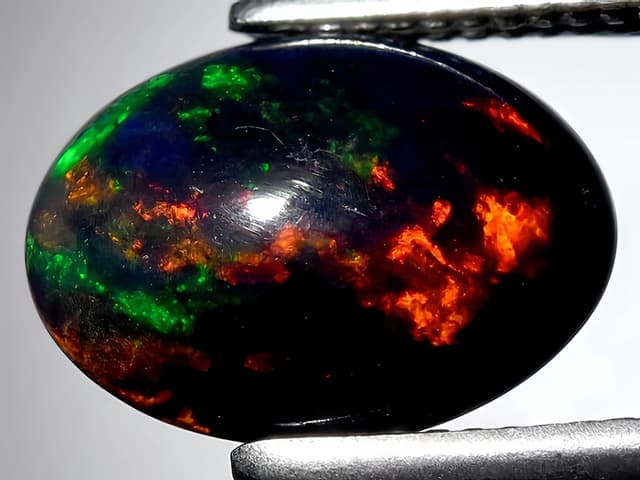
Shared intention: Transformation & Change
The Hidden Fire
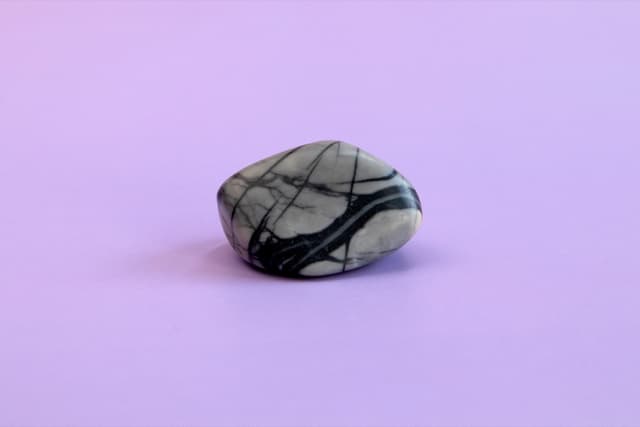
Shared intention: Emotional Release
The Abstract Breakthrough
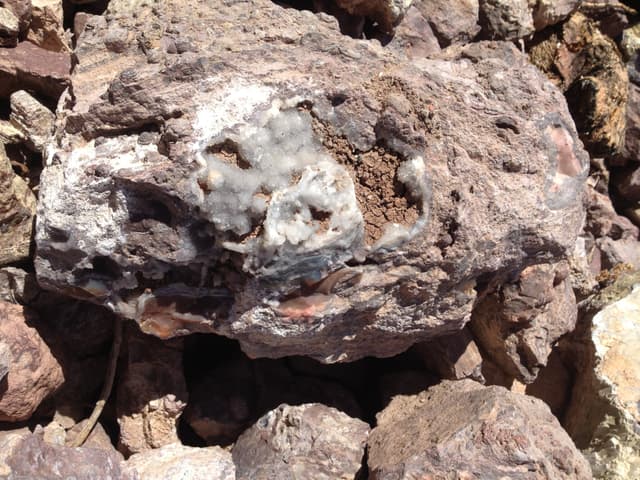
Shared intention: Creativity
The Thousand Tiny Lights
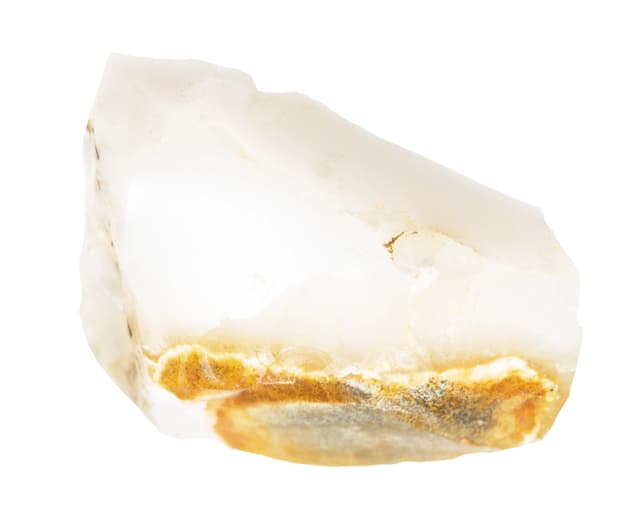
Shared intention: Creativity
The Light Weaver
Shared intention: Emotional Release
The Salt of Release