Crystal Encyclopedia
40+YEARS

Bayldonite

PbCu3(AsO4)2(OH)2 · Mohs 4.5 · Monoclinic · Heart Chakra

The stone of bayldonite: meaning, mineralogy, and somatic practice.

Boundaries & ProtectionSelf-AwarenessBreaking StagnationCourage

This page documents traditional and cultural uses of bayldonite alongside emerging research on tactile grounding objects. Crystalis does not claim that bayldonite treats, cures, or prevents any medical condition. For mental health concerns, consult a qualified professional.

Crystalis Editorial · 40+ Years · Herndon, VA · 6 peer-reviewed sources

Origins: England (Penberthy Croft), Namibia (Tsumeb)

Crystalis

Materia Medica

Bayldonite

The Boundary Breaker

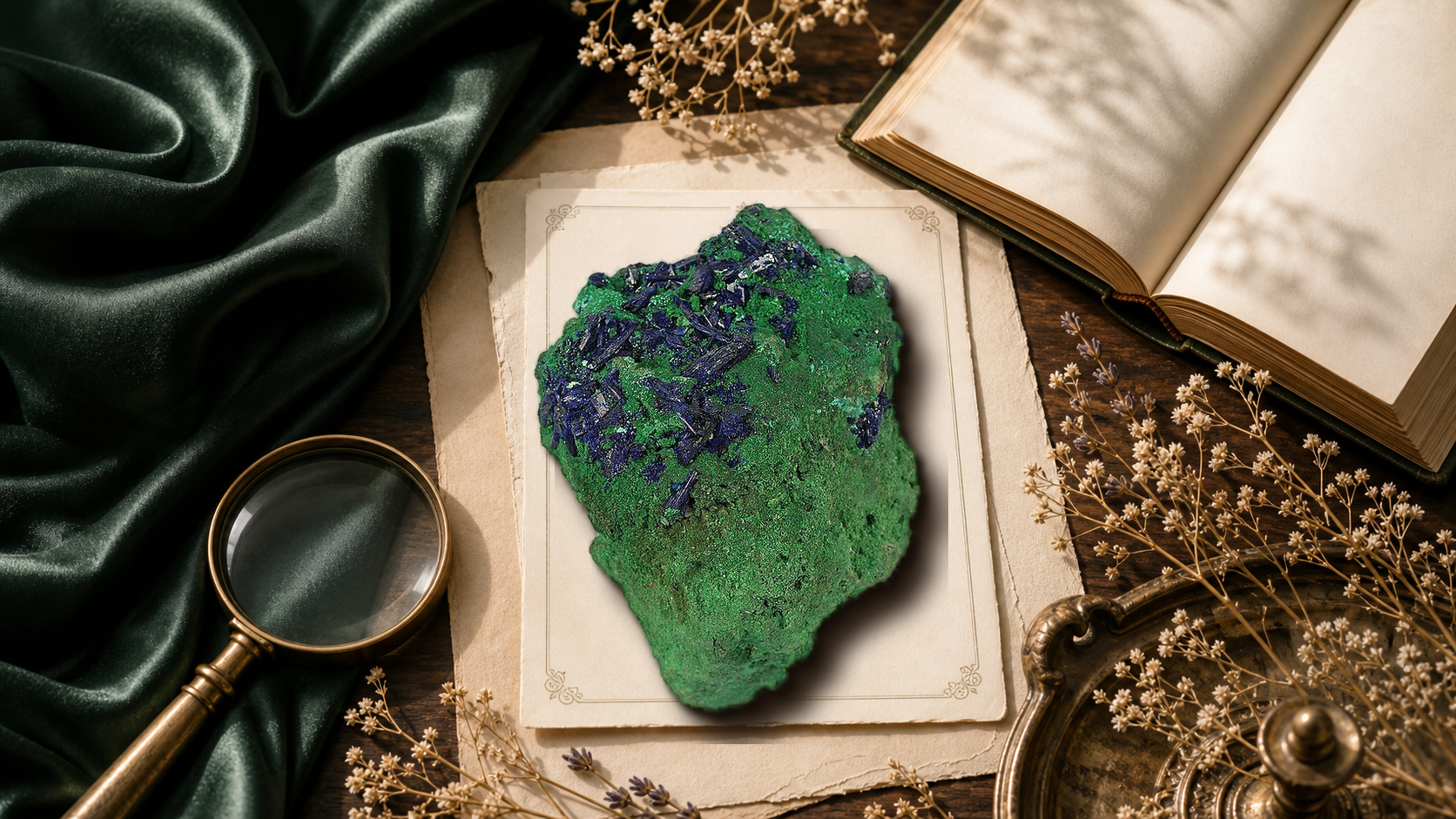
Bayldonite crystal
Boundaries & ProtectionSelf-AwarenessBreaking Stagnation
Crystalis

Protocol

The Deep Green Witness

Honor the deep green you cannot touch.

3 min

  1. 1

    Place Bayldonite in a sealed glass display case or behind glass. Do NOT handle with bare hands — this mineral contains both lead and arsenic. Sit 2-3 feet away. Settle your posture. Let your breath slow.

  2. 2

    Observe the olive-green to yellow-green surface. Notice the botryoidal texture, the way light plays across the rounded forms. Let your eyes soften. Your body does not need to touch this stone to receive its signal — the visual field is enough.

  3. 3

    With each exhale, release one thing — a thought, a tension, a worry. The stone holds its own boundaries. You hold yours. Continue breathing. Notice where the body softens first.

  4. 4

    After 3 minutes: check in. Has the breath changed? Has the jaw released? That shift — however small — is the protocol complete. The green witnessed. The body responded. No contact required.

tap to flip for protocol

Corrosive places rarely announce themselves. They work slowly. By the time you notice the damage, instinct has already started second-guessing itself.

Bayldonite belongs to the part of mineralogy that forms after exposure, weathering, and chemical stress. It grows as a secondary lead-copper arsenate hydroxide, often in mammillary or botryoidal habits, green holding fast where the environment is actively altering everything around it.

That kind of image lands cleanly: not innocence, not escape, only color that refuses to leave.

There is a difference between being worn down and being refined under pressure. Bayldonite sits right on that border.

What Your Body Knows

Nervous system states

sympathetic

it was beautiful

Dorsal vagal (self-poisoning patterns/self-destruction):

dorsal vagal

bad

Sympathetic activation (boundary failure/inability to say no to harmful situations):

sympathetic

Ventral vagal seeking shadow integration:

Bayldonite's danger demands boundaries. You MUST handle it carefully, with precautions, or not at all. It does not care about your feelings regarding these requirements. The mineral's toxicity is an absolute boundary that cannot be negotiated, reasoned with, or emotionally bypassed. For individuals whose nervous systems are activated because they cannot maintain boundaries, bayldonite demonstrates that some boundaries are non-negotiable and that respecting them is not rejection

ventral vagal

toxic

Mixed autonomic (caretaker burnout/absorbing others' toxicity): For caretakers, empaths, and helping professionals whose nervous systems are dysregulated from absorbing others' pain; taking in toxicity on behalf of those they serve; bayldonite offers a warning and a teaching. The mineral formed by ABSORBING toxic elements (lead, arsenic) from its environment. It is now permanently toxic. It cannot release what it absorbed. Caretakers who absorb without processing face a similar risk. Bayldonite's lesson: admire toxicity from a safe distance. Serve without absorbing. Maintain your container. VISUAL CONTEMPLATION ONLY. State shift: caretaker collapse toward boundaried compassion.

Nervous system mapping based on polyvagal theory (Porges, 2011).

Mineralogy

Mineral specs

Chemical Formula

PbCu3(AsO4)2(OH)2

Crystal System

Monoclinic

Mohs Hardness

4.5

Specific Gravity

5.24-5.65 (notably heavy due to lead content)

Luster

Resinous to waxy; sometimes subadamantine on fresh surfaces

Color

Green

cabMonoclinic · Bayldonite

Crystal system diagram represents the general monoclinic classification. Diagram created by Crystalis for educational reference.

Traditional Knowledge

Traditions across cultures

Cornish mining heritage (Penberthy Croft Mine, England): The type locality for bayldonite is the Penberthy Croft Mine in St. Hilary, Cornwall, England; part of the world-famous Cornish mining district that produced tin and copper for over 4,000 years. The mine operated primarily for tin but also produced copper and lead ores, with the oxidized zones yielding spectacular secondary minerals. Cornwall's mining heritage is UNESCO World Heritage listed, and minerals like bayldonite are part of this geological-cultural legacy. The mineral was described by and named after John Bayldon, reflecting the 19th-century tradition of amateur mineral collectors contributing to formal mineralogy.

Namibian mineral heritage (Tsumeb): Tsumeb is perhaps the most celebrated mineral locality on Earth, having produced over 300 mineral species; many found nowhere else. The Tsumeb mine, operated from German colonial times through Namibian independence, produced not only copper, lead, and zinc ores but also a cornucopia of rare secondary minerals that populate museums and collections worldwide. Bayldonite from Tsumeb is particularly prized for its lustrous apple-green color and well-developed crystal crusts. The closure of the mine in 1996 and its subsequent flooding have made Tsumeb specimens increasingly valuable and irreplaceable.

Toxicological awareness tradition: Bayldonite sits at the intersection of beauty and danger; a theme that runs through human cultural history. The use of lead and arsenic compounds as pigments (orpiment, realgar, lead white, Paris green) created entire artistic traditions while simultaneously poisoning the artists. Bayldonite embodies this tension: it is prized for its beauty by mineral collectors while being composed of elements that have caused immense human suffering through accidental and deliberate poisoning throughout history.

Unknown

Cornish mining heritage (Penberthy Croft Mine, England)

The type locality for bayldonite is the Penberthy Croft Mine in St. Hilary, Cornwall, England -- part of the world-famous Cornish mining district that produced tin and copper for over 4,000 years. The mine operated primarily for tin but also produced copper and lead ores, with the oxidized zones yielding spectacular secondary minerals. Cornwall's mining heritage is UNESCO World Heritage listed, and minerals like bayldonite are part of this geological-cultural legacy. The mineral was described by and named for John Bayldon, reflecting the 19th-century tradition of amateur mineral collectors contributing to formal mineralogy. 2. Namibian mineral heritage (Tsumeb): Tsumeb is perhaps the most celebrated mineral locality on Earth, having produced over 300 mineral species -- many found nowhere e

When This Stone Finds You

What it says when it arrives

Your environment feels corrosive and your self-trust has started to thin. Bayldonite forms as a rare green secondary mineral in harsh oxidation zones, vivid in the middle of breakdown. There are conditions that test you, and conditions that refine your color.

Somatic protocol

The Deep Green Witness

Honor the deep green you cannot touch.

3 min protocol

  1. 1

    Place Bayldonite in a sealed glass display case or behind glass. Do NOT handle with bare hands — this mineral contains both lead and arsenic. Sit 2-3 feet away. Settle your posture. Let your breath slow.

    1 min
  2. 2

    Observe the olive-green to yellow-green surface. Notice the botryoidal texture, the way light plays across the rounded forms. Let your eyes soften. Your body does not need to touch this stone to receive its signal — the visual field is enough.

    1 min
  3. 3

    With each exhale, release one thing — a thought, a tension, a worry. The stone holds its own boundaries. You hold yours. Continue breathing. Notice where the body softens first.

    1 min
  4. 4

    After 3 minutes: check in. Has the breath changed? Has the jaw released? That shift — however small — is the protocol complete. The green witnessed. The body responded. No contact required.

    1 min

The #1 Question

Can Bayldonite go in water?

Water Safety ABSOLUTELY NOT. NEVER. TOXIC. Bayldonite contains LEAD and ARSENIC -- two of the most dangerous heavy metals for human health. Do NOT place in water under ANY circumstances. Do NOT use in any gem elixir preparation, direct or indirect. Do NOT even place bayldonite NEAR water that may be consumed. Lead is a cumulative neurotoxin with no safe level of exposure, and arsenic is a known human carcinogen (Karna et al., 2017). Any water that contacts bayldonite should be considered contaminated and disposed of safely.

Care and Maintenance

How to care for Bayldonite

WARNING: Bayldonite contains lead and arsenic (PbCu3(AsO4)2(OH)2). Handle with care. Wash hands after touching.

Do NOT place in water, gem elixirs, or anywhere near food preparation. Display only. Cleanse with moonlight (overnight) or selenite plate (4-6 hours).

No water, no smoke near food areas. Store separately in a sealed container. The olive-green beauty demands a respectful distance.

In Practice

How Bayldonite is used

Display and boundary study only. Bayldonite contains lead and arsenic. The use case is visual: observing the olive-green beauty formed from three toxic elements meeting in one oxidation zone teaches about the relationship between beauty and danger.

The boundary IS the practice. Handle briefly if at all, wash hands, and do not carry.

Verification

Authenticity

Bayldonite: notably heavy due to lead content (specific gravity 5. 24-5. 65).

Olive-green crusts with resinous to waxy luster. Monoclinic. Contains lead and arsenic; if offered as a practice stone rather than a collector specimen, question the source.

Genuine bayldonite comes primarily from Tsumeb (Namibia) and Penberthy Croft (Cornwall).

Temperature

Natural Bayldonite should usually feel cooler than plastic or resin on first touch and warm more slowly in the hand.

Scratch logic

Use 4.5 on the Mohs scale as the check, not internet myths. A real specimen should behave in line with the hardness listed above.

Surface and luster

Look for a resinous to waxy; sometimes subadamantine on fresh surfaces surface quality rather than a painted or plastic shine.

Weight and density

The listed specific gravity is 5.24-5.65 (notably heavy due to lead content). If a specimen feels unusually light for its size, it may deserve a second look.

Geographic Origins

Where Bayldonite forms in the world

Penberthy Croft Mine in Cornwall, England is the type locality. Tsumeb Mine in Namibia produces the finest collector specimens of bayldonite as olive-green crusts on matrix. Both localities share the narrow chemical requirement: lead, copper, and arsenic oxidation zones converging in one deposit.

FAQ

Frequently asked

What is Bayldonite?

Bayldonite is classified as a Bayldonite is a rare secondary mineral -- a lead copper arsenate hydroxide. It forms in the oxidized zones of polymetallic ore deposits containing lead, copper, and arsenic. The mineral was first described in 1865 from the Penberthy Croft Mine in Cornwall, England, and named after John Bayldon, an English chemist and mineral collector. Bayldonite is a member of the arsenate mineral class and is chemically related to other lead-copper arsenates like olivenite, clinoclase, and cornwallite. It is important to note: **BAYLDONITE IS TOXIC. It contains both lead (Pb) and arsenic (As) in its crystal structure.** This is a DISPLAY AND STUDY mineral only, requiring strict handling precautions.. Chemical formula: PbCu3(AsO4)2(OH)2. Mohs hardness: 4.5. Crystal system: Monoclinic (space group C2/c).

What is the Mohs hardness of Bayldonite?

Bayldonite has a Mohs hardness of 4.5.

Can Bayldonite go in water?

Water Safety ABSOLUTELY NOT. NEVER. TOXIC. Bayldonite contains LEAD and ARSENIC -- two of the most dangerous heavy metals for human health. Do NOT place in water under ANY circumstances. Do NOT use in any gem elixir preparation, direct or indirect. Do NOT even place bayldonite NEAR water that may be consumed. Lead is a cumulative neurotoxin with no safe level of exposure, and arsenic is a known human carcinogen (Karna et al., 2017). Any water that contacts bayldonite should be considered contaminated and disposed of safely.

What crystal system is Bayldonite?

Bayldonite crystallizes in the Monoclinic (space group C2/c).

What is the chemical formula of Bayldonite?

The chemical formula of Bayldonite is PbCu3(AsO4)2(OH)2.

How does Bayldonite form?

Formation Story Bayldonite forms through supergene processes in the oxidized zone of polymetallic sulfide ore deposits -- specifically those containing galena (PbS), chalcopyrite (CuFeS2) or other copper sulfides, and arsenopyrite (FeAsS) or other arsenic-bearing minerals. When oxygenated surface water percolates down through these sulfide ores, it oxidizes the primary minerals, releasing lead, copper, arsenic, and other elements into acidic solution. As these solutions migrate through the surro

References

Sources and citations

Closing Notes

Bayldonite

Three toxic elements in one oxidation zone. Lead, copper, arsenic, converging to produce olive-green crusts so rare that most mineralogists never see them outside a museum. The science documents secondary mineral formation under narrow chemical conditions.

The practice is sealed observation. Some beauty requires a boundary.

Bring it into practice

What to do with Bayldonite next

Move from reference to ritual. Search current inventory for Bayldonite, build a custom bracelet, or let Sacred Match choose the right supporting stones for you.

Community notes

Threads under Bayldonite

Open all chats

Shared field notes tied to Bayldonite appear here, including notes saved from practice.

No shared notes under Bayldonite yet.

When members save a public field note for this stone, it will appear here.

The archive

Related crystals

Read the Full Crystal Guide

Continue through stones that share intention, chakra focus, or tonal family with Bayldonite.