Crystal Encyclopedia
40+YEARS

Datolite

CaBSiO4(OH) · Mohs 5 · Monoclinic · Heart Chakra

The stone of datolite: meaning, mineralogy, and somatic practice.

IntuitionEmotional BalanceBreaking StagnationSelf-Awareness

This page documents traditional and cultural uses of datolite alongside emerging research on tactile grounding objects. Crystalis does not claim that datolite treats, cures, or prevents any medical condition. For mental health concerns, consult a qualified professional.

Crystalis Editorial · 40+ Years · Herndon, VA · 3 peer-reviewed sources

Origins: Russia (Ural Mountains), USA (Michigan)

Crystalis

Materia Medica

Datolite

The Quiet Problem Solver

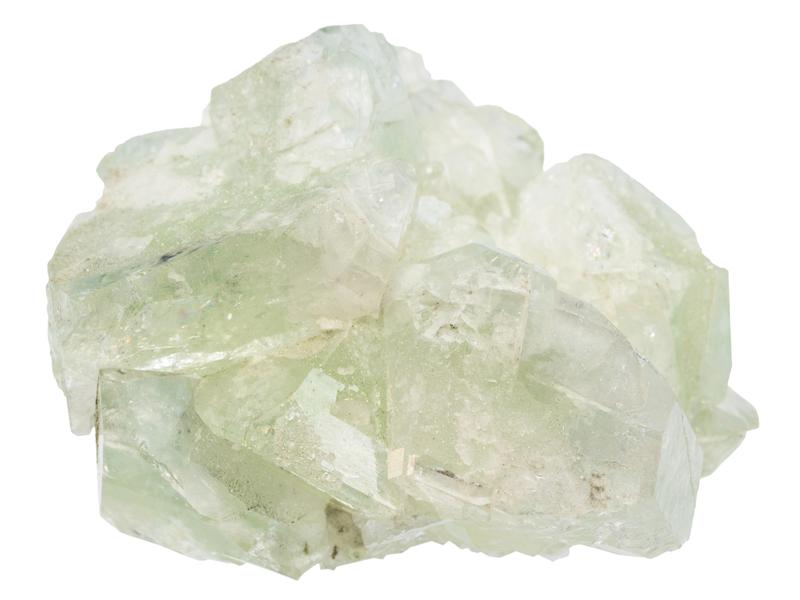
Datolite crystal
IntuitionEmotional BalanceBreaking Stagnation
Crystalis

Protocol

The Heart-Mind Bridge

Where calcium borosilicate meets the sternum, thinking and feeling share a line.

3 min

  1. 1

    Sit comfortably. Hold the datolite in both hands at the center of your chest, pressed against the sternum. If using a Michigan nodule, let the smooth porcelain-like surface rest flat against your chest. If using a crystalline specimen, cradle it gently. Feel the stone's weight -- datolite is light for a silicate, specific gravity around 2.9. It does not press. It rests. Three breaths: inhale for 4 counts, exhale for 6 counts. Each exhale softens the muscles behind the sternum where emotional bracing accumulates.

  2. 2

    With the stone still at your heart, bring to mind something you understand intellectually but have not yet felt. A truth you know in your head that has not reached your chest. Name it silently. Do not analyze it. Just hold the name alongside the stone at your heart. Breathe: 4 counts in, hold 3, exhale 7. Two cycles. The hold phase is where the transfer happens -- the pause between intake and release mirrors the pause between knowing and feeling. The stone at the heart is the bridge support. Your breath is the traffic crossing it.

  3. 3

    Move the stone from your chest to your forehead, between the eyebrows. Hold it there with one hand. Now bring to mind something you feel deeply but cannot explain or articulate. A felt sense without a framework. Hold that feeling alongside the stone at the perceptual center. Breathe naturally. Let the third eye do what it does: organize, pattern-match, find structure. You are not forcing an explanation. You are presenting the feeling to the part of you that builds frames, and seeing what it offers. Thirty seconds. Whatever arrives, arrives. What does not is not ready.

  4. 4

    Return the stone to your heart. Both hands. Press gently. You have loaded the heart with an intellectual truth and the mind with an emotional truth. Both now carry something that was foreign to them. Say silently or aloud: What I know and what I feel are parts of the same understanding. Remove the stone. Place it somewhere visible -- the Michigan nodule on a shelf, the crystalline specimen in a display. Each time you see it, let it remind you that the bridge between heart and mind is not a leap. It is a mineral. It exists. You just have to cross it.

tap to flip for protocol

Some truths travel as weight rather than spectacle. You carry them in the pocket, in the jaw, in a small persistent certainty that stays quiet until someone bothers to open it properly.

Datolite belongs to basalt cavities and often appears modest externally, yet reveals complex internal patterning and beauty once cut. A dense boron-bearing body, compact and less interested in charm than in staying intact.

There is a kind of self-knowledge that behaves exactly like that.

What Your Body Knows

Nervous system states

sympathetic

The Split Knowing

Your heart says one thing and your head says another and neither is willing to yield. Your chest feels pulled in two directions. You understand the situation intellectually but the understanding does not touch your emotions. Or you feel deeply but cannot articulate why. This is a sympathetic-dorsal split between the heart and crown; two systems of knowing operating in isolation.

dorsal vagal

The Frozen Bridge

You cannot feel and you cannot think. The connection between your heart and your analytical mind has gone dark. Your chest is numb and your head is foggy. Nothing moves between the two. This is dorsal vagal shutdown across the heart-crown axis; both centers offline, the bridge between them abandoned.

ventral vagal

The Integrated Knowing

Your heart and mind are saying the same thing in different languages and you understand both. Your chest is warm and your thoughts are clear. What you feel informs what you think. What you think enriches what you feel. There is no conflict between the two. This is ventral vagal integration of emotional and intellectual intelligence; understanding that has both depth and structure.

Nervous system mapping based on polyvagal theory (Porges, 2011).

Mineralogy

Mineral specs

Chemical Formula

CaBSiO4(OH)

Crystal System

Monoclinic

Mohs Hardness

5

Specific Gravity

2.90-3.00

Luster

Vitreous to greasy

Color

White-Green

cabMonoclinic · Datolite

Crystal system diagram represents the general monoclinic classification. Diagram created by Crystalis for educational reference.

Traditional Knowledge

Traditions across cultures

Described 1806 by Jens Esmark; named from Greek dato meaning to divide; Lake Superior copper district nodules with copper inclusions collected since 1840s

American & European Mineralogy

c. 1806-1850s

Dana's Mineralogical Description

American mineralogist James Dwight Dana catalogued datolite in his System of Mineralogy, establishing it as a recognized calcium borosilicate species. The mineral had been described earlier by Jens Esmark in 1806 from Norwegian specimens, with the name derived from the Greek dateisthai (to divide), referencing its granular fracture habit. Dana's systematic classification placed datolite within the broader framework of borosilicate mineralogy that was being developed during the 19th century.

Michigan Mining Heritage

c. 1850s-present

Michigan Copper Country Nodule Tradition

The copper mining districts of the Keweenaw Peninsula in Michigan's Upper Peninsula produced unique datolite nodules as byproducts of native copper extraction. Beginning in the mid-19th century, miners encountered porcelain-like datolite nodules in the basalt vesicles (gas cavities) of the Keweenaw lavas. These nodules, with their distinctive pink, green, and orange patterns, became prized regional collectibles. As copper mining declined in the 20th century, datolite nodules became a significant part of Michigan's mineral collecting heritage.

Russian Mineralogy

c. 1970s-present

Dal'negorsk Crystal Specimens

The mines of Dal'negorsk (formerly Tetyukhe) in Primorsky Krai, Russia, became the world's premier source of crystalline datolite specimens during the Soviet and post-Soviet periods. These far-eastern Russian deposits produced large, transparent green-white crystals with exceptional luster that set the standard for the species in mineral collections worldwide. Dal'negorsk datolite specimens are now considered classic examples of the species.

Contemporary Crystal Practice

c. 2000s-present

Heart-Crown Bridge Practice

Crystal practitioners prescribed datolite for work at the intersection of emotional and intellectual intelligence. The mineral's dual chakra mapping (heart and crown) and its occurrence in both emotional-green crystalline form and intellectual-precise porcelain nodule form provided a natural teaching tool for integration work. Practitioners used crystalline datolite for heart-first approaches and Michigan nodules for mind-first approaches to the same bridge.

When This Stone Finds You

What it says when it arrives

You need a compact truth that can survive being carried. Datolite forms dense boron-bearing nodules and crystals in basalt cavities, often plain until cut. Substance is not always obvious from the rind.

Somatic protocol

The Heart-Mind Bridge

Where calcium borosilicate meets the sternum, thinking and feeling share a line.

3 min protocol

  1. 1

    Sit comfortably. Hold the datolite in both hands at the center of your chest, pressed against the sternum. If using a Michigan nodule, let the smooth porcelain-like surface rest flat against your chest. If using a crystalline specimen, cradle it gently. Feel the stone's weight -- datolite is light for a silicate, specific gravity around 2.9. It does not press. It rests. Three breaths: inhale for 4 counts, exhale for 6 counts. Each exhale softens the muscles behind the sternum where emotional bracing accumulates.

  2. 2

    With the stone still at your heart, bring to mind something you understand intellectually but have not yet felt. A truth you know in your head that has not reached your chest. Name it silently. Do not analyze it. Just hold the name alongside the stone at your heart. Breathe: 4 counts in, hold 3, exhale 7. Two cycles. The hold phase is where the transfer happens -- the pause between intake and release mirrors the pause between knowing and feeling. The stone at the heart is the bridge support. Your breath is the traffic crossing it.

  3. 3

    Move the stone from your chest to your forehead, between the eyebrows. Hold it there with one hand. Now bring to mind something you feel deeply but cannot explain or articulate. A felt sense without a framework. Hold that feeling alongside the stone at the perceptual center. Breathe naturally. Let the third eye do what it does: organize, pattern-match, find structure. You are not forcing an explanation. You are presenting the feeling to the part of you that builds frames, and seeing what it offers. Thirty seconds. Whatever arrives, arrives. What does not is not ready.

  4. 4

    Return the stone to your heart. Both hands. Press gently. You have loaded the heart with an intellectual truth and the mind with an emotional truth. Both now carry something that was foreign to them. Say silently or aloud: What I know and what I feel are parts of the same understanding. Remove the stone. Place it somewhere visible -- the Michigan nodule on a shelf, the crystalline specimen in a display. Each time you see it, let it remind you that the bridge between heart and mind is not a leap. It is a mineral. It exists. You just have to cross it.

The #1 Question

Can datolite go in water?

Brief water contact is acceptable. Datolite is Mohs 5-5.5 with borosilicate chemistry that is reasonably stable under normal conditions. However, prolonged soaking is not recommended, particularly for the porous Michigan nodules that can absorb water. Rinse quickly and dry thoroughly.

Care and Maintenance

How to care for Datolite

Running Water Brief rinse under cool running water. Pat dry immediately. Safe for stones with adequate hardness.

30-60 seconds Yes . with conditions The Full Answer Datolite is generally water-safe for brief cleansing. Its 5-5.

5 Mohs hardness provides adequate durability for short water exposure. Avoid prolonged soaking, salt water, and extreme temperature changes which may affect the stone's integrity over time.

In Practice

How Datolite is used

You are staring at a problem that has no obvious solution and your thinking has gone circular. Datolite is calcium borosilicate hydroxide, Mohs 5, monoclinic. The Michigan nodules contain copper inclusions that create unexpected color patterns when sliced open.

The surprise is geological. Solutions to circular problems often arrive the same way: not from the direction you were looking. Hold a datolite nodule during problem-solving sessions.

The weight is modest. The boron content is unusual for a silicate. Unusual composition, unusual solutions.

Verification

Authenticity

Datolite: colorless to pale green or yellow botryoidal masses or prismatic crystals. Mohs 5-5. 5.

Specific gravity 2. 90-3. 00.

Vitreous to greasy luster. The Lake Superior copper district produces nodular datolite with distinctive porcelain-like appearance. Contains boron.

Not commonly faked due to limited commercial value.

Temperature

Natural Datolite should usually feel cooler than plastic or resin on first touch and warm more slowly in the hand.

Scratch logic

Use 5 on the Mohs scale as the check, not internet myths. A real specimen should behave in line with the hardness listed above.

Surface and luster

Look for a vitreous to greasy surface quality rather than a painted or plastic shine.

Weight and density

The listed specific gravity is 2.90-3.00. If a specimen feels unusually light for its size, it may deserve a second look.

Datolite benefits

What people ask most often

What does datolite look like?

Crystalline datolite forms short prismatic or wedge-shaped crystals that are typically pale green to white with a vitreous luster. Michigan datolite nodules are dense, opaque, and show intricate patterns of pink, green, white, and orange -- they resemble polished porcelain more than typical minerals. The two forms look nothing alike despite being the same species.

Geographic Origins

Where Datolite forms in the world

Datolite is calcium borosilicate hydroxide, named in 1806 by Jens Esmark from Greek 'datomai' meaning to divide . referring to the granular texture of massive varieties. It forms in hydrothermal veins associated with copper and iron deposits, and in the vesicles of basaltic rocks. The finest specimens come from the Keweenaw Peninsula of Michigan, where it forms beautiful pale green crystals in copper mines. Its boron content makes it of interest to mineralogists studying borate mineralogy.

Mineralogy: Chemical formula Ca(BSiO₄)(OH). Crystal system: Monoclinic. Mohs hardness: 5-5.5. Specific gravity: 2.9-3.0. Luster: Vitreous to resinous.

FAQ

Frequently asked

What is datolite?

Datolite is a calcium borosilicate hydroxide mineral (CaB(SiO4)(OH)) that forms green to white crystals and, in Michigan's copper country, distinctive porcelain-like nodules with patterns. Its name comes from the Greek for to divide, referencing its granular fracture. In crystal practice, it is mapped to the heart and crown chakras for work on integrating emotional and intellectual knowing.

Is Michigan datolite different from crystalline datolite?

Yes, in form though not in chemistry. Michigan datolite occurs as dense, porcelain-like nodules with patterned surfaces in pink, white, green, and orange. Crystalline datolite from other localities forms transparent to translucent green-white prismatic crystals. Both are the same mineral species, but the Michigan nodules are unique in appearance and highly collectible.

Can datolite go in water?

Brief water contact is acceptable. Datolite is Mohs 5-5.5 with borosilicate chemistry that is reasonably stable under normal conditions. However, prolonged soaking is not recommended, particularly for the porous Michigan nodules that can absorb water. Rinse quickly and dry thoroughly.

What chakra is datolite?

Datolite is mapped to the heart and crown chakras. The green crystalline variety aligns with heart-centered awareness, while the white and translucent forms connect to crown-level clarity. Practitioners describe it as a bridge stone that helps you understand what you feel and feel what you understand.

How hard is datolite?

Datolite is Mohs 5 to 5.5, comparable to apatite. This moderate hardness means it requires careful handling. It can scratch with quartz or harder minerals and is not ideal for rings or high-contact jewelry. Cabochons and display specimens are the typical forms.

Where does datolite come from?

The most famous locality is Michigan's Keweenaw Peninsula copper country, where unique porcelain-like nodules form in basalt vesicles associated with native copper deposits. Crystalline datolite specimens come from Dal'negorsk in Russia, various European localities, and New Jersey. The Michigan material is distinct and unique to that region.

What does datolite look like?

Crystalline datolite forms short prismatic or wedge-shaped crystals that are typically pale green to white with a vitreous luster. Michigan datolite nodules are dense, opaque, and show intricate patterns of pink, green, white, and orange -- they resemble polished porcelain more than typical minerals. The two forms look nothing alike despite being the same species.

Is datolite rare?

Crystalline datolite is not extremely rare but quality specimens are uncommon. Michigan datolite nodules, however, are restricted to the copper country deposits and are finite in supply. As active mining in the region has declined, good Michigan datolite has become increasingly scarce and collectible.

References

Sources and citations

  1. Foit, F.F.; Phillips, M.W.; Gibbs, G.V. (1973). A refinement of the crystal structure of datolite, CaBSiO4(OH). American Mineralogist. [SCI]

  2. Grew, E.S.; Anovitz, L.M. (1996). Boron: Mineralogy, Petrology and Geochemistry. Reviews in Mineralogy. [SCI]

    DOI: 10.1515/9781501509223

  3. Palache, C.; Berman, H.; Frondel, C. (1951). Dana's System of Mineralogy, Vol. II (7th ed.). [SCI]

Closing Notes

Datolite

Calcium borosilicate hydroxide, monoclinic, Mohs 5. Datolite crystallizes in basalt cavities where boron-bearing fluids meet calcium-rich rock. The nodular specimens from Michigan's Upper Peninsula contain copper inclusions that turn them pink and green.

Each nodule is a record of a specific hydrothermal event in a specific basalt flow.

Bring it into practice

What to do with Datolite next

Move from reference to ritual. Search current inventory for Datolite, build a custom bracelet, or let Sacred Match choose the right supporting stones for you.

Community notes

Threads under Datolite

Open all chats

Shared field notes tied to Datolite appear here, including notes saved from practice.

No shared notes under Datolite yet.

When members save a public field note for this stone, it will appear here.

The archive

Related crystals

Read the Full Crystal Guide

Continue through stones that share intention, chakra focus, or tonal family with Datolite.