Crystal Encyclopedia
40+YEARS

Bertrandite

Be4Si2O7(OH)2 · Mohs 6 · Orthorhombic · Heart Chakra

The stone of bertrandite: meaning, mineralogy, and somatic practice.

DisciplineClarity & FocusBreaking StagnationMind-Body Connection

This page documents traditional and cultural uses of bertrandite alongside emerging research on tactile grounding objects. Crystalis does not claim that bertrandite treats, cures, or prevents any medical condition. For mental health concerns, consult a qualified professional.

Crystalis Editorial · 40+ Years · Herndon, VA · 2 peer-reviewed sources

Origins: USA, Brazil, Mexico

Crystalis

Materia Medica

Bertrandite

The Invisible Framework

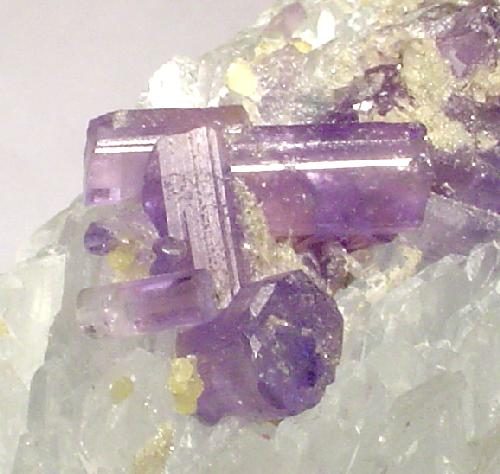
Bertrandite crystal
DisciplineClarity & FocusBreaking Stagnation
Crystalis

Protocol

The Clear Architecture

The Clear Architecture Protocol

3 min

  1. 1

    Sit upright at a desk or table. Place the bertrandite specimen in front of you at eye level, propped against a book or stand so you can see its tabular crystal form. Do not hold it -- bertrandite contains beryllium and works best as a visual focus stone. Rest both hands flat on the table surface. Look at the crystal's geometry: the flat, plate-like form, the sharp edges, the structural precision of the orthorhombic system. Breathe: 4 counts in through the nose, hold gently for 2, 4 counts out through the nose. Nasal only. Three cycles. You are matching your breath to the crystal's geometry -- equal, structured, no excess.

  2. 2

    Soften your gaze so the crystal is in your field of vision but you are not straining to see detail. Let the shape occupy your awareness the way a building occupies a skyline -- present, structural, not demanding. As you breathe, notice what your mind does with structure. Does it resist organization? Does it cling to it? Does it feel relieved? Your response is diagnostic. The crystal is not doing anything to you. It is showing you what architecture looks like, and your nervous system is revealing how it feels about order.

  3. 3

    Close your eyes. Keep the image of the crystal's geometry in your mind. Visualize the tabular form -- flat, precise, every angle deliberate. Now overlay that structure onto your own thinking. Imagine your thoughts organizing into clean planes, each one distinct, each one in its place. This is not rigidity. This is the difference between a pile of lumber and a built room. Same material, different architecture. Breathe naturally. Let the internal image hold for thirty seconds without forcing it. If it dissolves, let it dissolve. The practice is in the attempt, not the maintenance.

  4. 4

    Open your eyes. Look at the crystal one final time. Notice something about it you did not see before -- a surface detail, a reflection, an angle. Your perceptual field has reorganized slightly in the past two minutes. That shift is the protocol's residue. Stand up. Leave the bertrandite where it is. As you move through your next task, notice whether your thinking feels slightly more scaffolded, slightly more organized at the structural level. The stone stays on the desk. The architecture goes with you.

tap to flip for protocol

Some strains are invisible until the frame starts wavering. From the outside, the life may still look intact. Inside it, something has begun asking for reinforcement.

Bertrandite forms as a beryllium sorosilicate hydroxide, often in thin tabular crystals or aggregates that look more provisional than permanent. It can appear where beryllium-rich systems have already undergone change, the residue of a structure that still knows how to hold. There is a kind of strength that does not read as force. Bertrandite stays close to that register.

What Your Body Knows

Nervous system states

sympathetic

The Grid Collapse

Your thinking feels disorganized at a structural level. It is not that your thoughts are racing; they are falling. You reach for a framework and it dissolves. Sequences refuse to hold their order. Your crown area feels hollow, as if the scaffolding behind your skull has been removed. This is dorsal vagal withdrawal from the organizational layer of cognition; your system has stopped maintaining the architecture of thought.

dorsal vagal

The Rigid Lattice

Your thinking is organized but inflexible. Every thought has a place and nothing can move. You know exactly what you think but cannot consider an alternative. Your jaw is set. Your posture is locked. This is sympathetic activation crystallized into mental rigidity; your system has confused structure with control.

ventral vagal

The Clear Scaffold

Your thoughts organize themselves without effort. You can perceive the structure underneath an idea; not just the content but how it was built. Your crown feels open but not empty. Your mind is quiet and precise. This is ventral vagal clarity at the architectural level of cognition; your system is building and perceiving frameworks simultaneously.

Nervous system mapping based on polyvagal theory (Porges, 2011).

The Earth Made This

Formation: How Bertrandite Becomes Bertrandite

Bertrandite is easy to overlook and economically enormous. A beryllium sorosilicate hydroxide that forms in granite pegmatites as a secondary mineral after beryl, its crystals are typically small, tabular, and twinned in ways that make them visually unremarkable.

That changes at Spor Mountain in Utah, where bertrandite occurs in volcanic tuff rather than the usual pegmatite setting and serves as the primary beryllium ore for the United States. Nearly 42% beryllium oxide by composition, but crystals too small for gem use. Named after French mineralogist Émile Bertrand (1844–1909). The mineral that matters more than it shows.

Material facts

What the stone is made of

Mineralogy: Beryllium sorosilicate hydroxide. Chemical formula: Be₄Si₂O₇(OH)₂. Crystal system: orthorhombic. Mohs hardness: 6-7. Specific gravity: 2.59-2.60. Color: colorless, white, or pale yellow. Luster: vitreous to pearly. Habit: thin tabular crystals, often twinned in heart-shaped or pseudo-hexagonal aggregates. Perfect cleavage on {001}. Contains beryllium as an essential structural element. Named for Emile Bertrand, French mineralogist (1844-1909). The sorosilicate structure contains paired Si₂O₇ groups linked by beryllium in tetrahedral coordination.

Mineralogy

Mineral specs

Chemical Formula

Be4Si2O7(OH)2

Crystal System

Orthorhombic

Mohs Hardness

6

Specific Gravity

2.59-2.60

Luster

Vitreous to pearly

Color

White

Traditional Knowledge

Traditions across cultures

Utah beryllium mining community (20th; 21st century): The Spor Mountain district in Juab County, Utah, has been the world's primary beryllium source since Brush Engineered Materials (now Materion Corporation) began mining bertrandite ore in 1969. The mining community developed around a mineral so visually plain that early prospectors walked over it for decades. Local mining culture includes the saying "don't judge a rock by its color"; a direct reference to bertrandite's unassuming appearance masking extraordinary industrial value. The open-pit mine processes millions of tons of tuff annually.

French mineralogical tradition (19th century): Bertrandite was first described in 1883 from specimens found at Barbin, Nantes, France, and named in honor of Emile Bertrand, who was among the first to apply polarized light microscopy systematically to mineral identification. This naming connects bertrandite to the tradition of seeing beyond the surface; Bertrand's microscopic technique revealed internal structure invisible to the naked eye, just as bertrandite's significance is invisible without geological knowledge (Bertrand, E., various publications in Bulletin de la Societe Mineralogique de France, 1880s).

Nuclear era and Cold War (1940s; present): Beryllium, derived primarily from bertrandite, became a strategic material during the Manhattan Project and Cold War. Beryllium's unique properties; extreme lightness, high melting point, neutron transparency; made it essential for nuclear weapons casings, reactor moderators, and satellite structural components. The Spor Mountain deposit was developed partly in response to Cold War demand for domestic beryllium supply. Bertrandite thus carries the complex legacy of being the quiet source material for both destructive and constructive applications of nuclear science.

Medical imaging technology: Beryllium from bertrandite is used to make the X-ray windows through which medical imaging systems operate. Beryllium is uniquely transparent to X-rays while being mechanically strong enough to maintain vacuum seals. Every hospital X-ray, CT scan, and mammogram passes through beryllium derived from this unassuming mineral. Bertrandite is thus quietly present in the most intimate moments of human healthcare; the moment of diagnosis, the image that reveals what is hidden inside the body.

French Mineralogy

1883

Bertrand's Mineralogical Description

French mineralogist Emile Bertrand (1844-1909) first studied the tabular crystals that would bear his name from specimens collected in European pegmatite localities. The mineral was formally described in the scientific literature in 1883. Bertrand was known primarily for his work in optical mineralogy and the development of microscopy techniques for identifying minerals by their optical properties, making the naming of a beryllium mineral after him a recognition of his broader contributions to the field.

American Mining & Aerospace Industry

1960s-present

Spor Mountain Beryllium Discovery

In the 1960s geologists identified the Spor Mountain deposit in Juab County, Utah, as the world's largest known concentration of bertrandite in volcanic tuff. Brush Engineered Materials (later Materion Corporation) developed the deposit as the primary source of beryllium for the United States, producing the lightweight metal essential for aerospace, nuclear, and defense applications. Spor Mountain has supplied the majority of the world's beryllium since the 1970s, making bertrandite the most industrially significant beryllium mineral.

Strategic Materials History

c. 1950s-present

Beryllium in Nuclear and Space Technology

Bertrandite-derived beryllium became a critical strategic material during the Cold War and Space Race. Beryllium's combination of low density, high stiffness, and neutron transparency made it essential for nuclear reactor components, satellite structures, and the James Webb Space Telescope's mirror segments. The mineral that most crystal practitioners have never encountered has shaped the infrastructure of space exploration and nuclear technology for over sixty years.

Contemporary Crystal Practice

c. 2000s-present

Crown Chakra Structural Clarity Practice

A small number of contemporary crystal practitioners who work with rare mineral specimens have prescribed bertrandite for crown chakra work focused on the architecture of thought rather than its content. The mineral's tabular crystal habit and precise orthorhombic geometry inform a practice centered on organizing mental frameworks. Due to beryllium toxicity concerns, all practice is visual or proximity-based, with the stone displayed rather than held.

When This Stone Finds You

What it says when it arrives

You feel too soft for what is in front of you. Bertrandite often appears as a pale skeletal residue in beryllium-rich systems, delicate-looking and still structurally exact. Not all bracing is visible from the outside.

Somatic protocol

The Clear Architecture

The Clear Architecture Protocol

3 min protocol

  1. 1

    Sit upright at a desk or table. Place the bertrandite specimen in front of you at eye level, propped against a book or stand so you can see its tabular crystal form. Do not hold it -- bertrandite contains beryllium and works best as a visual focus stone. Rest both hands flat on the table surface. Look at the crystal's geometry: the flat, plate-like form, the sharp edges, the structural precision of the orthorhombic system. Breathe: 4 counts in through the nose, hold gently for 2, 4 counts out through the nose. Nasal only. Three cycles. You are matching your breath to the crystal's geometry -- equal, structured, no excess.

    1 min
  2. 2

    Soften your gaze so the crystal is in your field of vision but you are not straining to see detail. Let the shape occupy your awareness the way a building occupies a skyline -- present, structural, not demanding. As you breathe, notice what your mind does with structure. Does it resist organization? Does it cling to it? Does it feel relieved? Your response is diagnostic. The crystal is not doing anything to you. It is showing you what architecture looks like, and your nervous system is revealing how it feels about order.

    1 min
  3. 3

    Close your eyes. Keep the image of the crystal's geometry in your mind. Visualize the tabular form -- flat, precise, every angle deliberate. Now overlay that structure onto your own thinking. Imagine your thoughts organizing into clean planes, each one distinct, each one in its place. This is not rigidity. This is the difference between a pile of lumber and a built room. Same material, different architecture. Breathe naturally. Let the internal image hold for thirty seconds without forcing it. If it dissolves, let it dissolve. The practice is in the attempt, not the maintenance.

    1 min
  4. 4

    Open your eyes. Look at the crystal one final time. Notice something about it you did not see before -- a surface detail, a reflection, an angle. Your perceptual field has reorganized slightly in the past two minutes. That shift is the protocol's residue. Stand up. Leave the bertrandite where it is. As you move through your next task, notice whether your thinking feels slightly more scaffolded, slightly more organized at the structural level. The stone stays on the desk. The architecture goes with you.

    1 min

The #1 Question

Can bertrandite go in water?

Water contact should be avoided as a precaution. While the silicate structure is relatively stable, the beryllium content means any dissolution products would be toxic. Use dry cleansing methods only. This is a mineral best kept as a display specimen with minimal physical interaction.

Care and Maintenance

How to care for Bertrandite

Bertrandite requires caution. Contains beryllium (Be4Si2O7(OH)2), which is toxic in dust form. Mohs 6-7, durable as a crystal, but never cut, grind, or break without respiratory protection.

Brief water rinse is acceptable for whole specimens. Avoid creating dust. Recommended cleansing: moonlight (overnight), selenite plate (4-6 hours).

Store in a closed container. Handle whole crystals normally; the danger is in airborne beryllium particles, not the intact mineral.

In Practice

How Bertrandite is used

Bertrandite is not a meditation stone. It is a structure stone. Place it on your desk during planning work.

The beryllium sorosilicate forms invisible frameworks in pegmatites, and the practice mirrors this: building the scaffold that nobody sees but everything depends on. When you feel too soft for what is in front of you, bertrandite reminds you that framework is not aggression. It is architecture.

Verification

Authenticity

Bertrandite is rarely encountered in the retail market. Colorless to pale yellow tabular crystals. Specific gravity 2.

59-2. 60. Orthorhombic.

Vitreous to pearly luster. Mohs 6-7. Contains beryllium; mainly a collector specimen.

If offered as a common practice stone, it is likely misidentified.

Temperature

Natural Bertrandite should usually feel cooler than plastic or resin on first touch and warm more slowly in the hand.

Scratch logic

Use 6 on the Mohs scale as the check, not internet myths. A real specimen should behave in line with the hardness listed above.

Surface and luster

Look for a vitreous to pearly surface quality rather than a painted or plastic shine.

Weight and density

The listed specific gravity is 2.59-2.60. If a specimen feels unusually light for its size, it may deserve a second look.

Bertrandite benefits

What people ask most often

What is bertrandite used for in crystal practice?

Bertrandite is placed at the crown during work focused on precision of thought and structural clarity. Its beryllium sorosilicate chemistry produces tabular crystals with a distinctive geometric sharpness that practitioners associate with organized perception. This is a rare collector mineral, not a common practice stone. Handle with care and wash hands after contact due to beryllium content.

Geographic Origins

Where Bertrandite forms in the world

Bertrandite forms in miarolitic cavities within granitic pegmatites where beryllium concentrates in late-stage fluids. The primary commercial source is the Spor Mountain district in Utah, where volcanic tuff hosts disseminated bertrandite that Materion Corporation mines as the main U. S.

beryllium ore. Collector specimens come from pegmatites in Minas Gerais, Brazil, and the Strzegom-Sobotka massif in Poland, where prismatic crystals reach centimeter scale in quartz-lined vugs.

FAQ

Frequently asked

What is bertrandite used for in crystal practice?

Bertrandite is placed at the crown during work focused on precision of thought and structural clarity. Its beryllium sorosilicate chemistry produces tabular crystals with a distinctive geometric sharpness that practitioners associate with organized perception. This is a rare collector mineral, not a common practice stone. Handle with care and wash hands after contact due to beryllium content.

Is bertrandite safe to handle?

Bertrandite contains beryllium, which is toxic in dust or powder form. Intact crystals are safe for brief dry handling by adults who wash their hands afterward. Never grind, sand, or break bertrandite specimens. Do not inhale dust from them. Keep away from children. Use it as a display and meditation mineral rather than a body-contact stone.

Where does bertrandite come from?

The most commercially significant deposit is at Spor Mountain in Juab County, Utah, which is the world's primary source of beryllium ore. Collector-quality crystal specimens come from localities in Europe, Brazil, and Maine. The mineral was named after French mineralogist Emile Bertrand, who first studied it in the 19th century.

How hard is bertrandite?

Bertrandite ranges from Mohs 6 to 7, placing it in the same hardness range as feldspar to quartz. This makes the crystals reasonably durable for display purposes, though the tabular habit means thin crystals can be fragile at edges. Store carefully despite the decent hardness.

What chakra is bertrandite?

Bertrandite is mapped to the crown chakra. Its colorless to white appearance and beryllium-based chemistry align with the felt sense of clear, structured awareness. Practitioners who work with it describe the experience as architectural -- a sense of perceiving the framework underneath thought rather than the thoughts themselves.

Is bertrandite rare?

As a mineral species, bertrandite is not extremely rare -- it is industrially mined for beryllium in Utah. However, well-formed crystal specimens suitable for collectors are uncommon. Clear tabular crystals with sharp faces are sought after by mineral collectors and command significant prices.

What is the crystal system of bertrandite?

Bertrandite crystallizes in the orthorhombic system, forming tabular crystals that are typically flat and plate-like. The crystals can also occur as heart-shaped twins, which are prized by collectors. The sorosilicate structure means it contains paired silicon-oxygen tetrahedra sharing one oxygen atom.

Can bertrandite go in water?

Water contact should be avoided as a precaution. While the silicate structure is relatively stable, the beryllium content means any dissolution products would be toxic. Use dry cleansing methods only. This is a mineral best kept as a display specimen with minimal physical interaction.

References

Sources and citations

  1. Gorelova, L. et al. (2023). Crystal chemistry of beryllium silicate minerals. Journal of the American Ceramic Society. [SCI]

    DOI: 10.1111/jace.18923

  2. Brooks, K. (2012). Mineralogy of the Ilimaussaq alkaline intrusion. Geological Journal. [SCI]

    DOI: 10.1111/j.1365-2451.2012.00815.x

Closing Notes

Bertrandite

Beryllium silicate hydroxide, orthorhombic, Mohs 6. Bertrandite crystallizes in pegmatite cavities where beryllium concentrates in the last fluids of a cooling granite body. It is the primary ore of beryllium, the fourth element, lighter than aluminum and stronger than steel.

This is not a decorative crystal. It is an industrial mineral that happens to form beautiful specimens.

Bring it into practice

What to do with Bertrandite next

Move from reference to ritual. Search current inventory for Bertrandite, build a custom bracelet, or let Sacred Match choose the right supporting stones for you.

Community notes

Threads under Bertrandite

Open all chats

Shared field notes tied to Bertrandite appear here, including notes saved from practice.

No shared notes under Bertrandite yet.

When members save a public field note for this stone, it will appear here.

The archive

Related crystals

Read the Full Crystal Guide

Continue through stones that share intention, chakra focus, or tonal family with Bertrandite.