Crystal Encyclopedia
40+YEARS

Muscovite Mica

KAl₂(AlSi₃O₁₀)(F,OH)₂ · Mohs 2 · Monoclinic · Heart Chakra

The stone of muscovite mica: meaning, mineralogy, and somatic practice.

DisciplineMind-Body ConnectionSelf-AwarenessClarity & Focus

This page documents traditional and cultural uses of muscovite mica alongside emerging research on tactile grounding objects. Crystalis does not claim that muscovite mica treats, cures, or prevents any medical condition. For mental health concerns, consult a qualified professional.

Crystalis Editorial · 40+ Years · Herndon, VA · 4 peer-reviewed sources

Origins: Brazil, India, Russia

Crystalis

Materia Medica

Muscovite Mica

The Structured Insight

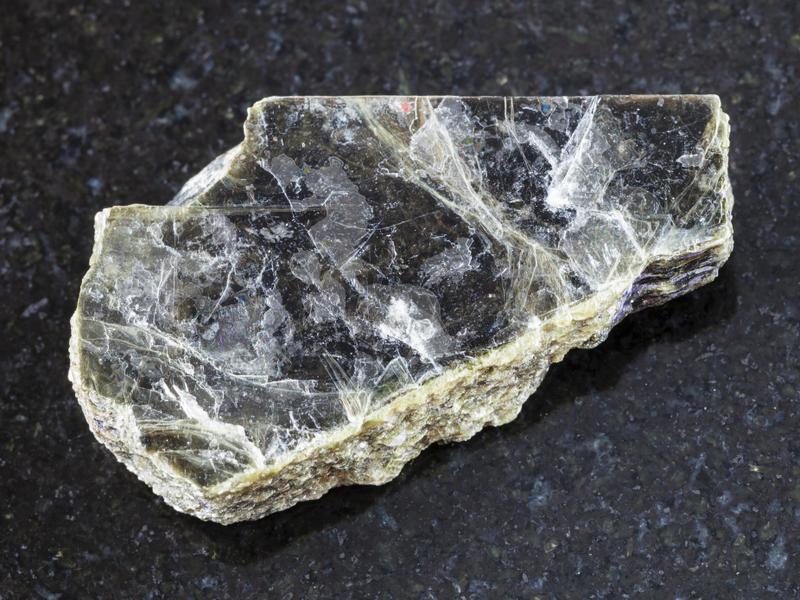
Muscovite Mica crystal
DisciplineMind-Body ConnectionSelf-Awareness
Crystalis

Protocol

The Layer Reading

Peel Back What You Already Know.

5 min

  1. 1

    Sit upright. Hold a book-form muscovite mica specimen in both hands, thumbs on the flat cleavage surface. Feel the layered structure under your thumbs — the thin sheets stacked parallel. Rest your hands in your lap, stone face-up. The layered surface against your skin activates tactile receptors in the thumb pads, the densest touch-receptor zone in the body.

  2. 2

    Breathe: 4 counts in, hold for 4, 4 counts out, hold for 4. On each exhale, press your thumbs gently into the mica surface. On each inhale, release the pressure. The alternating press-and-release mirrors the stone's own structure — layers bonded and separated, bonded and separated. Your breath moves through the same rhythm the mineral crystallized in.

  3. 3

    On the fifth exhale, close your eyes. Keep your thumbs on the mica. Notice the reflective quality of the surface against your skin — smooth, almost slippery, with a faint warmth building from friction. In darkness, your tactile sense amplifies. The stone's surface becomes a mirror you feel rather than see. Let your attention rest on the sensation of contact between skin and mineral.

  4. 4

    After 5 minutes: turn the mica over and hold the rough matrix side against your palms. Feel the difference — rough versus smooth, layered versus massive. Notice whether your internal state has a similar duality: a polished surface you present and a rougher substrate underneath. The protocol does not ask you to peel anything away. It asks you to notice that layers exist.

tap to flip for protocol

Some people avoid boundaries because every model they have inherited looks rigid, punitive, or opaque. The psyche wants a clearer surface than that, something that can reflect and separate without becoming brick.

Muscovite offers a subtler membrane. Thin reflective sheets split away with natural ease, silvery or nearly transparent, flexible while still unmistakably separate. The boundary is real. The texture remains light.

Muscovite is useful when the self needs to see that limits can be visible without becoming brutal. A shimmering boundary still counts.

What Your Body Knows

Nervous system states

sympathetic

The Peeling Mirror

You keep looking at yourself and finding more layers. Each time you think you have reached a solid surface, another sheet lifts. Your chest feels transparent. Your thoughts feel exposed but not endangered. There is a strange relief in discovering that you are not one thing; you are many thin, flexible layers held loosely together. Your breathing is shallow but steady, like someone reading a letter they wrote years ago.

dorsal vagal

The Insulation Wrap

Your body has built a barrier between your inner charge and the outside world. You feel present but unreachable; insulated from stimulation. Your skin registers sensation but your core does not react. This is not numbness; this is selective filtering. Your nervous system has decided what gets through and what does not. Your jaw is relaxed. Your hands are still. You are in the room but not available to it.

ventral vagal

The Flexible Sheet

You are bending without breaking. Your spine feels elastic. Your emotional responses are measured; you receive pressure and spring back rather than cracking or collapsing. There is a quality of translucence to your mood: you can see through your own reactions to what is underneath them. Your shoulders are down. Your neck is long. You are not defending anything.

Nervous system mapping based on polyvagal theory (Porges, 2011).

The Earth Made This

Formation: How Muscovite Mica Becomes Muscovite Mica

Muscovite is the most common mica mineral, a potassium aluminum phyllosilicate that forms in a wide range of igneous and metamorphic rocks. The name derives from "Muscovy glass," a historical term for the large transparent sheets that were exported from Russia (Muscovy) for use as window panes. Muscovite's perfect basal cleavage allows it to be split into thin, transparent, flexible, elastic sheets.

The mineral is a major constituent of granites, pegmatites, and mica schists, forming at temperatures from 300°C to over 700°C. Muscovite is an important industrial mineral: ground muscovite is used in paint, plastics, and cosmetics (providing shimmer), while sheet muscovite historically served as electrical insulation and heat-resistant windows.

Material facts

What the stone is made of

Mineralogy: Alternate trade name for muscovite. Chemical formula: KAl₂(AlSi₃O₁₀)(F,OH)₂. Crystal system: monoclinic. Mohs hardness: 2-2.5. Specific gravity: 2.76-2.88. Color: silver-white to pale gray. Same mineral species as muscovite; "muscovite mica" is a redundant commercial designation (muscovite is by definition a mica). All physical, optical, and structural properties identical to muscovite. See also: muscovite.

Mineralogy

Mineral specs

Chemical Formula

KAl₂(AlSi₃O₁₀)(F,OH)₂

Crystal System

Monoclinic

Mohs Hardness

2

Specific Gravity

2.77 - 2.88

Luster

Vitreous to pearly

Color

Silver-White

cabMonoclinic · Muscovite Mica

Crystal system diagram represents the general monoclinic classification. Diagram created by Crystalis for educational reference.

Traditional Knowledge

Traditions across cultures

6,000+ years; used as window panes in medieval Russia (hence muscovy glass); described 1794 by Johann Friedrich Blumenbach; cave paintings used ground mica as pigment

Russian Craft

15th-17th Century CE

Muscovy Glass Windows

Russian craftsmen in the Muscovy region used large sheets of muscovite mica as window panes from the 15th through 17th centuries, before glass became widely affordable. The sheets were transparent enough to admit light and flexible enough to survive transport. The name Muscovy glass became so widespread in European trade that the mineral itself was eventually named muscovite by mineralogist James Dwight Dana in 1850.

Indian Industrial Mining

1890s-1960s CE

Indian Mica Mining Industry

Bihar and Jharkhand in India dominated global mica production from the late 19th century through the mid-20th century, supplying muscovite sheets for electrical insulation worldwide. Indian muscovite was essential to early electronics, capacitors, and vacuum tube manufacturing. The mining communities of Koderma and Giridih built entire economies around mica extraction and sheet splitting.

Ayurvedic Tradition

Medieval-ongoing

Ayurvedic Abhraka Bhasma

Ayurvedic practitioners in India have processed muscovite mica into abhraka bhasma (mica ash) through repeated calcination and grinding for over a thousand years. Classical texts including the Rasa Ratna Samuchaya describe abhraka as a rejuvenative preparation. The processing involves hundreds of heating-and-quenching cycles to reduce mica to a fine, bioavailable ash used in traditional formulations.

American Mineralogy

1850 CE

Dana's Formal Naming

American mineralogist James Dwight Dana formally assigned the name muscovite in his 1850 edition of A System of Mineralogy, standardizing the name from the earlier trade term Muscovy glass. Dana's nomenclature replaced dozens of regional names for the mineral and established muscovite as the universal scientific designation for potassium mica, cementing its place in the mineralogical canon.

When This Stone Finds You

What it says when it arrives

You need a softer way to make boundaries visible. Muscovite peels into clear to silvery sheets, flexible and reflective at once. A boundary can shimmer without becoming hard.

Somatic protocol

The Layer Reading

Peel Back What You Already Know.

5 min protocol

  1. 1

    Sit upright. Hold a book-form muscovite mica specimen in both hands, thumbs on the flat cleavage surface. Feel the layered structure under your thumbs — the thin sheets stacked parallel. Rest your hands in your lap, stone face-up. The layered surface against your skin activates tactile receptors in the thumb pads, the densest touch-receptor zone in the body.

    1 min
  2. 2

    Breathe: 4 counts in, hold for 4, 4 counts out, hold for 4. On each exhale, press your thumbs gently into the mica surface. On each inhale, release the pressure. The alternating press-and-release mirrors the stone's own structure — layers bonded and separated, bonded and separated. Your breath moves through the same rhythm the mineral crystallized in.

    1 min
  3. 3

    On the fifth exhale, close your eyes. Keep your thumbs on the mica. Notice the reflective quality of the surface against your skin — smooth, almost slippery, with a faint warmth building from friction. In darkness, your tactile sense amplifies. The stone's surface becomes a mirror you feel rather than see. Let your attention rest on the sensation of contact between skin and mineral.

    1 min
  4. 4

    After 5 minutes: turn the mica over and hold the rough matrix side against your palms. Feel the difference — rough versus smooth, layered versus massive. Notice whether your internal state has a similar duality: a polished surface you present and a rougher substrate underneath. The protocol does not ask you to peel anything away. It asks you to notice that layers exist.

    1 min

The #1 Question

Can muscovite mica go in water?

No. Muscovite mica scores only Mohs 2-2.5 and cleaves into paper-thin sheets that can delaminate in water. Brief rinsing is risky — even a short soak can separate layers permanently. Cleanse with sound, smoke, or selenite only. Never submerge, never make gem water with direct contact.

Care and Maintenance

How to care for Muscovite Mica

Can Muscovite Mica Go in Water? No. Avoid Water. Muscovite is a potassium aluminum silicate hydroxide (KAl2(AlSi3O10)(OH)2) with Mohs hardness of 2 to 2.5 on cleavage surfaces. The defining characteristic of mica is perfect basal cleavage: the mineral splits into thin, flexible sheets. Water penetrates between these sheets instantly, causing swelling, warping, and delamination. Even brief water contact is inadvisable for sheet-form specimens.

Salt water: never.

Gem elixirs: never.

Cleansing Methods Moonlight: Overnight on a flat surface. The only recommended method. Keep the specimen flat to prevent sheets from curling or separating.

Smoke: Brief pass through sage smoke, 15 to 30 seconds. Dry methods are essential for mica.

Selenite plate: Lay flat on selenite for 4 to 6 hours.

Storage and Handling Muscovite is extremely fragile. At Mohs 2 to 2.5, a fingernail scratches it. The sheets peel apart with minimal force. Store flat on padded surfaces. Never store in bags where the specimen can flex. Do not stack anything on top. Large muscovite books (thick crystal stacks) are more durable than single sheets but still require flat, protected storage. The pearlescent sheen on cleavage surfaces is delicate; handle by edges rather than rubbing the flat faces.

In Practice

How Muscovite Mica is used

You need a softer way to make boundaries visible. Muscovite peels into clear to silvery sheets, flexible enough to bend without breaking. Hold a book of muscovite and feel the layers.

Separate one. The cleavage is perfect, meaning the mineral was designed to come apart along these planes. For boundary work: the practice is in recognizing where the natural separation already exists.

Verification

Authenticity

Muscovite mica: peels into thin, transparent to silvery, flexible elastic sheets. Mohs 2-2. 5.

Specific gravity 2. 77-2. 88.

Vitreous to pearly luster on sheet surfaces. The elasticity test is diagnostic: genuine mica sheets spring back when bent. If sheets do not spring back (stay bent), it may be talc or chlorite, not muscovite.

Temperature

Natural Muscovite Mica should usually feel cooler than plastic or resin on first touch and warm more slowly in the hand.

Scratch logic

Use 2 on the Mohs scale as the check, not internet myths. A real specimen should behave in line with the hardness listed above.

Surface and luster

Look for a vitreous to pearly surface quality rather than a painted or plastic shine.

Weight and density

The listed specific gravity is 2.77 - 2.88. If a specimen feels unusually light for its size, it may deserve a second look.

Muscovite Mica benefits

What people ask most often

What is muscovite mica used for?

Industrially, muscovite is used as an electrical insulator in capacitors, furnace windows, and electronic components because it resists heat and does not conduct electricity. In crystal practice, the layered sheets are used as reflective surfaces during contemplation, and the stone's association with self-examination comes from its mirror-like cleavage surfaces.

Geographic Origins

Where Muscovite Mica forms in the world

Brazil's Minas Gerais produces large books of muscovite mica from pegmatites. India's Bihar and Rajasthan states have been major producers of sheet muscovite. Russia's Ural Mountains and Siberia produce muscovite from metamorphic and pegmatitic deposits.

"Muscovy glass" (the origin of the name) referred to large transparent sheets used as window panes in pre-glass Russia.

FAQ

Frequently asked

Can muscovite mica go in water?

No. Muscovite mica scores only Mohs 2-2.5 and cleaves into paper-thin sheets that can delaminate in water. Brief rinsing is risky — even a short soak can separate layers permanently. Cleanse with sound, smoke, or selenite only. Never submerge, never make gem water with direct contact.

What is muscovite mica?

Muscovite mica is a potassium aluminum silicate (KAl2(AlSi3O10)(F,OH)2) with perfect basal cleavage — it splits into thin, flexible, transparent sheets. The name comes from Muscovy glass, because medieval Russians used large mica sheets as window panes. It crystallizes in the monoclinic system and is an especially common mineral in the Earth's crust.

What chakra is muscovite mica?

Muscovite mica connects to the heart and third eye chakras. In the body, this maps to the corridor between the cardiac plexus and the prefrontal cortex — where emotional processing meets reflective awareness. The stone's layered structure mirrors the way insight arrives: not all at once, but sheet by sheet.

Why does muscovite mica split into sheets?

Perfect basal cleavage. Muscovite's crystal structure consists of aluminum-silicon-oxygen layers bonded tightly within each sheet, but connected between sheets by weak potassium bonds. These potassium bonds break easily along flat planes, producing the thin, flexible, transparent sheets that define mica. This property is not a defect — it is the mineral's defining structural feature.

What is muscovite mica used for?

Industrially, muscovite is used as an electrical insulator in capacitors, furnace windows, and electronic components because it resists heat and does not conduct electricity. In crystal practice, the layered sheets are used as reflective surfaces during contemplation, and the stone's association with self-examination comes from its mirror-like cleavage surfaces.

How can you tell if muscovite mica is real?

Four tests: (1) Cleavage: real muscovite peels into thin, flexible, transparent sheets. (2) Flexibility: sheets bend without breaking and spring back. (3) Lustre: fresh cleavage surfaces are vitreous to pearly. (4) Transparency: thin sheets are transparent. If a specimen labeled muscovite does not split into flexible, see-through sheets, it is misidentified.

Is muscovite mica safe to handle?

Yes, with care. Muscovite itself is non-toxic. However, thin sheets can have sharp edges that cut skin. Large book-form specimens can shed micro-flakes. Handle thick specimens or matrix pieces rather than peeling thin sheets. Wash hands after prolonged handling. Keep away from food surfaces.

What is the difference between muscovite and biotite mica?

Color and chemistry. Muscovite is silvery-white to pale gold because it contains aluminum and potassium. Biotite is dark brown to black because it contains iron and magnesium. Both share the same perfect basal cleavage, but biotite is slightly harder (2.5-3) and less elastic. Muscovite is the most common mica in granites; biotite dominates in darker igneous rocks.

References

Sources and citations

  1. Guggenheim, S. et al. (2002). Classification of micas. Reviews in Mineralogy and Geochemistry. [SCI]

    DOI: 10.2138/rmg.2002.46.00

  2. Brigatti, M.F. et al. (2013). Mica crystal chemistry and the influence of pressure, temperature, and solid solution on atomistic models. Reviews in Mineralogy and Geochemistry. [SCI]

    DOI: 10.2138/rmg.2002.46.01

  3. London, D. (2008). Pegmatites. Canadian Mineralogist Special Publication 10. [SCI]

    DOI: 10.3749/canmin.GSSP10

  4. Putnis, A. (2002). Mineral replacement reactions: from macroscopic observations to microscopic mechanisms. Mineralogical Magazine. [SCI]

    DOI: 10.1180/0026461026650056

Closing Notes

Muscovite Mica

Muscovy glass. The most common mica, named for the historical practice of using it as window panes in Russia. Potassium aluminum phyllosilicate that splits into transparent sheets thin enough to see through.

The science documents a mineral whose cleavage is its most useful property. The practice asks what clarity means when it comes from splitting, not from polishing.

Bring it into practice

What to do with Muscovite Mica next

Move from reference to ritual. Search current inventory for Muscovite Mica, build a custom bracelet, or let Sacred Match choose the right supporting stones for you.

Community notes

Threads under Muscovite Mica

Open all chats

Shared field notes tied to Muscovite Mica appear here, including notes saved from practice.

No shared notes under Muscovite Mica yet.

When members save a public field note for this stone, it will appear here.

The archive

Related crystals

Read the Full Crystal Guide

Continue through stones that share intention, chakra focus, or tonal family with Muscovite Mica.