Materia Medica
Blue Zircon
The Ancient Blue Clarity

This page documents traditional and cultural uses of blue zircon alongside emerging research on tactile grounding objects. Crystalis does not claim that blue zircon treats, cures, or prevents any medical condition. For mental health concerns, consult a qualified professional.
Origins: Cambodia, Sri Lanka, Myanmar
Materia Medica
The Ancient Blue Clarity

Protocol
The oldest mineral on Earth meets diamond-like fire — zircon demands your sharpest attention and returns it doubled
3 min
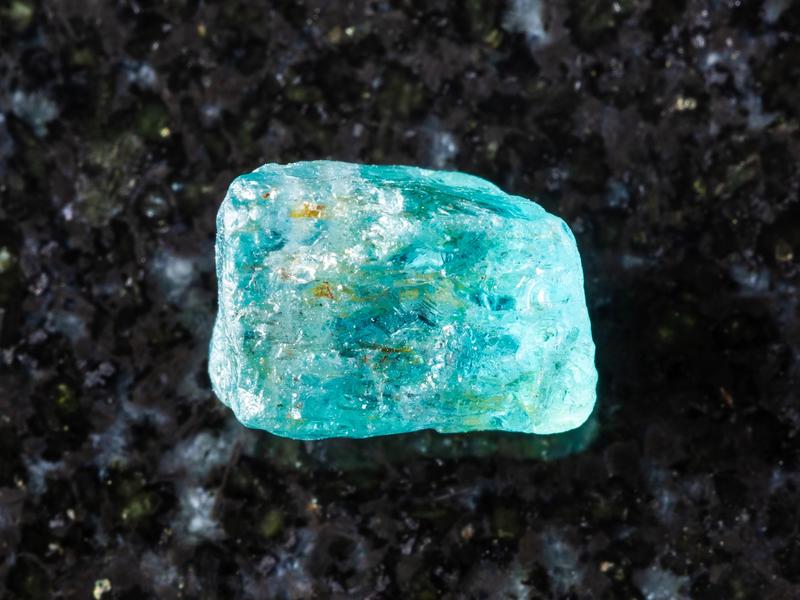
Hold the Blue Zircon between your thumb and index finger. Zircon crystals are among the oldest minerals ever found on Earth — some over 4 billion years old. This is not a young stone. Feel its weight relative to its size (zircon is notably dense). Let the disproportionate heaviness register. Something this small should not feel this substantial.
Bring the stone close to a light source. Zircon has adamantine luster — the same category as diamond. Watch how light enters and splits, creating fire and brilliance in a stone most people mistake for something common. Study the light for 30 seconds. Precision of attention, not duration, is what this stone asks.
Zircon crystallizes in the tetragonal system — a square base with a vertical stretch. Sit up straight. Feel the square of your sit bones as the base. Feel your spine as the vertical axis extending upward. Inhale into the square. Exhale up the axis. Four breaths, each sharper and more intentional than the last.
Place the Blue Zircon on your forehead between your eyebrows while lying down, or hold it there with one finger while seated. The adamantine luster now presses against your skin. Breathe normally for 60 seconds. Notice if your visual field behind closed eyes changes — becomes brighter, more granular, more defined. Do not force imagery. Just notice clarity.
Continue in the full protocol below.
tap to flip for protocol
Sedation gets mistaken for peace all the time. Some minds need the opposite: a cleaner, harder brilliance.
Blue zircon, often heat-treated into its vivid tone, still carries the density and optical punch zircon is known for. Age, refraction, brightness. It is one of those materials that looks composed while behaving intensely. A sharp light can be merciful too.
What Your Body Knows
sympathetic
When the sympathetic nervous system surges with urgency; the sense that there is not enough time, that danger is accelerating, that decisions must happen NOW; blue zircon introduces the longest possible timeframe. This crystal is 4.4 billion years old in its deepest form. The urgency of the present moment, real as it feels, occupies a vanishing fraction of the time this mineral has witnessed. In sympathetic activation, blue zircon does not dismiss your emergency. It contextualizes it. It says: you have more time than your nervous system believes you do. The fire of the moment is real. But you are holding something that has survived four billion years of fire.
dorsal vagal
In dorsal vagal collapse; the withdrawal, the flatness, the sense of being extinguished; blue zircon's survival through conditions that destroyed everything else becomes the medicine. Zircon persists through metamorphism, through melting, through the crushing pressures of continental collision. It does not merely endure; it records. The uranium and thorium trapped in its structure become a clock, ticking away geological ages, converting radiation into information. In shutdown, blue zircon says: your shutdown is not death. It is recording. You are encoding this experience into your structure, and one day, someone (perhaps you) will read what you recorded here.
ventral vagal
From a grounded, connected ventral vagal state, blue zircon's adamantine brilliance; that diamond-like luster and rainbow dispersion; becomes fully visible. Safety allows you to see the fire in things. Blue zircon in ventral states supports clear perception, wise decision-making, and the ability to hold multiple perspectives (its strong birefringence literally doubles your view of what lies behind it). It is the stone of elders, scholars, and anyone who values wisdom earned through deep time rather than quick answers.
sympathetic
Metamictization; the process by which radioactive decay disrupts zircon's crystal structure from within; is a geological analog for freeze: organized structure being dismantled by trapped internal energy. A metamict zircon looks intact from outside but has lost its crystalline order internally. Freeze feels the same way. Blue zircon's heat treatment models the cure: controlled application of warmth reorganizes the internal chaos into structure and transforms the damage (brown color) into brilliance (blue). The frozen state is not permanent. It can be annealed.
sympathetic
Blue zircon's dispersion; the splitting of white light into rainbow colors; is the physical basis of its famous "fire." In the creative play state, where ventral safety meets sympathetic energy, blue zircon supports the prismatic expression of ideas: taking one clear thought and splitting it into its component colors, each beautiful, each different, all originating from the same source. It is the stone of the polymath, the multi-disciplinary thinker, the artist who works in every medium.
Nervous system mapping based on polyvagal theory (Porges, 2011).
The Earth Made This
Zircon is the oldest mineral found on Earth: detrital zircon grains from the Jack Hills of Western Australia have been dated at 4. 4 billion years old. The mineral forms in silica-saturated igneous rocks as one of the earliest minerals to crystallize from felsic melts.
Blue zircon does not occur naturally in significant quantities; nearly all blue zircon on the market has been heat-treated from brown or reddish-brown Cambodian or Vietnamese material. The treatment reduces iron-related color centers and enhances blue. Zircon's high refractive index (1.
93-1. 98) and strong dispersion (0. 039) give it considerable fire and brilliance.
It should not be confused with synthetic cubic zirconia (CZ), which is zirconium oxide, a completely different material.
Mineralogy
Chemical Formula
ZrSiO4 (zirconium silicate)
Crystal System
Tetragonal
Mohs Hardness
6
Specific Gravity
4.6-4.7 (crystalline); lower in metamict specimens (down to ~3.9)
Luster
Adamantine to vitreous (gem-quality specimens have notably high luster)
Color
Blue
Traditional Knowledge
Medieval European Tradition (12th-18th Century): The name "zircon" derives from the Persian words "zar" (gold) and "gun" (color), reflecting its common golden-brown natural hue. In medieval Europe, zircon was believed to protect the wearer against poison, induce restful sleep, bring honor, and ward off disease. It was particularly associated with wisdom and prosperity. The mineral was referenced as early as c.1400 in Lydgate's edition of Aesop's Fables. Medieval lapidaries (books of stone lore) attributed to zircon the power to strengthen the intellect and dispel melancholy. (Source: MacDonald, J., Geology Today, 2013, DOI: 10.1111/gto.12011; King, R., Geology Today, 2008, DOI: 10.1111/j.1365-2451.2008.00687.x)
Hindu Tradition; Kalpa Tree: In Hindu mythology, zircon appears as one of the gems decorating the mythical Kalpa Tree (also called Kalpavriksha), a divine wish-granting tree described in various Puranic texts. Different colored gems adorned different parts of the tree, with zircon representing leaves alongside cat's eye, diamond, topaz, and other precious stones. This positions zircon within the Hindu cosmology of abundance, divine order, and the interconnection of mineral and spiritual realms. The Sri Lankan gem gravels (where many fine zircons originate) have been a source of gemstones for Hindu and Buddhist communities for over 2,000 years. (Source: traditional lapidary literature; King, R., Geology Today, 2008, DOI: 10.1111/j.1365-2451.2008.00687.x)
Cambodian Gem Heritage (Ratanakiri Province): The name "Ratanakiri" itself means "Mountain of Gems" in Khmer. This remote northeastern Cambodian province is the world's premier source of the brownish-red zircon that, when heat-treated, produces the finest blue zircons in the gem trade. Local Khmer communities have mined these alluvial gem gravels for generations, and zircon represents both a livelihood and a cultural connection to the land. The volcanic soils of Ratanakiri, derived from Cenozoic basaltic eruptions, have weathered and concentrated zircon crystals into stream gravels where they are recovered by artisanal miners. (Source: gemological trade literature; regional geological context)
Victorian Jewelry (19th Century, England): Blue zircon experienced a surge of popularity in Victorian-era England, where it was marketed under the trade name "starlite" for its remarkable brilliance and blue color. The Victorians, who valued both scientific knowledge and aesthetic beauty, appreciated zircon's exceptional optical properties; its high refractive index and dispersion rivaling diamond. Blue zircon became a fashionable alternative to more expensive sapphires and was frequently set in brooches, rings, and evening jewelry. (Source: King, R., Geology Today, 2008, DOI: 10.1111/j.1365-2451.2008.00687.x)
Medieval European Tradition (12th-18th Century)
The name "zircon" derives from the Persian words "zar" (gold) and "gun" (color), reflecting its common golden-brown natural hue. In medieval Europe, zircon was believed to protect the wearer against poison, induce restful sleep, bring honor, and ward off disease. It was particularly associated with wisdom and prosperity. The mineral was referenced as early as c.1400 in Lydgate's edition of Aesop's Fables. Medieval lapidaries (books of stone lore) attributed to zircon the power to strengthen the intellect and dispel melancholy. (Source: MacDonald, J., Geology Today, 2013, DOI: 10.1111/gto.12011; King, R., Geology Today, 2008, DOI: 10.1111/j.1365-2451.2008.00687.x)
Hindu Tradition -- Kalpa Tree
In Hindu mythology, zircon appears as one of the gems decorating the mythical Kalpa Tree (also called Kalpavriksha), a divine wish-granting tree described in various Puranic texts. Different colored gems adorned different parts of the tree, with zircon representing leaves alongside cat's eye, diamond, topaz, and other precious stones. This positions zircon within the Hindu cosmology of abundance, divine order, and the interconnection of mineral and spiritual realms. The Sri Lankan gem gravels (where many fine zircons originate) have been a source of gemstones for Hindu and Buddhist communities for over 2,000 years. (Source: traditional lapidary literature; King, R., Geology Today, 2008, DOI: 10.1111/j.1365-2451.2008.00687.x)
Cambodian Gem Heritage (Ratanakiri Province)
The name "Ratanakiri" itself means "Mountain of Gems" in Khmer. This remote northeastern Cambodian province is the world's premier source of the brownish-red zircon that, when heat-treated, produces the finest blue zircons in the gem trade. Local Khmer communities have mined these alluvial gem gravels for generations, and zircon represents both a livelihood and a cultural connection to the land. The volcanic soils of Ratanakiri, derived from Cenozoic basaltic eruptions, have weathered and concentrated zircon crystals into stream gravels where they are recovered by artisanal miners. (Source: gemological trade literature; regional geological context)
Victorian Jewelry (19th Century, England)
Blue zircon experienced a surge of popularity in Victorian-era England, where it was marketed under the trade name "starlite" for its remarkable brilliance and blue color. The Victorians, who valued both scientific knowledge and aesthetic beauty, appreciated zircon's exceptional optical properties -- its high refractive index and dispersion rivaling diamond. Blue zircon became a fashionable alternative to more expensive sapphires and was frequently set in brooches, rings, and evening jewelry. (Source: King, R., Geology Today, 2008, DOI: 10.1111/j.1365-2451.2008.00687.x)
When This Stone Finds You
Somatic protocol
The oldest mineral on Earth meets diamond-like fire — zircon demands your sharpest attention and returns it doubled
3 min protocol
Hold the Blue Zircon between your thumb and index finger. Zircon crystals are among the oldest minerals ever found on Earth — some over 4 billion years old. This is not a young stone. Feel its weight relative to its size (zircon is notably dense). Let the disproportionate heaviness register. Something this small should not feel this substantial.
1 minBring the stone close to a light source. Zircon has adamantine luster — the same category as diamond. Watch how light enters and splits, creating fire and brilliance in a stone most people mistake for something common. Study the light for 30 seconds. Precision of attention, not duration, is what this stone asks.
1 minZircon crystallizes in the tetragonal system — a square base with a vertical stretch. Sit up straight. Feel the square of your sit bones as the base. Feel your spine as the vertical axis extending upward. Inhale into the square. Exhale up the axis. Four breaths, each sharper and more intentional than the last.
1 minPlace the Blue Zircon on your forehead between your eyebrows while lying down, or hold it there with one finger while seated. The adamantine luster now presses against your skin. Breathe normally for 60 seconds. Notice if your visual field behind closed eyes changes — becomes brighter, more granular, more defined. Do not force imagery. Just notice clarity.
1 minRemove the stone. Open your eyes. Look at one specific object in the room — not the whole room, one object — with the same precision the zircon gave to light. Hold that focus for 10 seconds. Then release. Set the stone down. You have practiced 4-billion-year-old attention.
1 minCare and Maintenance
Blue zircon is water-safe. Zirconium silicate (ZrSiO4), Mohs 6-7. 5, chemically stable.
Brief to moderate water contact is safe. One caution: zircon can be brittle along its crystal edges despite its hardness. Handle with care.
The blue color in most commercial zircon is produced by heat treatment of brown crystals; this treatment is permanent and water-stable. Recommended cleansing: moonlight, sound, running water (brief). Store individually; zircon's brittleness means it can chip against harder stones.
In Practice
You want clarity with actual fire in it. Blue zircon has higher dispersion than most gems and dates to 4. 4 billion years in its oldest detrital grains.
Hold it when you need perspective that goes deeper than this lifetime. Place on your desk during financial or strategic planning. The density (specific gravity 4.
6-4. 7) is real. The weight in your hand is not symbolic.
It is zirconium silicate that has outlasted continents.
Verification
Blue zircon: exceptionally brilliant with adamantine luster and high dispersion (fire). Specific gravity 4. 6-4.
7, very heavy for a gemstone. Mohs 6-7. 5.
Most commercial blue zircon is heat-treated from brown; this is standard and permanent. Distinguish from blue topaz (lighter, lower dispersion) and synthetic cubic zirconia (different optical properties). Under magnification, zircon shows characteristic doubling of back facet junctions.
Natural Blue Zircon should usually feel cooler than plastic or resin on first touch and warm more slowly in the hand.
Use 6 on the Mohs scale as the check, not internet myths. A real specimen should behave in line with the hardness listed above.
Look for a adamantine to vitreous (gem-quality specimens have notably high luster) surface quality rather than a painted or plastic shine.
The listed specific gravity is 4.6-4.7 (crystalline); lower in metamict specimens (down to ~3.9). If a specimen feels unusually light for its size, it may deserve a second look.
Geographic Origins
Cambodia's Ratanakiri Province produces the most prized blue zircon, heat-treated from brown crystals found in basalt. Sri Lanka's gem gravels yield natural and treated blue zircon from alluvial deposits. Myanmar (Mogok) produces gem zircon in marble-hosted gem deposits.
The blue color in most commercial stones results from heat treatment of naturally brown zircon.
FAQ
Blue zircon is natural zircon (ZrSiO4, formed in nature) that has been heat-treated to achieve its blue color. The starting material is brownish natural zircon, typically from Cambodia or Sri Lanka. The heat treatment is a universally accepted, standard practice in gemology -- it permanently reorganizes the crystal structure to produce the blue hue. Some natural untreated blue zircons exist (mainly from Cambodia) but they are extremely rare and command premium prices.
Because the names sound similar, and both are associated with diamond substitutes. But they are entirely different. Zircon is a natural mineral (ZrSiO4) that has been a valued gemstone for thousands of years. Cubic zirconia (ZrO2) is a synthetic material manufactured in laboratories since the 1970s as an inexpensive diamond simulant. Zircon actually has HIGHER brilliance and fire than cubic zirconia in many cases. The confusion is a modern marketing problem, not a mineralogical one.
Look for the doubling. Blue zircon has extremely strong birefringence (double refraction). When you look through the table facet of a blue zircon with a loupe, the back facets appear doubled -- each edge becomes two edges. No other common blue gemstone shows this effect so strongly. Also, blue zircon is notably heavy for its size (SG 4.6-4.7, much heavier than sapphire, topaz, or aquamarine).
Some heat-treated blue zircons may show slight fading with prolonged UV or strong sunlight exposure. This is more common in paler blues. Most commercially available blue zircons have been tested for color stability before sale. To be safe, remove blue zircon jewelry before tanning or extended sun exposure, and store in a dark place.
Blue zircon works primarily with the third eye (ajna) and throat chakras, supporting clear perception, truthful communication, and the integration of intuitive and analytical knowing. Its high density and grounding weight also connect it to the earth star and root chakras, making it a bridge stone between higher perception and embodied presence.
References
. [SCI]
DOI: 10.1002/jrs.6041
. [SCI]
DOI: 10.1111/gto.12011
. [SCI]
. [SCI]
DOI: 10.1111/jmg.12795
. [SCI]
DOI: 10.1002/jrs.4707
Closing Notes
The oldest mineral on Earth. Detrital zircon grains from Western Australia date to 4. 4 billion years.
This crystal was here before the continents. The science documents zirconium silicate as geological chronometer. The practice asks what perspective looks like when your timekeeper predates everything you know.
Bring it into practice
Move from reference to ritual. Search current inventory for Blue Zircon, build a custom bracelet, or let Sacred Match choose the right supporting stones for you.
Community notes
Shared field notes tied to Blue Zircon appear here, including notes saved from practice.
When members save a public field note for this stone, it will appear here.
The archive
Continue through stones that share intention, chakra focus, or tonal family with Blue Zircon.
Shared intention: Clarity & Focus
The Rarest Blue Clarity

Shared intention: Clarity & Focus
The Inner Cartographer
Shared intention: Self-Awareness
The Glowing Eye of Awareness

Shared intention: Clarity & Focus
The Deep Blue Mind

Shared intention: Spiritual Connection
The Library of Light

Shared intention: Clarity & Focus
The Ice of Insight