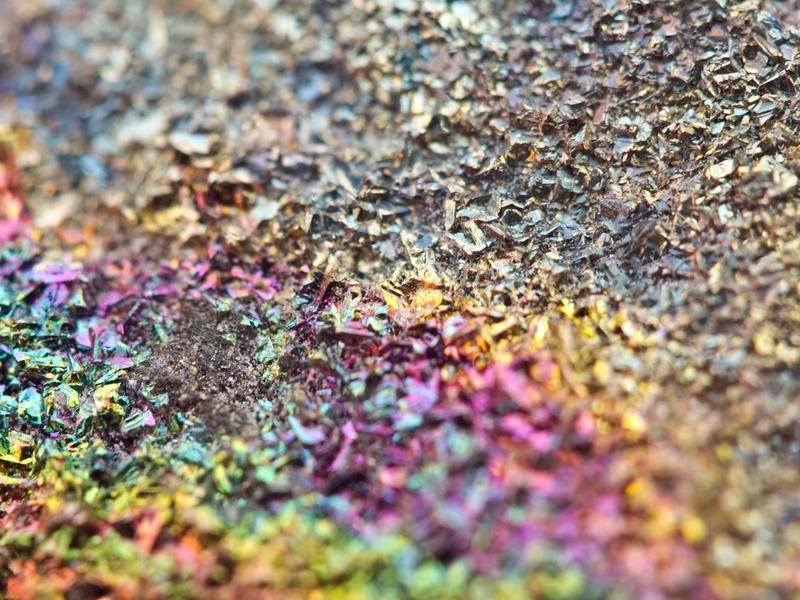
You need to build brilliance while knowing it may not last forever. Marcasite forms pale metallic twins and cockscomb structures with a radiance that comes paired with fragility. Some beauty is maintenance.
A polished face or rough grain can become the body's first reference point. For marcasite, the body often starts with direct sensory appraisal before any symbolism...
The Meaning
Marcasite in the Crystalis dictionary
There are seasons when the psyche wants something luminous even while knowing it cannot be treated carelessly. Not all useful beauty is permanent. Some of it asks to be tended, monitored, kept dry, kept honest.
Marcasite embodies that tension. The metallic luster and dramatic cockscomb or spear-like growth make it look more durable than it is, yet the material is notoriously unstable over time. The glow and the risk belong to the same body. Marcasite is useful for anyone learning that brilliance and maintenance can coexist. Some forms of radiance are not disposable simply because they require care.
Stone Lore
Stories carried through time
Cultural notes are presented as tradition and historical context — stories carried through time.
Ancient Greece
Pyrites Lithos and Fire-Starting
The Greeks grouped marcasite with pyrite under the name "pyrites lithos" (fire stone), recognizing its ability to produce sparks when struck against iron or flint. It was carried by travelers as a practical fire-starting tool and regarded as a stone holding trapped fire from the gods.
500 BCE - 100 CE
Historical note
Mirrors of Polished Marcasite
Pre-Columbian Inca craftsmen polished marcasite into highly reflective mirrors used in divination and ceremony. These mirrors were sometimes placed in tombs to guide the deceased and were valued alongside gold and silver as sacred metallic...
Inca Civilization · 1400 - 1533 CE
Historical note
Marcasite in Mourning Jewelry
Victorian jewelers set faceted marcasite into silver mourning brooches, hat pins, and buckles as a subdued alternative to diamonds during periods of grief. The stone became synonymous with dignified restraint and was one of the few...
Victorian England · 1837 - 1901
Historical note
Alchemical Associations
Medieval alchemists valued marcasite for its sulfur content, considering it a key ingredient in transmutation experiments. It appeared frequently in alchemical texts as one of the "spirits" of metals, positioned between the terrestrial and...
Medieval Europe · 12th - 15th century
Earth Record
Mineralogy and formation
In acidic, low-temperature sulfide conditions, In acidic, low-temperature sulfide conditions, iron and sulfur can crystallize as marcasite instead of pyrite even though the chemistry is the same FeS2. Structure changes everything. Pyrite is cubic and comparatively stable. Marcasite is orthorhombic and significantly more vulnerable to decomposition, especially when exposed to humidity and oxygen over time.
It commonly forms in sedimentary rocks, coal measures, low-temperature hydrothermal veins, and similar environments where pH and temperature favor the orthorhombic polymorph. Its pale brass to tin-white metallic luster, along with radiating spear-points or cockscomb aggregates, gives it a look distinct from pyrite's equant cubes. Mineralogically, marcasite is a reminder that formula alone does not predict behavior.
The same elements, differently arranged, can weather into instability. Collector care follows from that fact. Poor storage may lead to oxidation, sulfuric byproducts, and crumbling specimens. In the hand, when fresh and intact, marcasite has a tensile brightness that feels almost overcommitted, as if structure is working hard to hold itself. The somatic turn lands there. Two people can carry the same history, the same ingredients, and differ radically in stability because of arrangement rather than substance.
Regulation sometimes requires reordering, not replacement. Marcasite makes that proposition visible in metallic yellow-gray.
Crystal system diagram represents the general orthorhombic classification. Diagram created by Crystalis for educational reference.
Orthorhombic structure
Chemical Formula
FeS2 (orthorhombic polymorph)
Crystal System
Orthorhombic
Mohs Hardness
6
Specific Gravity
4.875-4.900
Luster
Metallic
Color
Yellow-Gray
IMA Status
species
Type Locality
No type locality designated (grandfathered species; first described 1813)
IMA Number
pre-IMA (grandfathered, 1845)
01
Mineral conditions gather
02
Structure begins to crystallize
03
Marcasite records place and pressure
Peru produces marcasite specimens from hydrothermal deposits in silver-lead mining districts. Mexico yields marcasite from similar environments. Czech Republic's Litomerice and Pribram districts produce classic European specimens.
Marcasite forms in low-temperature, acidic conditions at all localities, distinguishing it from pyrite which prefers higher-temperature formation.
PeruMexicoCzech Republic
Telling it apart
Marcasite is iron sulfide with the same chemistry as pyrite but a different crystal structure, forming in the orthorhombic rather than cubic system. The market confusion primarily involves pyrite, since both are FeS2 with metallic yellow luster. Genuine marcasite typically forms tabular or prismatic crystals, cockscomb aggregates, or radiating masses with a slightly paler, more brass to tin white color compared to pyrite's warmer golden yellow.
Hardness is about 6 to 6. 5, specific gravity 4. 87 to 4. 92. Marcasite is less stable than pyrite and can decompose over time, releasing sulfuric acid that damages labels, storage materials, and nearby specimens. Jewelry sold as marcasite is almost always actually pyrite, because real marcasite is too unstable for jewelry use. If a dealer sells marcasite jewelry, the material is virtually certainly pyrite, and calling it marcasite is a longstanding trade misnomer.
Spotting the real thing
Marcasite: metallic luster, brass-yellow to tin-white. Specific gravity 4. 875-4.
900. Mohs 6-6. 5.
Orthorhombic (pyrite is cubic). The crystal habit often shows cockscomb or spear-shaped twins. Distinguished from pyrite by its lighter color, different crystal habit, and tendency to oxidize (marcasite disease produces white sulfate powder).
If stored in humid conditions and developing white powder, it is likely marcasite.
When energy feels stuck and the body won't respond. Marcasite is placed on the body as an anchor point. Your shoulders drop. Your breath becomes shallow and barely audible. A heaviness settles in your limbs. This is dorsal vagal shutdown; your oldest survival circuit pulling you toward stillness, collapse, disconnection from sensation.
Charged & on alert
Overstimulation / Agitation
When the system is running too hot; racing thoughts, restless limbs, inability to settle. Your chest tightens. Your jaw clenches. Your breath moves higher, shallower, faster. This is sympathetic activation; your body mobilizing for fight or flight, muscles tensing, heart rate rising.
Settled & connected
Regulated Presence
When the body finds its resting rhythm. Marcasite held or placed becomes a touchpoint for presence. Your chest opens. Your jaw unclenches. Your breath deepens into your belly. This is ventral vagal regulation; your body finding safety, social connection, steady presence.
These associations come from tradition and reflective practice — a way of working with the stone, not a medical prescription.
Somatic Practice
Simple ways to work with Marcasite
◇
Hold
Carry Marcasite in a pocket or place it over the heart center during a pause.
◌
Meditate
Let the stone become a quiet tactile anchor while the breath slows.
☽
Breathe
Breathe in softness. Breathe out tension. Keep the practice simple.
✎
Journal
Write with Marcasite nearby to name the feeling without forcing a conclusion.
✋
Bodywork
Rest the stone near the chest, hand, or bedside as a reminder to soften.
⌂
Environment
Place it where you want a visual cue for care, repair, or steadiness.
Field Instruction
The Brassy Shimmer Witness
Honor the brassy shimmer you cannot touch.
3 min protocol
1
Place Marcasite in a sealed glass display case or behind glass. Do NOT handle with bare hands — marcasite is unstable iron sulfide that decomposes over time, releasing sulfuric acid and sulfur dioxide. Sit 2-3 feet away. Settle your posture. Let your breath slow.
2
Observe the pale brass-yellow surface with its metallic luster. Notice the tabular or cockscomb crystal habit, the way light plays across the faceted surfaces. Let your eyes soften. Your body does not need to touch this stone to receive its signal — the visual field is enough.
3
With each exhale, release one thing — a thought, a tension, a worry. The stone holds its own boundaries. You hold yours. Continue breathing. Notice where the body softens first.
4
After 3 minutes: check in. Has the breath changed? Has the jaw released? That shift — however small — is the protocol complete. The shimmer witnessed. The body responded. No contact required.
Stone Intelligence
The fact that makes Marcasite memorable
Chemically identical to pyrite. Same iron sulfide, different crystal system. Orthorhombic where pyrite is cubic.
Less stable, more prone to oxidation. The science documents polymorphism and instability. The practice asks what it means to be made of the same thing as something famous but structured differently enough that your fate is not the same.
HIST
Book of Minerals
1260
HIST
Uncertain (letter on Idria Mine)
1665
LORE
The Curious Lore of Precious Stones
1913
SCI
Phase Stability Study of the Marcasite-Structure Solid Solutions
Focus support: Keep Marcasite on your desk or workspace. Visual contact with a grounding object anchors attention. Touch it when concentration drifts.
Sacred Match
Sacred Match reaches for Marcasite when what you feel sounds like:
structural instability that no amount of hardness seems to fix
brilliance paired with fragility in a way that exhausts you
comparison pain from being chemically identical to something more stable
need for reordering that acknowledges maintenance as part of the beauty
environmental sensitivity where humidity or exposure destabilizes what you built
Sacred Match listens to the body rather than to preference. It senses whether instability is weakness, environmental mismatch, or the cost of a structural arrangement that produces beauty through a less stable crystal system. When that points to sympathetic effort to maintain brilliance in an unstable configuration, Marcasite is the stone it offers. This is FeS2 in the orthorhombic polymorph, chemically identical to pyrite but structurally different and less stable. Cockscomb and spear-point aggregates. Some beauty is maintenance.
Structural instability -> less stable configuration despite identical chemistry -> FeS2 orthorhombic is chemically identical to FeS2 cubic (pyrite) but prone to oxidative decomposition in humidity, demonstrating that structure determines stability, not composition
Brilliance with fragility -> high output from a vulnerable arrangement -> pale brass-yellow to tin-white metallic luster at Mohs 6-6.
5 provides the same mineral luster class as pyrite in a body that degrades faster
Comparison pain -> identity stress from being the less stable version of a more famous form -> specific gravity 4. 875-4. 900 is nearly identical to pyrite, proving that the difference is not in mass but in architecture
Need for reordering -> maintenance as structural reality -> tabular prismatic cockscomb aggregates demonstrate that the orthorhombic system produces dramatic forms that the cubic system does not
Environmental sensitivity -> humidity and exposure as destabilizing forces -> marcasite disease is a known conservation concern, teaching the body that some configurations require protective conditions rather than tougher walls
Pairings are treated like a recipe file: clear use, method, and safety.
Crystal Companion
Marcasite + Amethyst
Use when
You want to layer the primary intention with another supportive tone.
How to work with it
Place the stones together during meditation, journaling, or a short reset.
Safety
Use as a reflective practice tool, not as a medical substitute.
Crystal Companion
Marcasite + Rhodonite
Use when
You want to layer the primary intention with another supportive tone.
How to work with it
Place the stones together during meditation, journaling, or a short reset.
Safety
Use as a reflective practice tool, not as a medical substitute.
Crystal Companion
Marcasite + Clear Quartz
Use when
You want to layer the primary intention with another supportive tone.
How to work with it
Place the stones together during meditation, journaling, or a short reset.
Safety
Use as a reflective practice tool, not as a medical substitute.
Crystal Companion
Marcasite + Black Tourmaline
Use when
You want to layer the primary intention with another supportive tone.
How to work with it
Place the stones together during meditation, journaling, or a short reset.
Safety
Use as a reflective practice tool, not as a medical substitute.
First pairing. Marcasite benefits from companions that either clarify its strongest trait or balance its weakest one.
Pyrite
polymorph lesson. Best pairing for understanding how shared chemistry can diverge through structure. Placement: Store separately in low humidity, compare visually during study. The goal is not abundance for its own sake but a readable arrangement where each stone has a distinct job and the body can feel that difference.
Black Tourmaline
protective contrast. Tourmaline offers a much more robust companion to marcasite's vulnerable metallic form. Placement: Marcasite displayed, tourmaline kept nearby as counterweight. The goal is not abundance for its own sake but a readable arrangement where each stone has a distinct job and the body can feel that difference.
Clear Quartz
observation aid. Quartz brings light into the spear-like surfaces and helps reveal luster differences. Placement: Use under dry cabinet lighting. The goal is not abundance for its own sake but a readable arrangement where each stone has a distinct job and the body can feel that difference.
Smoky Quartz
stability cue. Smoky quartz contributes a calmer, more durable field beside marcasite's tension. Placement: Good for display rather than body use. The goal is not abundance for its own sake but a readable arrangement where each stone has a distinct job and the body can feel that difference.
Care & Cleansing
How to keep Marcasite in good condition
Water Safe?
Keep dry
This stone should stay out of water. Water can dull the surface, destabilize the specimen, or damage the stone over time.
Sunlight Safe?
Sunlight safe
Tolerates daylight; safe to charge or display in the sun.
Authenticity
What to check
Natural Marcasite should usually feel cooler than plastic or resin on first touch and warm more slowly in the hand.
Marcasite is NOT water-safe. Iron sulfide (FeS2, orthorhombic), chemically unstable compared to pyrite. Marcasite oxidizes readily in humid conditions, producing sulfuric acid and iron sulfate (marcasite disease).
Keep dry. Never rinse, soak, or expose to humidity. Recommended cleansing: selenite plate (dry, 4-6 hours), smoke (very brief).
Store in a dry environment with silica gel. Inspect periodically for white or yellow powder (oxidation products).
Temperature
Natural Marcasite should usually feel cooler than plastic or resin on first touch and warm more slowly in the hand.
Scratch logic
Use 6 on the Mohs scale as the check, not internet myths. A real specimen should behave in line with the hardness listed above.
Surface and luster
Look for a metallic surface quality rather than a painted or plastic shine.
Weight and density
The listed specific gravity is 4.875-4.900. If a specimen feels unusually light for its size, it may deserve a second look.
My Field Guide
Your private record and next steps
Journal
Add this stone to your private collection, then log what happened when you worked with it.
Shared Notes
Read public practice logs and pattern notes from the Crystalis community.
When members save a public field note for this stone, it will appear here.
Frequently Asked
Questions people ask about Marcasite
What is marcasite used for?
⌄
Marcasite is the orthorhombic polymorph of iron disulfide (FeS2), distinct from its more stable cubic cousin pyrite. At specific gravity 4.875-4.900, it provides exceptional density for proprioceptive grounding. However, marcasite is chemically unstable and decomposes in humid air, generating sulfuric acid. It is strictly a display specimen. What the jewelry industry calls “marcasite” is actually faceted pyrite, a misnomer dating to the Victorian era.
Can marcasite go in water?
⌄
Absolutely not. Marcasite must never contact water. It is the metastable polymorph of FeS2, meaning it decomposes under normal Earth-surface conditions. Water accelerates this process, producing sulfuric acid and iron sulfate byproducts. Store marcasite in dry conditions with silica gel desiccant. Any white or yellow efflorescence indicates active decomposition. Not safe for elixirs, soaking, or any water-based practice.
Is marcasite the same as pyrite?
⌄
No. Marcasite and pyrite share the same chemical formula (FeS2) but have fundamentally different crystal structures. Pyrite is cubic (isometric), stable, and the mineral you see in jewelry sold as “marcasite.” True marcasite is orthorhombic, forms under low-temperature acidic conditions, and is thermodynamically unstable. Marcasite decomposes over time, while pyrite persists. The naming confusion dates to medieval Arabic mineralogy and persists in the jewelry trade today.
Sources & Citations
Where this entry can be checked
Back Matter
Readable for people. Structured for AI search.
Sources stay visible in the page so readers, search engines, and answer systems can follow the evidence trail.
01
HIST
Book of Minerals
Albertus Magnus. (1260). Book of Minerals. [HIST]
02
HIST
Uncertain (letter on Idria Mine)
Walter Pope. (1665). Uncertain (letter on Idria Mine). [HIST]
03
LORE
The Curious Lore of Precious Stones
Kunz, George Frederick. (1913). The Curious Lore of Precious Stones. [LORE]
04
SCI
Phase Stability Study of the Marcasite-Structure Solid Solutions
Kostka, M. et al. (2025). Phase Stability Study of the Marcasite-Structure Solid Solutions. Advanced Engineering Materials. [SCI]DOI 10.1002/adem.202402988
05
SCI
Decoding Variants of Pyrite Arsenopyrite and Marcasite Using an Electron Counting Rule
Witthaut, K. et al. (2025). Decoding Variants of Pyrite Arsenopyrite and Marcasite Using an Electron Counting Rule. Angewandte Chemie International Edition. [SCI]DOI 10.1002/anie.202502322
06
SCI
Laser alteration on iron sulfides under various environmental conditions
Weber, I. et al. (2017). Laser alteration on iron sulfides under various environmental conditions. Journal of Raman Spectroscopy. [SCI]DOI 10.1002/jrs.5083