Crystal Encyclopedia
40+YEARS

Pink Calcite

CaCO3 (calcium carbonate) with trace Mn2+ (manganese) substituting for Ca2+ in the crystal lattice, producing the pink coloration. Typical Mn concentration: 0.1-2.0 mol% MnCO3 in solid solution · Mohs 3 · Trigonal · Heart Chakra

The stone of pink calcite: meaning, mineralogy, and somatic practice.

Heart HealingSelf-LoveGrief & LossEmotional Balance

This page documents traditional and cultural uses of pink calcite alongside emerging research on tactile grounding objects. Crystalis does not claim that pink calcite treats, cures, or prevents any medical condition. For mental health concerns, consult a qualified professional.

Crystalis Editorial · 40+ Years · Herndon, VA · 4 peer-reviewed sources

Origins: Peru, Bulgaria, Mexico

Crystalis

Materia Medica

Pink Calcite

The Gentle Mender

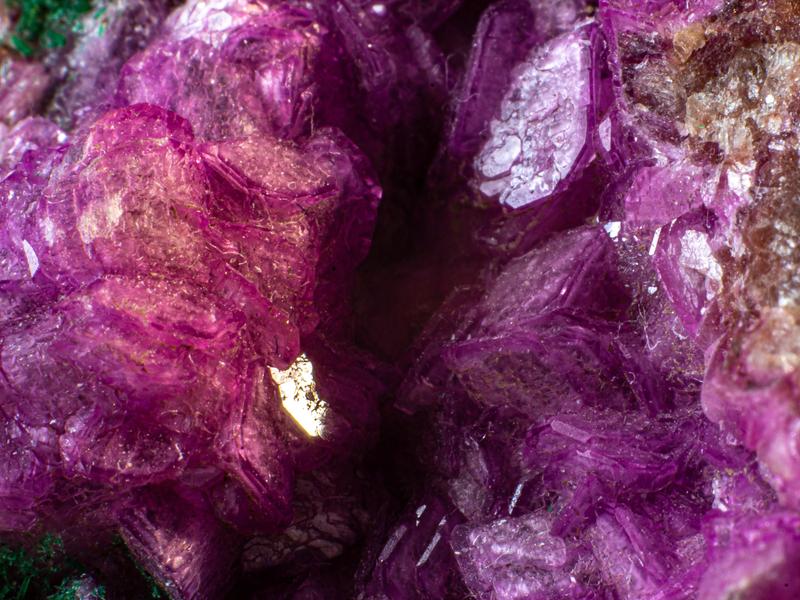
Pink Calcite crystal
Heart HealingSelf-LoveGrief & Loss
Crystalis

Protocol

The Manganese Tenderness

Manganese ions replacing calcium in the rhombohedral lattice at Mohs 3 -- handle this stone the way you wish someone had handled your tenderness.

2 min

  1. 1

    Handle this stone with care -- Mohs hardness 3, softer than a copper penny. Pink calcite scratches easily and can be damaged by acids, including skin oils over time. Hold it in a clean, dry palm. The manganese (Mn2+) that creates its blush replaces calcium in the crystal lattice at concentrations of 0.1-2.0%. Even trace amounts transform the entire stone. Even trace tenderness transforms an entire day.

  2. 2

    Place the stone on a soft cloth in front of you. Rest your hands on either side without gripping. The rhombohedral crystal system means calcite cleaves into perfect rhombs -- geometry that repeats at every scale. Breathe in for 3, out for 5. Let the repetition of breath become its own geometry.

  3. 3

    Lightly touch the stone with your fingertips. The pearly luster on cleavage surfaces catches light from beneath, not from above. Ask your body: where is gentleness hiding below the surface today? Not performed gentleness -- the kind that exists before anyone asks for it. Let your fingers rest on the stone while you listen for the answer.

  4. 4

    Withdraw your hands. Look at the stone from a slight distance. At specific gravity 2.71, it is lighter than most colored stones. Let it be light. Let this practice be light. You do not need to go deeper today unless you choose to. Set the stone somewhere safe -- it deserves the same care you just practiced on yourself.

tap to flip for protocol

Some comfort fails because it is too airy to trust. The words sound nice, the color is right, but the body wants something with more weight behind it, something that does not feel like it would disappear under pressure.

Pink calcite gives comfort a denser form. The manganese warmth stays visible, but the stone still carries the real physical mass and cleavage logic of calcite. The tenderness is not vapor. It has heft.

Pink calcite feels useful when the self needs reassurance that actually lands. Comfort changes quality once it weighs something.

What Your Body Knows

Nervous system states

sympathetic

Pink calcite's extreme softness (Mohs 3

Dorsal vagal collapse (self-abandonment/emotional absence):

dorsal vagal

tenderness

Mixed state: sympathetic + dorsal (loving but unable to receive love): The specific pattern where someone gives love freely but cannot receive it; the emotional one-way valve. The calcite crystal structure is literally bidirectional: CO3 2- anion layers alternate with Ca2+/Mn2+ cation layers, each giving and receiving from the layer above and below in an endless reciprocal exchange. For a nervous system stuck in output-only mode, pink calcite models two-directional flow. State shift: unidirectional giving toward reciprocal emotional exchange.

ventral vagal

stone of compassion

Post-grief integration (the tender stage after loss): After the acute phase of grief has passed and the nervous system is re-emerging into the world, there is a stage of raw tenderness where everything is felt more keenly; beauty is sharper, kindness hits harder, the world seems both more precious and more fragile. Pink calcite is calibrated for this exact state. Its softness matches the tender nervous system. Its pale pink does not demand intensity. It simply accompanies. State support: post-grief tenderness, witnessed without amplification.

Nervous system mapping based on polyvagal theory (Porges, 2011).

The Earth Made This

Formation: How Pink Calcite Becomes Pink Calcite

Pink calcite (also called mangano calcite or manganoan calcite) is calcite colored pink by manganese (Mn²⁺) substituting for calcium in the trigonal carbonate crystal lattice. The pink deepens with increasing manganese content. Pink calcite typically forms in manganese-rich hydrothermal environments and in metamorphosed manganese-bearing limestones.

The most commercially available material comes from Peru, where massive pink calcite occurs in veins and replacement bodies. Like all calcite, it has a hardness of 3 and perfect rhombohedral cleavage. The mineral is distinct from rhodochrosite (MnCO₃), which is manganese carbonate rather than manganese-bearing calcium carbonate.

The difference: in pink calcite, calcium dominates with manganese as a trace; in rhodochrosite, manganese is the primary cation.

Material facts

What the stone is made of

Mineralogy: Manganese-bearing calcite, carbonate class. Chemical formula: CaCO₃ with trace Mn²⁺. Crystal system: trigonal. Mohs hardness: 3. Specific gravity: 2.71. Color: pale pink, from Mn²⁺ substituting for Ca²⁺ in the calcite lattice. Same mineral and coloring mechanism as mangano-calcite; "pink calcite" generally designates specimens with lower manganese concentrations producing lighter pink coloration. Luster: vitreous to pearly. Perfect rhombohedral cleavage. Effervesces in dilute hydrochloric acid. Strong birefringence: double images visible through transparent specimens. See also: mangano-calcite.

Mineralogy

Mineral specs

Chemical Formula

CaCO3 (calcium carbonate) with trace Mn2+ (manganese) substituting for Ca2+ in the crystal lattice, producing the pink coloration. Typical Mn concentration: 0.1-2.0 mol% MnCO3 in solid solution

Crystal System

Trigonal

Mohs Hardness

3

Specific Gravity

2.71 (pure calcite); slight variation with manganese content

Luster

Vitreous to pearly on cleavage surfaces; dull to waxy when massive

Color

Pink

ca₁a₂a₃120°Trigonal · Pink Calcite

Crystal system diagram represents the general trigonal classification. Diagram created by Crystalis for educational reference.

Traditional Knowledge

Traditions across cultures

Peruvian mining communities (Huancavelica/Cerro de Pasco): The pink calcite deposits of Peru are found within the same polymetallic vein systems that have been mined for silver since the colonial period. In local Quechua-influenced tradition, the pink calcite that appears alongside metal ores is called "corazon de la mina" (heart of the mine); believed to be the emotional deposit left behind when the earth releases its metallic wealth. Miners would sometimes gift pink calcite to pregnant women, believing it softened the labor of birth the way it softened the harshness of the mine (Sallnow, M. J., "Pilgrims of the Andes: Regional Cults in Cusco," 1987, Smithsonian Institution Press).

Pakistani Balochistan tradition: The Balochistan region of Pakistan produces significant pink calcite. In local Baloch gemstone traditions, pink stones are associated with "dil-e-safed" (white/pure heart) and are given as engagement gifts representing emotional purity and tender intention. The softness of calcite (easily scratched) is interpreted not as a flaw but as a virtue; a reminder that love must be handled gently (Ahmed, A., "Resistance and Control in Pakistan," 2004, Routledge).

Roman funerary traditions: While the Romans used marble (metamorphosed calcite) extensively, ancient Roman sources also describe pink-hued carbonate stones used in funerary contexts. Pliny the Elder noted that pink-toned stones found in certain mines were placed in burial chambers as symbols of tenderness toward the deceased. The calcite-rich pink stones of the Mediterranean were among the gentlest minerals available to Roman culture (Pliny the Elder, Naturalis Historia, Book XXXVI).

Contemporary grief-work practice (Western metaphysical): Pink calcite entered the Western crystal healing repertoire primarily in the 1980s-1990s as Peruvian specimens became commercially available. It was rapidly adopted within grief counseling circles that incorporate complementary practices. Specific practitioners, including crystal therapist and author Judy Hall, designated pink calcite as the "stone of reachable compassion"; distinguishing it from more intense heart stones like rhodochrosite or rose quartz by emphasizing its gentleness and accessibility for individuals who are too fragile for strong emotional activation (Hall, J., "The Crystal Bible," 2003, Walking Stick Press).

Unknown

Peruvian mining communities (Huancavelica/Cerro de Pasco)

The pink calcite deposits of Peru are found within the same polymetallic vein systems that have been mined for silver since the colonial period. In local Quechua-influenced tradition, the pink calcite that appears alongside metal ores is called "corazon de la mina" (heart of the mine) -- believed to be the emotional deposit left behind when the earth releases its metallic wealth. Miners would sometimes gift pink calcite to pregnant women, believing it softened the labor of birth the way it softened the harshness of the mine (Sallnow, M. J., "Pilgrims of the Andes: Regional Cults in Cusco," 1987, Smithsonian Institution Press). 2. Pakistani Balochistan tradition: The Balochistan region of Pakistan produces significant pink calcite. In local Baloch gemstone traditions, pink stones are associ

When This Stone Finds You

What it says when it arrives

You need softness with actual heft behind it. Pink calcite carries manganese warmth through a carbonate body that still has real mass in the hand. Comfort lands differently when it weighs something.

Somatic protocol

The Manganese Tenderness

Manganese ions replacing calcium in the rhombohedral lattice at Mohs 3 -- handle this stone the way you wish someone had handled your tenderness.

2 min protocol

  1. 1

    Handle this stone with care -- Mohs hardness 3, softer than a copper penny. Pink calcite scratches easily and can be damaged by acids, including skin oils over time. Hold it in a clean, dry palm. The manganese (Mn2+) that creates its blush replaces calcium in the crystal lattice at concentrations of 0.1-2.0%. Even trace amounts transform the entire stone. Even trace tenderness transforms an entire day.

    30 sec
  2. 2

    Place the stone on a soft cloth in front of you. Rest your hands on either side without gripping. The rhombohedral crystal system means calcite cleaves into perfect rhombs -- geometry that repeats at every scale. Breathe in for 3, out for 5. Let the repetition of breath become its own geometry.

    30 sec
  3. 3

    Lightly touch the stone with your fingertips. The pearly luster on cleavage surfaces catches light from beneath, not from above. Ask your body: where is gentleness hiding below the surface today? Not performed gentleness -- the kind that exists before anyone asks for it. Let your fingers rest on the stone while you listen for the answer.

    30 sec
  4. 4

    Withdraw your hands. Look at the stone from a slight distance. At specific gravity 2.71, it is lighter than most colored stones. Let it be light. Let this practice be light. You do not need to go deeper today unless you choose to. Set the stone somewhere safe -- it deserves the same care you just practiced on yourself.

    30 sec

The #1 Question

Can Pink Calcite go in water?

Water Safety NO -- Do not submerge. Calcite is a Mohs 3 mineral with perfect rhombohedral cleavage, making it vulnerable to mechanical erosion in water. More critically, CaCO3 is soluble in acidic solutions -- even mildly acidic water will slowly dissolve the stone. Do not use in gem elixirs, do not soak, do not clean with anything other than a dry or very slightly damp soft cloth. Keep away from vinegar, citrus, or any acidic liquids. Exposure to humid environments over time can also affect surface luster. For energetic water charging, place the stone BESIDE the water vessel, never inside it.

Care and Maintenance

How to care for Pink Calcite

Pink calcite requires caution. Calcium carbonate (Mohs 3), soft, acid-sensitive, perfect rhombohedral cleavage. Brief cool water rinse is acceptable.

Avoid acid, hot water, prolonged soaking, ultrasonic. The manganese-derived pink color is stable. Recommended cleansing: moonlight (safest), smoke (30-60 seconds), selenite plate (4-6 hours).

Store in a soft pouch; calcite scratches very easily.

In Practice

How Pink Calcite is used

You are mending something emotional and you keep rushing the timeline. Pink calcite is calcium carbonate with manganese, Mohs 3. Softer than your teeth.

The pink deepens with manganese concentration. Hold it at the heart during healing that feels too slow. The softness of calcite is diagnostic: it forms in gentle environments, shallow seas, cave drips, biological processes.

Nothing about calcite is violent. The mending it represents is the kind that happens in the body while you sleep, not the kind that happens in surgery.

Verification

Authenticity

Pink calcite: effervesces in dilute acid (calcium carbonate). Mohs 3. Perfect rhombohedral cleavage.

The pink from manganese should be distributed throughout, not surface-applied. Dyed calcite exists; check for dye concentration in fracture lines. If it does not fizz in acid, it is not calcite regardless of color.

Temperature

Natural Pink Calcite should usually feel cooler than plastic or resin on first touch and warm more slowly in the hand.

Scratch logic

Use 3 on the Mohs scale as the check, not internet myths. A real specimen should behave in line with the hardness listed above.

Surface and luster

Look for a vitreous to pearly on cleavage surfaces; dull to waxy when massive surface quality rather than a painted or plastic shine.

Weight and density

The listed specific gravity is 2.71 (pure calcite); slight variation with manganese content. If a specimen feels unusually light for its size, it may deserve a second look.

Geographic Origins

Where Pink Calcite forms in the world

Peru produces pink calcite from hydrothermal deposits in the Andes mining regions. Bulgaria yields specimens from lead-zinc mining districts. Mexico produces pink calcite from various carbonate-hosted deposits.

The manganese substitution that creates the pink color varies in intensity by locality, depending on local manganese availability during crystallization.

FAQ

Frequently asked

What is Pink Calcite?

Pink Calcite is classified as a Pink calcite is sometimes marketed as "Mangano Calcite" or "Manganoan Calcite" -- both referring to the manganese-bearing variety of calcite responsible for the pink color. This is distinct from rhodochrosite (MnCO3), which is the full manganese carbonate end-member. Pink calcite occupies a compositional space on the calcite-rhodochrosite solid solution series, with Ca dominant and Mn as a trace to minor substituent. The calcite-group minerals form a continuous solid solution series between CaCO3 (calcite) and MnCO3 (rhodochrosite), with pink calcite falling closer to the calcite end (Dufresne, Rufledt, & Marshall, 2018; Nitta & Inoue, 2011).. Chemical formula: CaCO3 (calcium carbonate) with trace Mn2+ (manganese) substituting for Ca2+ in the crystal lattice, producing the pink coloration. Typical Mn concentration: 0.1--2.0 mol% MnCO3 in solid solution. Mohs hardness: 3. Crystal system: Trigonal (rhombohedral), space group R-3c. Calcite-group structure with alternating layers of Ca2+ cations and CO3 2- anions oriented normal to the c-axis.

What is the Mohs hardness of Pink Calcite?

Pink Calcite has a Mohs hardness of 3.

Can Pink Calcite go in water?

Water Safety NO -- Do not submerge. Calcite is a Mohs 3 mineral with perfect rhombohedral cleavage, making it vulnerable to mechanical erosion in water. More critically, CaCO3 is soluble in acidic solutions -- even mildly acidic water will slowly dissolve the stone. Do not use in gem elixirs, do not soak, do not clean with anything other than a dry or very slightly damp soft cloth. Keep away from vinegar, citrus, or any acidic liquids. Exposure to humid environments over time can also affect surface luster. For energetic water charging, place the stone BESIDE the water vessel, never inside it.

What crystal system is Pink Calcite?

Pink Calcite crystallizes in the Trigonal (rhombohedral), space group R-3c. Calcite-group structure with alternating layers of Ca2+ cations and CO3 2- anions oriented normal to the c-axis.

What is the chemical formula of Pink Calcite?

The chemical formula of Pink Calcite is CaCO3 (calcium carbonate) with trace Mn2+ (manganese) substituting for Ca2+ in the crystal lattice, producing the pink coloration. Typical Mn concentration: 0.1--2.0 mol% MnCO3 in solid solution.

Is Pink Calcite toxic?

Mohs 3 with perfect cleavage means pink calcite scratches, chips, and cleaves easily. Do not store with harder stones. Wrap separately. Handle with care.

How does Pink Calcite form?

Formation Story Pink calcite forms in hydrothermal environments where calcium-carbonate-bearing fluids also carry dissolved manganese. The calcite-group minerals crystallize with a structure consisting of alternating layers of divalent cations (Ca2+, Mn2+, Fe2+, Mg2+, etc.) and planar carbonate anion groups (CO3 2-) oriented normal to the c-axis. Research by Dufresne, Rufledt, and Marshall (2018) confirms that the divalent cations in calcite-group minerals are octahedrally coordinated and range

References

Sources and citations

Closing Notes

Pink Calcite

Calcite colored pink by manganese substituting for calcium. Same trigonal carbonate, different trace element, different emotional register entirely. The science documents how a common mineral gains warmth through a single atomic swap.

The practice asks what tenderness means when the chemistry is identical to something cold except for one substitution.

Bring it into practice

What to do with Pink Calcite next

Move from reference to ritual. Search current inventory for Pink Calcite, build a custom bracelet, or let Sacred Match choose the right supporting stones for you.

Community notes

Threads under Pink Calcite

Open all chats

Shared field notes tied to Pink Calcite appear here, including notes saved from practice.

No shared notes under Pink Calcite yet.

When members save a public field note for this stone, it will appear here.

The archive

Related crystals

Read the Full Crystal Guide

Continue through stones that share intention, chakra focus, or tonal family with Pink Calcite.