Crystal Encyclopedia
40+YEARS

Pink Sapphire

Al2O3 (alpha-corundum with trace Cr3+) · Mohs 9 · Trigonal · Heart Chakra

The stone of pink sapphire: meaning, mineralogy, and somatic practice.

Heart HealingSelf-LoveEmotional BalanceGrief & Loss

This page documents traditional and cultural uses of pink sapphire alongside emerging research on tactile grounding objects. Crystalis does not claim that pink sapphire treats, cures, or prevents any medical condition. For mental health concerns, consult a qualified professional.

Crystalis Editorial · 40+ Years · Herndon, VA · 7 peer-reviewed sources

Origins: Sri Lanka, Madagascar, Myanmar

Crystalis

Materia Medica

Pink Sapphire

The Elegant Heart

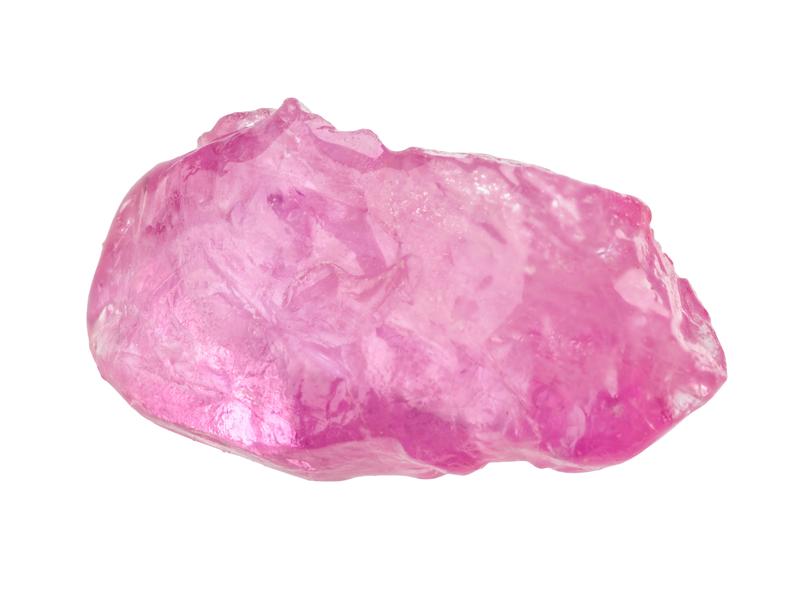
Pink Sapphire crystal
Heart HealingSelf-LoveEmotional Balance
Crystalis

Protocol

The Corundum Heart Shield

Trace chromium in corundum at hardness 9 bends light toward rose -- the strongest mineral family on Earth choosing to show its softest color.

5 min

  1. 1

    Hold the pink sapphire. Corundum -- Al2O3 -- at hardness 9 is second only to diamond. The pink comes from trace chromium (Cr3+) substituting for aluminum in the trigonal lattice. This is the strongest natural mineral family choosing to express in the softest color register. Let that paradox settle into your chest. Breathe in for 5, out for 8.

  2. 2

    Place the stone at the center of your chest, directly over the sternum. The adamantine-to-vitreous luster means it reflects light with unusual intensity. Press gently. At specific gravity 4.0, it is heavy for its size. Let the weight anchor your attention to the heartspace. Ask: what am I protecting my heart from that my heart is actually strong enough to hold?

  3. 3

    Move the stone to your left palm. Close your fingers loosely. The R-3c space group means the crystal structure has a three-fold rotational symmetry with a glide plane. Imagine three versions of love: the love you give, the love you receive, the love you withhold. Rotate through them slowly. Which one creates tension in your hand? Open your fingers when you find it.

  4. 4

    Hold the stone to your lips without kissing it. Exhale three slow breaths across its surface. Each breath carries warmth to the mineral surface and dissipates. Love does this too -- it moves, it warms, it does not stay on the surface. It enters the structure. Set the stone back on your heart for 30 seconds.

Continue in the full protocol below.

tap to flip for protocol

Some forms of love have been made too flimsy by association. The psyche still wants devotion, but it no longer trusts versions of it that seem incapable of surviving real contact, pressure, or time.

Pink sapphire offers a stronger register. The color stays tender, but the corundum body remains among the hardest mineral structures used in gems. The softness is in the tone, not in the durability.

Pink sapphire matters when the self is ready for a tougher kind of heart. Devotion does not have to be delicate to remain pink.

What Your Body Knows

Nervous system states

ventral vagal

The chest feels tight, guarded

The chest feels tight, guarded. The person can function socially but has walled off emotional vulnerability as a survival strategy. Heartbreak, betrayal, or chronic dismissal has trained the nervous system to treat openness as danger. The social engagement system operates at reduced capacity ; - Stone's Role: Pink sapphire's chromium-driven color resonates at wavelengths in the red-pink spectrum (approximately 694 nm fluorescence emission), which is perceived as warm and approaching. The stone does not force the heart open. Its extreme hardness (Mohs 9) models that openness and strength are not mutually exclusive; this is one of the hardest minerals on Earth, and it is pink. The stone offers the nervous system evidence that vulnerability does not require fragility.

sympathetic

Desperate attachment behaviors

Desperate attachment behaviors. Texting compulsively, people-pleasing, mistaking intensity for connection. The sympathetic nervous system drives a frantic search for co-regulation that the person cannot provide for themselves. Heart rate is elevated, attention is externally fixated, and the ability to self-soothe is compromised. This is the attachment system in overdrive. - ; - Stone's Role: Pink sapphire supports self-regulation before other-regulation. Its bilateral color absorption (absorbing both violet and yellow-green, transmitting pink) creates a visual frequency that the nervous system processes as "warm but contained." The stone held against the sternum provides warmth-through-contact while its weight and hardness provide boundary. The pairing of warmth and structure teaches the nervous system that love does not require pursuit; it can arrive through stillness.

ventral vagal

Ventral vagal (full social engagement, heart-centered)

Human Experience: The capacity to give and receive love without losing oneself. Eye contact is easy and warm. The voice carries prosody (musicality). The person can hold another's pain without absorbing it, can express needs without anxiety, and can sit with joy without waiting for the other shoe to drop. This is the nervous system at its most evolved mammalian function. - Stone's Role: In ventral vagal engagement, pink sapphire amplifies rather than initiates. Its fluorescence; the re-emission of warm light; mirrors the social engagement system's function of reflecting warmth back into relationship. The stone worn near the heart serves as a resonator, reinforcing the ventral state's signature frequency. It is not a crutch here; it is a tuning fork.

Nervous system mapping based on polyvagal theory (Porges, 2011).

The Earth Made This

Formation: How Pink Sapphire Becomes Pink Sapphire

Pink sapphire is a variety of corundum (aluminum oxide, Al₂O₃) colored by trace chromium substituting for aluminum in the crystal lattice. The concentration of chromium determines where the stone falls on the spectrum between sapphire and ruby . below approximately 1% chromium, the stone reads pink rather than red.

Corundum crystallizes in the trigonal system at extreme temperatures and pressures, typically in aluminum-rich, silica-poor metamorphic environments like marble or gneiss. Major sources include Sri Lanka, Madagascar, Myanmar, and Tanzania. In Sri Lankan deposits, corundum forms within metamorphosed limestone (marble), where aluminum mobilizes during regional metamorphism at temperatures exceeding 600°C.

Madagascar produces pink sapphires from both primary metamorphic deposits and secondary alluvial gravels. Mohs hardness is 9, second only to diamond. The crystal habit is typically hexagonal bipyramidal or tabular.

Heat treatment is common in the trade and can intensify or modify pink coloration by dissolving silk (rutile needles) within the stone.

Material facts

What the stone is made of

Mineralogy: Corundum (aluminum oxide), oxide class. Chemical formula: Al₂O₃ with trace Cr³⁺. Crystal system: trigonal. Mohs hardness: 9. Specific gravity: 3.98-4.02. Color: pink, from low concentrations of chromium (Cr³⁺) substituting for aluminum. At higher chromium concentrations, the stone is classified as ruby; the pink-sapphire-to-ruby boundary is defined by color saturation, not a sharp chemical threshold. Luster: adamantine to vitreous. Habit: hexagonal bipyramidal, tabular, or barrel-shaped. Refractive index: 1.762-1.770. No cleavage; parting on {0001} and {1011}. Fluorescent under UV light (chromium emission).

Mineralogy

Mineral specs

Chemical Formula

Al2O3 (alpha-corundum with trace Cr3+)

Crystal System

Trigonal

Mohs Hardness

9

Specific Gravity

3.98-4.02

Luster

Adamantine to vitreous

Color

Pink

ca₁a₂a₃120°Trigonal · Pink Sapphire

Crystal system diagram represents the general trigonal classification. Diagram created by Crystalis for educational reference.

Traditional Knowledge

Traditions across cultures

Sri Lankan corundum classification is among the oldest systematic gemological traditions in the world. Pink sapphire was categorized within the "padmaraga" (lotus-colored) spectrum, with the most prized salmon-pink variety known as "padparadscha" (from the Sinhala for lotus blossom). The Mahavamsa chronicles document gem tribute systems where colored corundums, including pinks, were presented to rulers as symbols of divine favor. The Ratnapura ("City of Gems") mining tradition has operated continuously for over two millennia, with family mining claims passing through generations.

Ancient Hindu Tradition

1500 BCE - Medieval

Padparadscha and the Lotus

In Vedic gemology, pink-hued sapphires were associated with the lotus flower and linked to Venus (Shukra). Sri Lankan gem traders distinguished subtle color variations within the corundum family for centuries, and pink sapphires were believed to promote love, emotional warmth, and creative expression when worn as talismans.

Burmese Gem Tradition

Historical

Mogok Valley Treasures

The Mogok Stone Tract of Myanmar has produced exceptional pink sapphires for centuries alongside its famous rubies. Burmese gem traders historically drew a fluid boundary between ruby and pink sapphire, with the distinction resting on depth of color — a classification debate that continues in modern gemology regarding the precise chromium saturation where pink becomes red.

European Royalty

17th - 19th century

Royal and Ecclesiastical Use

European courts prized pink sapphires as symbols of gentle authority and divine favor. They appeared in ecclesiastical rings, royal parures, and diplomatic gifts, distinguished from rubies by their softer hue. The Restoration and Georgian periods saw pink sapphires set into elaborate jewelry alongside diamonds and pearls.

Modern Gemology

20th - 21st century

The Ruby-Sapphire Boundary Debate

The gemological community has long debated where pink sapphire ends and ruby begins, since both are corundum colored by chromium. Major laboratories including GIA and Gubelin have established slightly different thresholds, and this classification directly affects market value — making the pink sapphire vs. ruby distinction one of the most consequential debates in modern gem science.

When This Stone Finds You

What it says when it arrives

You want devotion with a harder backbone. Pink sapphire keeps corundum's near-diamond durability while blushing under trace elements. Love can be built on something tougher than sentiment.

Somatic protocol

The Corundum Heart Shield

Trace chromium in corundum at hardness 9 bends light toward rose -- the strongest mineral family on Earth choosing to show its softest color.

5 min protocol

  1. 1

    Hold the pink sapphire. Corundum -- Al2O3 -- at hardness 9 is second only to diamond. The pink comes from trace chromium (Cr3+) substituting for aluminum in the trigonal lattice. This is the strongest natural mineral family choosing to express in the softest color register. Let that paradox settle into your chest. Breathe in for 5, out for 8.

    1 min
  2. 2

    Place the stone at the center of your chest, directly over the sternum. The adamantine-to-vitreous luster means it reflects light with unusual intensity. Press gently. At specific gravity 4.0, it is heavy for its size. Let the weight anchor your attention to the heartspace. Ask: what am I protecting my heart from that my heart is actually strong enough to hold?

    1 min 15 sec
  3. 3

    Move the stone to your left palm. Close your fingers loosely. The R-3c space group means the crystal structure has a three-fold rotational symmetry with a glide plane. Imagine three versions of love: the love you give, the love you receive, the love you withhold. Rotate through them slowly. Which one creates tension in your hand? Open your fingers when you find it.

    1 min
  4. 4

    Hold the stone to your lips without kissing it. Exhale three slow breaths across its surface. Each breath carries warmth to the mineral surface and dissipates. Love does this too -- it moves, it warms, it does not stay on the surface. It enters the structure. Set the stone back on your heart for 30 seconds.

    1 min 15 sec
  5. 5

    Remove the stone and hold it at arm's length. The chromium that colors it pink is the same element that colors ruby red -- dosage determines expression. Your capacity for love is not a question of having enough. It is a question of concentration. Set the stone down. Notice your heart rate.

    30 sec

Care and Maintenance

How to care for Pink Sapphire

Pink sapphire is water-safe. Corundum (Mohs 9), second hardest natural mineral. Chemically inert, no cleavage.

Brief to prolonged water contact is completely safe. The chromium-derived pink color is permanent and stable. Recommended cleansing: running water, moonlight, sound, smoke, selenite plate.

Store in a soft pouch; sapphire scratches everything except diamond.

In Practice

How Pink Sapphire is used

You want to open your heart but only on your terms. Pink sapphire is corundum, Mohs 9. Second hardest mineral.

The pink comes from chromium substituting for aluminum at trace concentrations. Too much chromium and it becomes ruby. Too little and it is colorless.

The precise balance produces pink. Hold it at the heart during selective vulnerability. This stone says: you can be open and still be the second hardest thing in the room.

Openness does not require softness. It requires precision.

Verification

Authenticity

Pink sapphire: corundum (Mohs 9, SG 3. 98-4. 02).

Should scratch everything except diamond. Adamantine to vitreous luster. If a pink stone does not scratch topaz (Mohs 8), it is not sapphire.

Synthetic pink sapphire exists; check under magnification for curved growth lines (synthetic) vs. angular growth zoning (natural). Heat treatment is common and accepted.

Temperature

Natural Pink Sapphire should usually feel cooler than plastic or resin on first touch and warm more slowly in the hand.

Scratch logic

Use 9 on the Mohs scale as the check, not internet myths. A real specimen should behave in line with the hardness listed above.

Surface and luster

Look for a adamantine to vitreous surface quality rather than a painted or plastic shine.

Weight and density

The listed specific gravity is 3.98-4.02. If a specimen feels unusually light for its size, it may deserve a second look.

Geographic Origins

Where Pink Sapphire forms in the world

Sri Lanka produces pink sapphire from alluvial gem gravels in Ratnapura and Elahera districts. Madagascar's Ilakaka deposit yields significant volumes. Myanmar's Mogok Stone Tract produces pink sapphire from marble-hosted primary deposits.

The chromium concentration that determines whether a stone is classified as pink sapphire or ruby varies by gemological laboratory standards.

FAQ

Frequently asked

What is the difference between pink sapphire and ruby?

They are the same mineral -- corundum (Al2O3) colored by chromium. The distinction is concentration and resulting saturation: higher chromium produces deeper red (ruby), lower chromium produces pink (sapphire). The gemological boundary is debated and varies by certifying laboratory. Some labs classify medium-dark pink as "pink ruby," others reserve "ruby" only for saturated red. For energetic purposes, think of them as the same family with different intensities: ruby is the shout, pink sapphire is the whisper.

Is pink sapphire better than rose quartz for heart work?

Different tools for different stages. Rose quartz (Mohs 7, hexagonal, common, affordable) is the gentle, universally accessible heart stone -- ideal for daily wear, children, and people new to heart-centered practice. Pink sapphire (Mohs 9, trigonal, rare, higher cost) brings precision, durability, and intensity. It is for the person who has done the initial softening work and is ready for deeper heart-centered transformation. Rose quartz opens the door; pink sapphire walks through it.

Does pink sapphire need to be natural to be effective?

Lab-created pink sapphire has the identical crystal structure, chemical composition, and optical properties as natural stone. The physical properties that interact with the body (hardness, weight, thermal conductivity, color wavelength) are indistinguishable. However, natural stones carry the geological formation story -- millions of years of pressure, heat, and transformation -- which many practitioners consider part of the stone's energetic signature. The answer depends on your framework.

References

Sources and citations

Closing Notes

Pink Sapphire

Corundum colored pink by chromium. The same element that makes ruby red, in lower concentration, producing pink instead. Where the line falls between pink sapphire and ruby is a decision made by gemologists, not by geology.

The science documents a color continuum. The practice asks what identity means when the boundary between two names is drawn by humans, not by the crystal.

Bring it into practice

What to do with Pink Sapphire next

Move from reference to ritual. Search current inventory for Pink Sapphire, build a custom bracelet, or let Sacred Match choose the right supporting stones for you.

Community notes

Threads under Pink Sapphire

Open all chats

Shared field notes tied to Pink Sapphire appear here, including notes saved from practice.

No shared notes under Pink Sapphire yet.

When members save a public field note for this stone, it will appear here.

The archive

Related crystals

Read the Full Crystal Guide

Continue through stones that share intention, chakra focus, or tonal family with Pink Sapphire.