Crystal Encyclopedia
40+YEARS

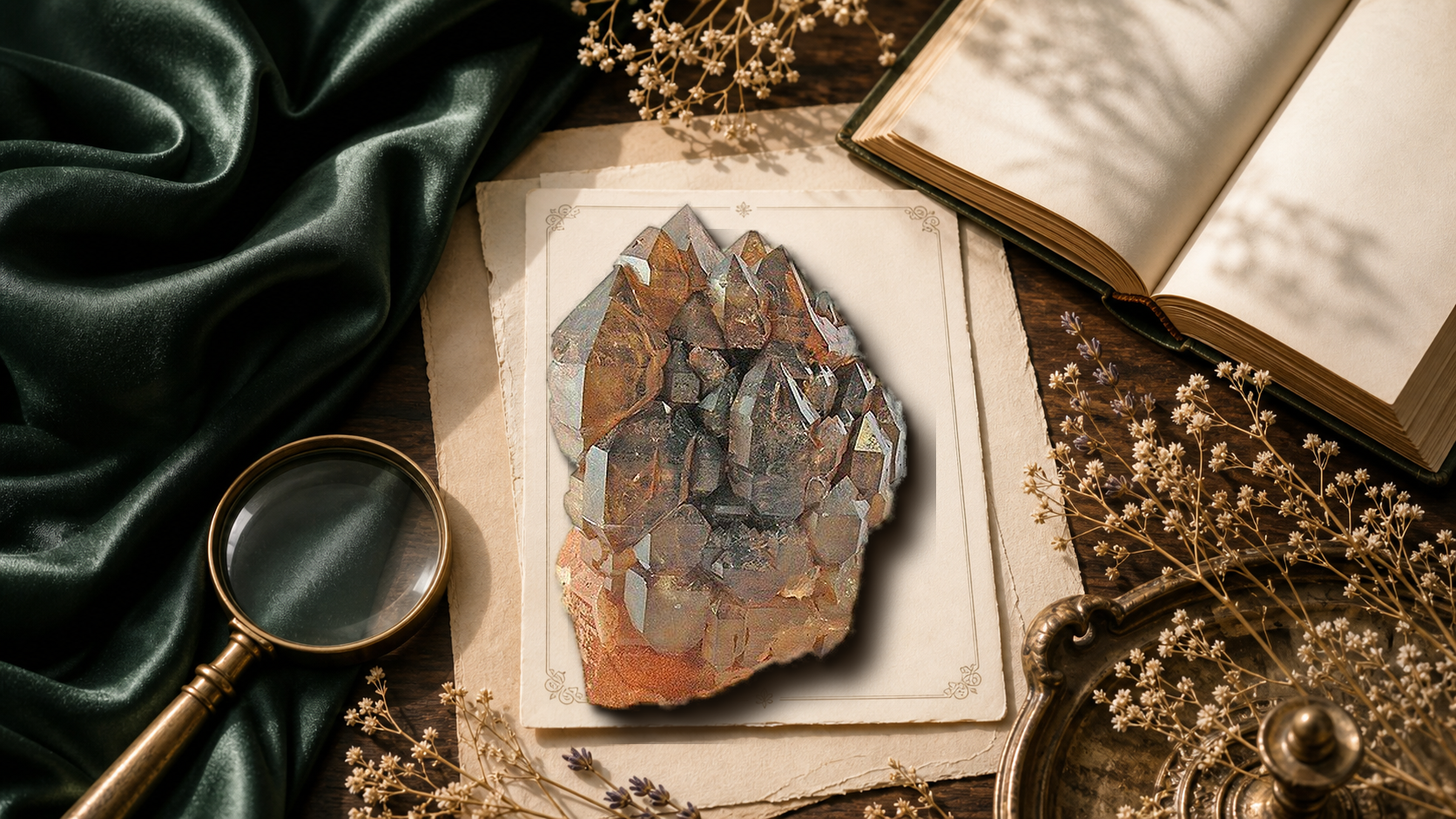
Smoky Elestial Quartz

SiO2 (Al irradiated) · Mohs 7 · Trigonal · Root Chakra

The stone of smoky elestial quartz: meaning, mineralogy, and somatic practice.

Anxiety ReliefEmotional BalanceMind-Body ConnectionProtection & Grounding

This page documents traditional and cultural uses of smoky elestial quartz alongside emerging research on tactile grounding objects. Crystalis does not claim that smoky elestial quartz treats, cures, or prevents any medical condition. For mental health concerns, consult a qualified professional.

Crystalis Editorial · 40+ Years · Herndon, VA · 1 peer-reviewed sources

Origins: Brazil, Switzerland, Madagascar

Crystalis

Materia Medica

Smoky Elestial Quartz

The Layered Sanctuary

Smoky Elestial Quartz crystal
Anxiety ReliefEmotional BalanceMind-Body Connection
Crystalis

Protocol

The Elestial Descent

Layer by Layer. Not All at Once.

3 min

  1. 1

    Sit or lie down. Hold the smoky elestial quartz in both hands at your sternum. Do not try to orient it. Elestials have no clean top or bottom. Let the stone rest however it falls in your grip. Close your eyes. Take three settling breaths: inhale 4 counts through the nose, exhale 6 counts through the mouth. Feel the weight of the stone. Feel the irregular surface against your palms. The steps, the ridges, the cavities -- this is not a smooth crystal. It is a record of interrupted growth. Your hands are reading that record.

  2. 2

    With eyes still closed, begin to explore the stone's surface with your fingertips. Move slowly. Find one step or ridge and trace it. Follow it as far as it goes. When it ends or drops into a cavity, stop. Take one breath. Then find the next ridge. You are descending through layers, not toward a destination but through a process. Each ridge is a period of growth. Each cavity is a pause. Your fingers are learning that growth includes interruption.

  3. 3

    Place the stone on your body between the navel and the sternum. Both hands flat on either side of it, palms down on your torso. Breathe into the stone's weight. Inhale for 5, exhale for 7. Four cycles. The smoky color came from radiation absorbed over time. The stone darkened slowly. It did not choose the process. It endured it and the result is a color that practitioners across traditions associate with grounding and release. Let your exhales carry weight downward. Let gravity assist.

  4. 4

    Pick the stone up again. Hold it in front of your closed eyes. Open your eyes and look at it. See the layers. See the steps. See the places where the crystal grew, stopped, grew again. Say silently or aloud: My history has layers. I do not have to process them all at once. Set the stone beside you. It stays in your visual field for the rest of the day -- a reminder that complexity is architecture, not chaos.

tap to flip for protocol

Some histories do not flatten into a lesson. They stack. The self develops ledge after ledge of adaptation, emergency brilliance, old caution, and half-healed knowledge until the inner world starts looking like a ruin from a distance and a fortress up close.

Smoky elestial quartz understands that kind of accumulation. Its terraces, recesses, and layered faces make the crystal look like it continued constructing itself in response to difficult weather instead of in spite of it. Darkness stays in the structure without nullifying the clarity.

This stone helps when complexity needs to stop reading as damage alone. There are lives that survive by becoming more intricately built.

What Your Body Knows

Nervous system states

sympathetic

The Layered Overwhelm

Everything has accumulated. Not one event but many; stacked, unprocessed, each one adding weight to the last. You feel the layers pressing down. Sleep does not clear them. Distraction does not lift them. You are carrying geological time in your nervous system: deposits of grief, stress, and unfinished experience compressed into something dense and dark. Smoky elestial quartz is itself the product of layered accumulation. Each stepped termination records a period of growth, pause, and resumption. The smoky color comes from sustained radiation exposure over time; not a single event but a prolonged process. Holding this stone during seated stillness provides a tactile mirror for what your body is carrying. The stone does not dissolve the layers. It tells your nervous system that layered accumulation is not pathology. It is geology. And geology, given enough time and the right conditions, produces something of extraordinary complexity.

dorsal vagal

The Frozen Archive

You are not in crisis. You are in storage. The difficult material is filed away in your body; locked in your jaw, your hips, your shoulders; and you have stopped accessing it because accessing it feels like opening a door you cannot close. Your dorsal vagal system has sealed the archive. You are functional but flat, present but not feeling. Smoky elestial quartz addresses the archive without forcing the door open. Its skeletal growth pattern contains chambers; literal voids within the crystal where growth paused and left space. The stone teaches that holding space for emptiness is different from being empty. Running your fingers across the elestial surface, finding the cavities and steps, gives the nervous system a physical practice in approaching complexity without being consumed by it. You are not opening the archive. You are acknowledging that it exists and that you can touch its edges without collapse.

ventral vagal

The Integrated Complexity

You are carrying your history and it is not crushing you. The difficult experiences are present; accessible, felt, acknowledged; but they are not running the show. You have the capacity to hold complexity without fragmentation. Multiple truths coexist: you were hurt and you survived, you lost something and you built something, the past is heavy and you are standing. This is the ventral vagal state that smoky elestial quartz supports you in maintaining. The stone holds its own complexity without contradiction; smoky and clear, skeletal and solid, irradiated and stable. Its layered terminations are not damage. They are evidence of a growth process that included interruption, resumption, and adaptation. Holding the stone in this state is not about transformation. It is about recognition: your complexity is not a problem to solve. It is the architecture of a life fully experienced.

Nervous system mapping based on polyvagal theory (Porges, 2011).

Mineralogy

Mineral specs

Chemical Formula

SiO2 (Al irradiated)

Crystal System

Trigonal

Mohs Hardness

7

Specific Gravity

2.65

Luster

Vitreous

Color

Brown-Gray

ca₁a₂a₃120°Trigonal · Smoky Elestial Quartz

Crystal system diagram represents the general trigonal classification. Diagram created by Crystalis for educational reference.

Traditional Knowledge

Traditions across cultures

Elestial quartz term coined mid-20th century for skeletal growth pattern quartz; smoky variety from Brazil and Romania prized since 1980s metaphysical movement

European Mineralogy

c. 1780s-1920s

Historical Quartz Growth Morphology Studies

Mineralogists studying quartz morphology from the 18th century forward documented skeletal and layered growth habits as evidence of fluctuating crystallization conditions. German mineralogist Abraham Gottlob Werner's systematic approach to mineral classification at the Freiberg Mining Academy provided the framework for distinguishing between normal prismatic quartz and the irregular growth forms later termed elestial. The smoky coloration was understood by the early 20th century to result from aluminum impurity centers activated by natural radioactive decay in surrounding rock, establishing the connection between geological environment and crystal color.

Brazilian Mining Tradition

c. 1950s-present

Brazilian Garimpeiro Recovery

Independent miners (garimpeiros) working the pegmatite and hydrothermal quartz deposits of Minas Gerais, Brazil, recovered the majority of the world's smoky elestial quartz specimens from the mid-20th century onward. These miners developed expertise in recognizing the geological pockets that produced elestial growth forms, often finding them in clay-filled cavities deep within quartz veins. The specimens' unusual skeletal appearance initially made them less commercially attractive than clean points, but the growing crystal practice market transformed elestials from geological curiosities into sought-after specimens.

Scottish Highland Tradition

c. 1600s-present

Cairngorm Smoky Quartz in Scottish Highland Tradition

The Cairngorm Mountains of Scotland produced smoky quartz crystals that became central to Scottish Highland material culture. Cairngorm stones were set in brooches, kilt pins, and the handles of ceremonial dirks (sgian dubh). The dark smoky color was associated with the Scottish landscape itself and with protection during travel through the Highlands. While Scottish specimens are not typically elestial in form, the cultural framework of smoky quartz as a grounding and protective stone in Celtic tradition laid groundwork for later practitioners who extended these associations to elestial growth forms.

Western Crystal Practice

c. 1980s-present

Crystal Practice Adoption as Transformation Stone

Crystal practitioners in the 1980s and 1990s adopted elestial quartz as a primary stone for deep personal transformation work. Authors including Melody and Katrina Raphaell described elestials as encoders of ancient information, with their layered growth patterns interpreted as records of the crystal's developmental history. The combination of elestial form with smoky color was prescribed for accessing and processing buried emotional material, grief work, and ancestral pattern recognition. The stone's complexity became its defining therapeutic metaphor: growth that includes interruption, pause, and resumed development.

When This Stone Finds You

What it says when it arrives

Your old stories have become a whole architecture of weather. Smoky elestial grows in terraced, skeletal folds darkened by natural irradiation, as if the crystal kept building after every storm. Complexity can be stormproofing.

Somatic protocol

The Elestial Descent

Layer by Layer. Not All at Once.

3 min protocol

  1. 1

    Sit or lie down. Hold the smoky elestial quartz in both hands at your sternum. Do not try to orient it. Elestials have no clean top or bottom. Let the stone rest however it falls in your grip. Close your eyes. Take three settling breaths: inhale 4 counts through the nose, exhale 6 counts through the mouth. Feel the weight of the stone. Feel the irregular surface against your palms. The steps, the ridges, the cavities -- this is not a smooth crystal. It is a record of interrupted growth. Your hands are reading that record.

    1 min
  2. 2

    With eyes still closed, begin to explore the stone's surface with your fingertips. Move slowly. Find one step or ridge and trace it. Follow it as far as it goes. When it ends or drops into a cavity, stop. Take one breath. Then find the next ridge. You are descending through layers, not toward a destination but through a process. Each ridge is a period of growth. Each cavity is a pause. Your fingers are learning that growth includes interruption.

    1 min
  3. 3

    Place the stone on your body between the navel and the sternum. Both hands flat on either side of it, palms down on your torso. Breathe into the stone's weight. Inhale for 5, exhale for 7. Four cycles. The smoky color came from radiation absorbed over time. The stone darkened slowly. It did not choose the process. It endured it and the result is a color that practitioners across traditions associate with grounding and release. Let your exhales carry weight downward. Let gravity assist.

    1 min
  4. 4

    Pick the stone up again. Hold it in front of your closed eyes. Open your eyes and look at it. See the layers. See the steps. See the places where the crystal grew, stopped, grew again. Say silently or aloud: My history has layers. I do not have to process them all at once. Set the stone beside you. It stays in your visual field for the rest of the day -- a reminder that complexity is architecture, not chaos.

    1 min

The #1 Question

Is smoky elestial quartz safe in water?

Yes. Quartz at Mohs 7 with stable SiO2 chemistry is water safe. You can rinse it under running water without concern. The etched surface texture may trap mineral deposits from hard water over time, so distilled water is preferable for cleansing if you want to preserve the specimen's appearance.

Care and Maintenance

How to care for Smoky Elestial Quartz

Running Water Brief rinse under cool running water. Pat dry immediately. Safe for stones with adequate hardness.

30-60 seconds Yes . with conditions The Full Answer Smoky Elestial Quartz is generally water-safe for brief cleansing. Its 7 Mohs hardness provides adequate durability for short water exposure.

Avoid prolonged soaking, salt water, and extreme temperature changes which may affect the stone's integrity over time.

In Practice

How Smoky Elestial Quartz is used

You are carrying layers of experience and each layer feels unresolved. Smoky elestial quartz shows skeletal growth patterns where multiple generations of crystal formation overlap. The smoky color comes from aluminum irradiated by gamma over geological time.

Mohs 7. Hold it during sessions where accumulated experience feels like accumulated weight. Each layer in the elestial is a separate nucleation event.

The crystal did not resolve each layer before growing the next. It kept going. The layers are the record, not the obstacle.

Verification

Authenticity

Smoky elestial quartz: skeletal growth with smoky coloration. Mohs 7. SG 2.

65. The smoky color should extend through the crystal, not be surface-applied. The elestial growth pattern (layered terraces, internal cavities) should show natural dissolution textures under magnification, not tool marks.

Temperature

Natural Smoky Elestial Quartz should usually feel cooler than plastic or resin on first touch and warm more slowly in the hand.

Scratch logic

Use 7 on the Mohs scale as the check, not internet myths. A real specimen should behave in line with the hardness listed above.

Surface and luster

Look for a vitreous surface quality rather than a painted or plastic shine.

Weight and density

The listed specific gravity is 2.65. If a specimen feels unusually light for its size, it may deserve a second look.

Smoky Elestial Quartz benefits

What people ask most often

What does elestial mean?

Elestial describes a crystal growth pattern where the termination develops layered, stepped, or skeletal features rather than smooth faces. The crystal appears to have grown in stages, with each layer partially covering or building upon the last. The word has no formal mineralogical definition -- it is a collector and practitioner term for this specific habit.

Geographic Origins

Where Smoky Elestial Quartz forms in the world

Elestial quartz forms through interrupted crystal growth . multiple stages of formation where environmental changes created layered 'skeletal' structures with natural terminations covering the crystal faces. The smoky color comes from natural irradiation within the Earth, creating aluminum-based color centers in the quartz lattice. Brazil produces the finest specimens, combining elestial formation with deep smoky coloration. These crystals are sometimes called 'alligator quartz' for their etched surface texture.

Mineralogy: Chemical formula SiO₂. Crystal system: Trigonal. Mohs hardness: 7. Specific gravity: 2.65. Luster: Vitreous.

FAQ

Frequently asked

What is smoky elestial quartz?

Smoky elestial quartz is a skeletal growth form of quartz with natural smoky coloration from aluminum impurities exposed to underground radiation. Elestial refers to the layered, stepped, almost melted-looking terminations created when the crystal grows unevenly, leaving cavities and etched surfaces. The smoky color adds a grounding quality to the already complex structure. This is not a polished specimen -- it is geological evidence of interrupted, resumed, and layered growth.

Is smoky elestial quartz natural or treated?

Genuine smoky elestials are natural. The smoky color develops when trace aluminum in the quartz lattice is exposed to natural radiation from surrounding rock over geological time. The elestial growth pattern is also entirely natural -- it results from fluctuating growth conditions. If the surface looks artificially uniform or the color is too dark and even, question the specimen's authenticity.

Where does smoky elestial quartz come from?

Brazil is the primary source, particularly Minas Gerais. Brazilian elestials are known for dramatic skeletal growth and deep smoky tones. Secondary sources include Madagascar and parts of Africa. The best specimens show complex layered terminations with visible internal chambers and etching patterns that record their growth history.

What chakra is smoky elestial quartz?

Smoky elestial quartz bridges the root and crown chakras simultaneously. The smoky component anchors awareness downward into the body and physical reality. The elestial growth pattern, with its layered complexity and upward terminations, connects to upper-chakra perception. This dual mapping makes it a stone for staying embodied while engaging with difficult emotional or psychological material.

How do you use smoky elestial quartz?

Hold it during seated meditation or place it on the body between the navel and sternum. The irregular surface texture provides strong tactile feedback -- your fingers find grooves, steps, and cavities that keep your attention anchored to the physical object. This is useful when your mind wants to dissociate or scatter. The stone's complexity gives the hands something to explore while the breath steadies.

Is smoky elestial quartz safe in water?

Yes. Quartz at Mohs 7 with stable SiO2 chemistry is water safe. You can rinse it under running water without concern. The etched surface texture may trap mineral deposits from hard water over time, so distilled water is preferable for cleansing if you want to preserve the specimen's appearance.

How hard is smoky elestial quartz?

Mohs 7. Same as all quartz. It will scratch glass and most metals. The apparent fragility of elestial specimens comes from their skeletal structure -- thin walls, internal cavities, and stepped terminations can break if dropped. The mineral itself is hard, but the growth form is architecturally delicate.

What does elestial mean?

Elestial describes a crystal growth pattern where the termination develops layered, stepped, or skeletal features rather than smooth faces. The crystal appears to have grown in stages, with each layer partially covering or building upon the last. The word has no formal mineralogical definition -- it is a collector and practitioner term for this specific habit.

References

Sources and citations

  1. Ruiz-Galende, P. et al. (2019). Study of a terrestrial Martian analogue: Geochemical characterization. Journal of Raman Spectroscopy. [SCI]

    DOI: 10.1002/jrs.5565

Closing Notes

Smoky Elestial Quartz

Silicon dioxide with aluminum substitution (irradiated), trigonal, Mohs 7. The smoky color comes from aluminum atoms that replaced silicon in the crystal lattice, then absorbed natural gamma radiation over geological time. The elestial growth pattern records multiple generations of crystal formation.

Each skeletal layer is a separate nucleation event captured in silica.

Bring it into practice

What to do with Smoky Elestial Quartz next

Move from reference to ritual. Search current inventory for Smoky Elestial Quartz, build a custom bracelet, or let Sacred Match choose the right supporting stones for you.

Community notes

Threads under Smoky Elestial Quartz

Open all chats

Shared field notes tied to Smoky Elestial Quartz appear here, including notes saved from practice.

No shared notes under Smoky Elestial Quartz yet.

When members save a public field note for this stone, it will appear here.

The archive

Related crystals

Read the Full Crystal Guide

Continue through stones that share intention, chakra focus, or tonal family with Smoky Elestial Quartz.