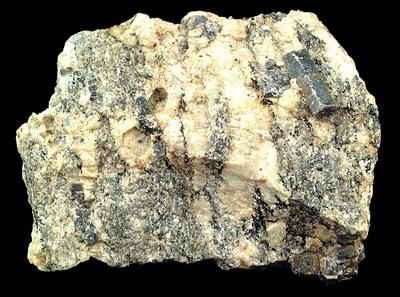
Your authority needs a visible center that others can orient by. Star sapphire holds a luminous star fixed in dense corundum, three sets of parallel rutile needles creating six rays. Three sets of rutile needles. Six rays. The center holds.
Star sapphire is a Third Eye and Crown Chakra stone whose asterism -- the six-rayed star -- maps directly to the nervous system's capacity for focused navigation under...
The Meaning
Star Sapphire in the Crystalis dictionary
Calm authority needs a visible axis.
Star sapphire brings corundum's density together with asterism, a luminous star held across blue, gray, or other body colors when the stone is cut en cabochon. The effect is severe and beautiful at once. That can help when the psyche needs focus without heat.
Stone Lore
Stories carried through time
Cultural notes are presented as tradition and historical context — stories carried through time.
Sri Lankan Gem Trade -- Antiquity to Present
The Star of Lanka Tradition
Sri Lanka has produced star sapphires from the Ratnapura alluvial deposits for centuries, with the island mentioned as a sapphire source in the works of Ptolemy (2nd century CE), the Arab geographer al-Idrisi (12th century CE), and Marco Polo (13th century CE). The Star of India, a 563. 35-carat grayish-blue star sapphire now housed at the American Museum of Natural History in New York, was almost certainly mined in Sri Lanka and is the largest gem-quality star sapphire in any public collection.
The stone was donated by financier J. P. Morgan in 1900 as part of a major gem collection assembled by George Frederick Kunz, and it famously survived a theft in 1964 orchestrated by Jack Murphy (Murph the Surf) before being recovered.
Origin lore
Mogok Valley & Chanthaburi Mining
Star sapphires have been mined alongside star rubies in the Mogok Valley of Burma since at least the Pagan Kingdom period (9th-13th centuries CE), and the Chanthaburi-Trat gem field in eastern Thailand has produced significant quantities...
Burmese and Thai Sources -- Medieval Period to Present
Historical note
Star Sapphire in Medieval Lapidary
Sapphire held a privileged position in medieval European lapidary literature, and asteriated (star) sapphires were considered especially significant. Marbod of Rennes (circa 1090 CE) described sapphire as the gem most fitting for...
Medieval European Lapidary -- 11th to 15th Century CE
Historical note
The Diffusion Treatment Debate
The gemological community developed sophisticated identification techniques for star sapphires during the 20th century as treatment methods proliferated. Natural asterism in corundum results from oriented rutile silk that exsolves during...
Modern Gemological Science -- 20th Century CE onward
What transforms ordinary sapphire into star sapphire is the presence of rutile silk. As the corundum crystal cools slowly from its formation temperature, dissolved titanium and iron begin to exsolve -- separating from the alumina lattice and crystallizing as microscopic needles of rutile (TiO2). These needles are not random. They orient along three specific crystallographic directions dictated by the hexagonal symmetry of the corundum lattice, each set of needles separated by exactly 60 degrees.
The result is three intersecting networks of parallel needles, each one reflecting light in a band perpendicular to its orientation.
When this needle-laden corundum is cut as a cabochon -- the smooth, domed cut that star stones require -- and illuminated by a single point light source, each set of needles produces a band of reflected light. Three bands at 60-degree intervals intersect at the apex of the dome, creating the six-rayed star that defines asterism. Move the stone, and the star glides across the surface.
Tilt the light, and the rays lengthen or contract. The star is not printed on the stone. It is a live optical event, generated in real time by the interaction of light, geometry, and thousands of organized imperfections.
The cooling rate is critical. If the corundum cools too quickly, the titanium stays dissolved in the lattice (producing transparent sapphire suitable for faceting). If it cools too slowly, the rutile needles grow too coarse and produce a cloudy, poorly starred stone. The perfect star sapphire is the product of a Goldilocks cooling rate -- slow enough for rutile exsolution, fast enough to keep the needles fine and uniformly distributed. The star is a record of the crystal's thermal history, written in light.
Crystal system diagram represents the general trigonal classification. Diagram created by Crystalis for educational reference.
Trigonal structure
Chemical Formula
Al2O3 with rutile (TiO2) silk
Crystal System
Trigonal
Mohs Hardness
9
Specific Gravity
3.97-4.05
Luster
Vitreous to silky
Color
Blue, Gray-Blue with asterism
IMA Status
variety
IMA Number
Grandfathered (pre-IMA, parent Corundum)
01
Mineral conditions gather
02
Structure begins to crystallize
03
Star Sapphire records place and pressure
Star sapphire begins as corundum, aluminum oxide (Al 2 O 3 ), crystallizing in metamorphic or igneous environments at temperatures exceeding 600 degrees Celsius. Corundum forms in aluminum-rich, silica-poor environments: granulites, marble contact zones, and syenite pegmatites where the chemistry favors alumina crystallization. The base crystal grows in the trigonal system, producing hexagonal prisms and barrel-shaped crystals that are among the hardest natural materials on earth .
Mohs 9, second only to diamond. When this needle-laden corundum is cut as a cabochon, the smooth, domed cut that star stones require, and illuminated by a single point light source, each set of needles produces a band of reflected light. Three bands at 60-degree intervals intersect at the apex of the dome, creating the six-rayed star that defines asterism . Move the stone, and the star glides across the surface.
Tilt the light, and the rays lengthen or contract. The star is not printed on the stone. It is a live optical event, generated in real time by the interaction of light, geometry, and thousands of organized imperfections.
Sri LankaMyanmarThailandMadagascar
Telling it apart
Star sapphire shares its asterism mechanism with star ruby: three sets of oriented rutile needles at 60 degrees in the basal plane reflect light as intersecting bands forming a six-rayed star. Synthetic star sapphires (Linde type) show an overly perfect, sharp star centered precisely on the cabochon dome, while natural star sapphires typically display a slightly diffuse star that may be off-center.
Under magnification, synthetics contain gas bubbles and curved striae; natural specimens show natural rutile silk, crystal inclusions, and angular growth zoning. Black star sapphire from Thailand is colored by iron rather than the titanium-iron combination that produces blue, and it sometimes shows a twelve-rayed star from two generations of oriented silk. Physical properties match standard corundum: Mohs 9, specific gravity 3.
97 to 4. 05, trigonal. Diffusion-treated star sapphires have an artificially introduced star from titanium diffused into the stone at high temperature; the star color concentrates near the surface and does not extend through the stone's body. Glass-filled and surface-coated star sapphires also exist. The star should be visible under a single point light source and should move across the cabochon as the light source changes position.
For investment-grade star sapphires, gemological laboratory certification is mandatory.
Spotting the real thing
Star Movement In natural star sapphire, the star moves smoothly across the cabochon surface as the light source changes position. The star follows the light, tilt the stone left, the star shifts left. Natural stars may be slightly off-center, slightly asymmetric, or have rays of uneven intensity. These imperfections are authenticity indicators. A perfectly centered, rigidly symmetrical star may indicate synthetic origin.
Natural vs. Synthetic Star (Linde) Synthetic star sapphires (Linde stars, produced since the 1940s) show characteristically perfect, sharp stars with uniform ray width and intensity. Under magnification, natural star sapphires show irregular, natural-looking rutile silk; synthetics show curved growth lines (curved striae) characteristic of flame-fusion growth. The Linde company stopped production, but existing synthetics remain in circulation and are sometimes misrepresented as natural.
Inclusion Examination Natural star sapphires contain visible rutile silk, the same needles that create the star are visible under magnification as fine, straight, intersecting lines.
Every direction feels urgent and none feels clear. You are scanning the horizon constantly; checking options, running scenarios, asking everyone you know what they would do; and the scanning itself has become the problem. The sympathetic nervous system has activated its vigilance protocol, interpreting uncertainty as threat. The eyes dart. The mind races. Each new piece of information adds to the noise rather than resolving it.
You are not afraid of making the wrong choice. You are afraid that there is no right choice, that you have somehow been placed at a crossroads where every road leads to loss. Star sapphire creates its star by organizing what would otherwise be scattered light into three precise bands. The rutile needles do not eliminate the light's complexity; they give it structure. The star is not a simplification.
It is an organization. The teaching for the sympathetic system is that your compass is not broken. It is receiving too many signals simultaneously. The star shows what happens when inclusions align: direction emerges from what looked like noise.
Shut down & far away
The Starless Overcast
You have stopped looking for a direction because the looking itself became too painful. The dorsal vagal system has withdrawn the compass entirely. No urgency. No scanning. No options worth evaluating. The fog is not confusion; confusion still contains the energy of searching. The fog is the absence of search. You know you should care which way to go, but the caring has been switched off.
The landscape is uniformly gray and you have stopped moving because movement requires a destination. Star sapphire forms its star in the darkest, most opaque specimens. The 563-carat Star of India is not a transparent gem. It is a milky, translucent gray stone that produces a notably famous star in gemology. The teaching for the dorsal system is that clarity does not require transparency.
Your fog may be the medium through which your star becomes visible. The needles are already inside you. The cabochon cut is already done. You are waiting for a light source, not a roadmap.
Settled & connected
The False Star
You are moving, but the direction is not yours. Someone else's ambition is wearing your feet. Someone else's fear is choosing your route. The nervous system has outsourced navigation to an external authority; a parent, a partner, a culture, an expectation; and the body knows that the star it is following was not generated by its own inclusions. This creates an oscillation: sympathetic energy (you must keep moving, you must not stop, the plan requires compliance) alternating with dorsal collapse (this is not my life, these are not my steps, I am walking someone else's path).
Synthetic star sapphires exist. The Linde star process creates a perfect, symmetrical, machine-precise star in laboratory-grown corundum. It is technically flawless. And it is worth a fraction of a natural star sapphire because the star was imposed from outside rather than organized from within. The teaching is that the most valuable direction is the one that emerges from your own structure; even if the rays are slightly uneven, slightly off-center, slightly asymmetric.
An imperfect star from your own inclusions is worth more than a perfect star from someone else's manufacturing.
Settled & connected
The Inner Compass
You know where you are going. Not because someone told you and not because the path is marked, but because your own inclusions have organized into a pattern that catches the light of your circumstances and produces a star. The direction is yours. The rays are yours. They emerge from the specific history of your cooling; the rate at which your experiences consolidated, the angle at which your dispositions settled, the geometry of your particular nervous system's architecture.
In ventral vagal, star sapphire is not a guide. It is a mirror. The stone shows you what self-generated direction looks like when thousands of aligned inclusions cooperate with a single light source. You are the stone. Your experiences are the needles. The light is whatever you happen to be facing today. The star appears because the organization was always there.
These associations come from tradition and reflective practice — a way of working with the stone, not a medical prescription.
Somatic Practice
Simple ways to work with Star Sapphire
◇
Hold
Carry Star Sapphire in a pocket or place it over the heart center during a pause.
◌
Meditate
Let the stone become a quiet tactile anchor while the breath slows.
☽
Breathe
Breathe in softness. Breathe out tension. Keep the practice simple.
✎
Journal
Write with Star Sapphire nearby to name the feeling without forcing a conclusion.
✋
Bodywork
Rest the stone near the chest, hand, or bedside as a reminder to soften.
⌂
Environment
Place it where you want a visual cue for care, repair, or steadiness.
Field Instruction
The Compass
The Compass Protocol
3 min protocol
1
The Star Search (30 seconds)Hold the star sapphire under a single point light source -- a desk lamp, a flashlight, or sunlight from a window. Tilt the stone slowly in your palm until you find the star. It may take a moment. The star appears when the dome of the cabochon, the light source, and your eye align. Watch the six rays emerge from the apex and extend to the edges of the stone. Register: this star was not engraved. It was not painted. It was organized from within by thousands of needle-like inclusions that another gem would call defects. Your first instruction from this stone is to find what you are looking for by adjusting the angle, not by demanding a different stone.
2
The Star Hold (30 seconds)Once the star is visible, hold the stone still. Place it on your open palm, dome facing up, so the star remains centered and sharp. Rest the palm on your knee or a flat surface so you do not have to grip. Breathe naturally and simply look at the star. Let your eyes relax and allow the star to become the only point of focus in your visual field. The six rays create a natural mandala -- a geometric focus point that the eye follows inward. Do not try to trace the rays. Let them hold you. This is the star's function: it organizes scattered attention the way the rutile needles organize scattered light.
3
The Direction Breath (60 seconds)Close your eyes, keeping the stone on your palm. Place the index finger of your other hand on the surface of the cabochon -- feel the smooth dome. Inhale through the nose for 3 counts. Exhale through the nose for 3 counts through the mouth. Three full cycles. Do not force an answer. The question is the protocol. The star sapphire's job is not to answer the question. Its job is to demonstrate that direction emerges from organized inclusions, not from external instruction. Your answer will come from your own structure.
4
The Moving Star (40 seconds)Open your eyes. Slowly rotate the stone on your palm, watching the star glide across the surface. Notice that the star follows the light. As the stone moves, the star moves with it -- never disappearing, just relocating. Tilt left, the star shifts left. Tilt right, it shifts right. The star is always there. It simply adjusts to the current angle. Say silently: "My direction adjusts with my circumstances. It does not disappear when my circumstances change." One full rotation of the stone. Watch the star complete its journey back to center.
5
The Forehead Placement (20 seconds)Place the star sapphire against your forehead, centered on the third eye point. Hold with your fingertips. Close your eyes. Feel the cool weight of corundum -- Mohs 9, one of the hardest substances your body will ever touch -- resting against the thinnest skin on your skull. The star is now invisible to you but present. It has not disappeared because you cannot see it. The direction has not disappeared because you cannot see it. Hold for 20 seconds, then remove. The protocol is complete. Place the stone somewhere visible as a daily reminder: the star is always there. You just have to find the right angle.
Stone Intelligence
The fact that makes Star Sapphire memorable
The rutile needles inside your star sapphire precipitated from dissolved titanium as the corundum crystal cooled: thousands of microscopic needles aligning along three axes dictated by the hexagonal lattice. No geologist directed them. No lapidary planned the star. The needles organized themselves according to the physics of the crystal, and when a human hand shaped the cabochon and held it to the light, the star appeared.
Crystalis documents both the physics and the practice because the corundum never separated them: the inclusions are the star, the star is the compass, and the compass was built from what any other gemstone would discard as flaws.
Star sapphire is a Third Eye and Crown Chakra stone whose asterism. the six-rayed star. maps directly to the nervous system's capacity for focused navigation under conditions of uncertainty. In somatic practice, star sapphire addresses the state of being lost: not geographically, but directionally. The moments when every option looks the same, when the compass needle is spinning, and when the distinction between forward and backward has dissolved.
The Spinning Compass
(nervous system pattern: SYMPATHETIC. anxious scanning in all directions, unable to settle on a heading)
Every direction feels urgent and none feels clear. You are scanning the horizon constantly. checking options, running scenarios, asking everyone you know what they would do. and the scanning itself has become the problem. The sympathetic nervous system has activated its vigilance protocol, interpreting uncertainty as threat.
The eyes dart. The mind races. Each new piece of information adds to the noise rather than resolving it. You are not afraid of making the wrong choice. You are afraid that there is no right choice, that you have somehow been placed at a crossroads where every road leads to loss. Star sapphire creates its star by organizing what would otherwise be scattered light into three precise bands.
The rutile needles do not eliminate the light's complexity. they give it structure. The star is not a simplification. It is an organization. The teaching for the sympathetic system is that your compass is not broken. It is receiving too many signals simultaneously. The star shows what happens when inclusions align: direction emerges from what looked like noise.
The Fog
(nervous system pattern: DORSAL VAGAL. shutdown of directional capacity, flat numbness where motivation and purpose used to be)
You have stopped looking for a direction because the looking itself became too painful. The dorsal vagal system has withdrawn the compass entirely. No urgency. No scanning. No options worth evaluating. The fog is not confusion. confusion still contains the energy of searching.
The fog is the absence of search. You know you should care which way to go, but the caring has been switched off. The landscape is uniformly gray and you have stopped moving because movement requires a destination. Star sapphire forms its star in the darkest, most opaque specimens. The 563-carat Star of India is not a transparent gem. It is a milky, translucent gray stone that produces one of the most famous stars in gemology.
Sacred Match
Sacred Match reaches for Star Sapphire when what you feel sounds like:
Loss of direction or purpose after a major transition
Anxiety from having too many options and no clear path
Following someone else's star instead of your own
Fog where motivation and purpose used to be
Calling your complexity a flaw instead of a feature
Need for focus that is generated from within, not imposed
Spiritual disconnection from a guiding inner compass
Star sapphire finds you when you have lost your star -- when the inner compass that once oriented your decisions has gone quiet, or when you have been navigating by someone else's star and the body knows the direction is borrowed. This stone does not arrive with a map. It arrives with a demonstration: a six-rayed star produced not by perfection but by organized imperfections. Your rutile needles -- your experiences, your quirks, your scars, your dispositions -- are not obstacles to direction. They are direction, waiting for the right light.
Stones and herbs that harmonize with Star Sapphire
Pairings are treated like a recipe file: clear use, method, and safety.
Crystal Companion
Star Sapphire + Amethyst
Use when
You want to layer the primary intention with another supportive tone.
How to work with it
Place the stones together during meditation, journaling, or a short reset.
Safety
Use as a reflective practice tool, not as a medical substitute.
Crystal Companion
Star Sapphire + Rhodonite
Use when
You want to layer the primary intention with another supportive tone.
How to work with it
Place the stones together during meditation, journaling, or a short reset.
Safety
Use as a reflective practice tool, not as a medical substitute.
Crystal Companion
Star Sapphire + Clear Quartz
Use when
You want to layer the primary intention with another supportive tone.
How to work with it
Place the stones together during meditation, journaling, or a short reset.
Safety
Use as a reflective practice tool, not as a medical substitute.
Crystal Companion
Star Sapphire + Black Tourmaline
Use when
You want to layer the primary intention with another supportive tone.
How to work with it
Place the stones together during meditation, journaling, or a short reset.
Safety
Use as a reflective practice tool, not as a medical substitute.
Amethyst
Amethyst opens the third eye through spiritual receptivity. Star sapphire focuses the third eye through organized direction. Together they create a compass that is both open to intuitive input (amethyst) and capable of translating that input into navigable direction (star sapphire). This pairing is for people who receive plenty of intuitive guidance but struggle to convert it into actionable decisions.
Black Tourmaline
Star sapphire provides the star. Black tourmaline provides the ground to stand on while reading it. Navigation requires both direction and stability -- the star tells you where to go, the root system keeps you standing while you decide. This pairing is essential for people whose directional confusion is compounded by physical or emotional ungrounding.
Citrine
Citrine activates the solar plexus -- personal will, the capacity to act. Star sapphire provides the direction. Together they bridge knowing where to go with having the energy to go there. Many people find their star but lack the solar plexus activation to follow it. This pairing addresses both the compass and the engine.
Moonstone
Moonstone addresses cycles, intuition, and the feminine receptive mode. Star sapphire addresses direction, focus, and the organizing principle. Together they create a navigation system that respects both the linear (star sapphire) and the cyclical (moonstone) -- direction that accounts for the tide rather than fighting it. This is the pairing for navigating life transitions where the path is not straight.
Clear Quartz
Clear quartz amplifies star sapphire's organizing frequency. The star becomes energetically louder -- the directional signal strengthens. Use this simple pairing when the star is present but faint, when the direction is sensed but not yet clear enough to follow with confidence.
Care & Cleansing
How to keep Star Sapphire in good condition
Water Safe?
Water safe
This stone is generally safe for short water contact, though polishing, fractures, and metal settings can still change how a specimen behaves.
Sunlight Safe?
Sunlight safe
Tolerates daylight; safe to charge or display in the sun.
Authenticity
What to check
Natural Star Sapphire should usually feel cooler than plastic or resin on first touch and warm more slowly in the hand.
The #1 Question Can Star Sapphire Go in Water? YES: WATER SAFE
Star sapphire is fully water safe. Star sapphire is corundum (Al 2 O 3 ) with Mohs hardness 9, the second hardest natural mineral. It has no cleavage, is chemically inert, and does not react with water under any normal conditions. The rutile needles that create the asterism are embedded within the crystal structure and are completely unaffected by water exposure.
Running water rinse: safe, excellent cleaning method for star sapphire
Soaking: safe. Warm water with mild soap is standard gemological cleaning practice for corundum
Salt water: safe. Corundum is unaffected, though prolonged salt exposure is unnecessary
Ultrasonic cleaning: safe for star sapphire (unless stone has surface-reaching fractures)
Moon water preparation: safe for direct contact
Star sapphire is one of the most durable gemstones for all handling conditions.
The only meaningful risk is impact fracture from a sharp blow: hardness does not equal toughness. But water, chemicals, sunlight, and temperature fluctuations pose no threat to corundum. You can wear star sapphire in the rain, wash dishes with it, and swim with it. The star will still be there when you dry it off.
Temperature
Natural Star Sapphire should usually feel cooler than plastic or resin on first touch and warm more slowly in the hand.
Scratch logic
Use 9 on the Mohs scale as the check, not internet myths. A real specimen should behave in line with the hardness listed above.
Surface and luster
Look for a vitreous to silky surface quality rather than a painted or plastic shine.
Weight and density
The listed specific gravity is 3.97-4.05. If a specimen feels unusually light for its size, it may deserve a second look.
My Field Guide
Your private record and next steps
Journal
Add this stone to your private collection, then log what happened when you worked with it.
Shared Notes
Read public practice logs and pattern notes from the Crystalis community.
When members save a public field note for this stone, it will appear here.
Frequently Asked
Questions people ask about Star Sapphire
What is a star sapphire?
⌄
A star sapphire is a variety of corundum (Al2O3) that displays asterism, a six-rayed star of light that glides across the surface when the stone is moved under a single light source. The star is created by needle-like rutile (TiO2) inclusions oriented along three crystallographic axes at 60-degree angles within the corundum crystal. Star sapphires occur in all sapphire colors: blue, gray, pink, black, white, yellow, and orange.
Can star sapphire go in water?
⌄
Yes. Star sapphire is water safe. At Mohs hardness 9, corundum is one of the hardest minerals and is chemically inert in water. Brief rinses, gentle cleaning, and even ultrasonic cleaning are all acceptable. The rutile inclusions that create the star are embedded within the crystal structure and are unaffected by water.
What causes the star in a star sapphire?
⌄
The star is caused by asterism, an optical phenomenon produced by aligned needle-like inclusions of rutile (TiO2) within the corundum crystal. These rutile needles orient along three crystallographic directions at 60-degree angles. When the stone is cut as a cabochon and illuminated by a single point light source, each set of needles reflects light in a line perpendicular to the needle direction, creating three intersecting bands that form a six-rayed star.
What chakra is star sapphire?
⌄
Star sapphire is associated with the third eye chakra (Ajna) and crown chakra (Sahasrara). The six-rayed star maps to the third eye's function as an inner compass, providing focused direction amid confusion. Blue star sapphire specifically resonates with the third eye. Pink, white, and violet star sapphire connect more strongly to the crown. Black star sapphire adds root-chakra grounding to the higher-center activation.
What is the Star of India?
⌄
The Star of India is a 563.35-carat grayish-blue star sapphire from Sri Lanka, one of the largest and most famous star sapphires in the world. It is displayed at the American Museum of Natural History in New York City and is notable for displaying a well-defined star on both sides of the stone. It was famously stolen in 1964 by Jack Murphy ('Murph the Surf') and recovered.
Are star sapphires valuable?
⌄
Value varies enormously by color, star quality, and size. Commercial-grade star sapphires start at $20-100 per carat. Fine blue star sapphire with a sharp, centered, well-defined star commands $500-3,000+ per carat. Exceptional Burmese or Sri Lankan blue star sapphires with vivid color and perfect asterism can reach $10,000+ per carat. The sharpness, centering, and completeness of the star dramatically affect value.
Can star sapphire go in the sun?
⌄
Yes. Star sapphire is sun safe. The color in corundum is caused by trace elements (iron, titanium, chromium) within the crystal lattice, structural color that does not fade under UV exposure. The rutile inclusions creating the star are also unaffected by sunlight. Star sapphire can be displayed, worn, or charged in direct sunlight without risk.
How can you tell if a star sapphire is real?
⌄
Real star sapphires show a star that moves smoothly across the surface as the light source changes position. The star in natural stones may be slightly asymmetric or off-center. Synthetic star sapphires (Linde star) show a more perfect, rigid star. Under magnification, natural star sapphires show irregular rutile silk; synthetics show curved growth lines. A gemological laboratory can definitively distinguish natural from synthetic.
Sources & Citations
Where this entry can be checked
Back Matter
Readable for people. Structured for AI search.
Sources stay visible in the page so readers, search engines, and answer systems can follow the evidence trail.
01
HIST
Naturalis Historia, Book 37
Pliny the Elder. Naturalis Historia, Book 37. [HIST]
02
HIST
The Curious Lore of Precious Stones
Kunz, George Frederick. (1913). The Curious Lore of Precious Stones. [HIST]