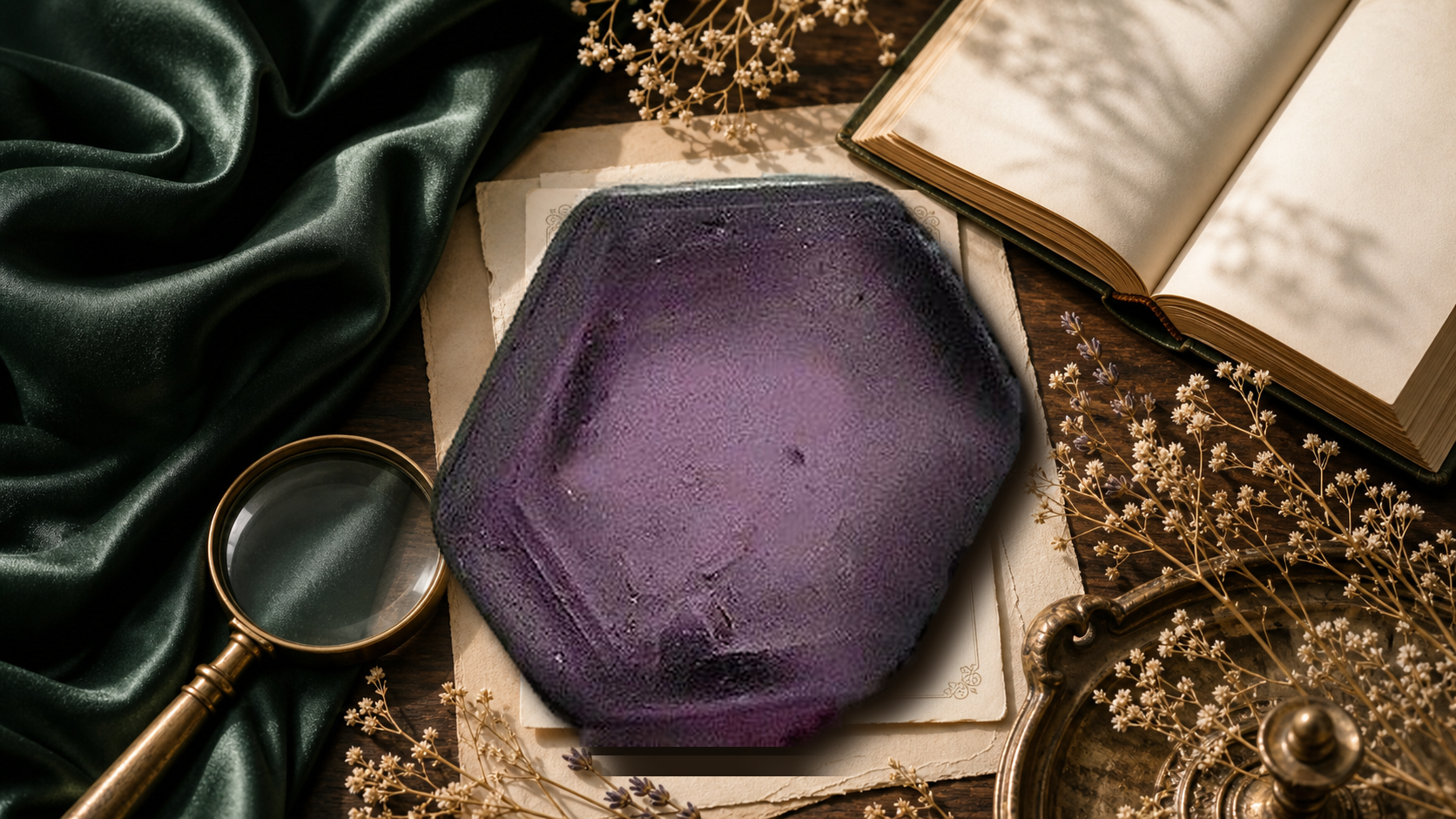
You have spent too long being mistaken for something more common. Taaffeite was first identified after being cut as a gemstone and misread as spinel. Recognition sometimes comes after the fact.
Taaffeite addresses misrecognition with unusual precision. Its history is inseparable from being mistaken for spinel until optical testing revealed a different...
The Meaning
Taaffeite in the Crystalis dictionary
Misrecognition leaves a strange bruise. The self starts doubting its own distinctness because the room keeps sorting it into the nearest available category, then acting as if nothing of value was lost in the compression.
Taaffeite gives that wound a mineral analog. It passed as something more ordinary until someone looked closely enough to realize the identification had been wrong. The rarity existed before the recognition did.
Taaffeite matters when self-knowledge has to survive bad labeling. Being misnamed does not make the underlying structure any less uncommon.
Stone Lore
Stories carried through time
Cultural notes are presented as tradition and historical context — stories carried through time.
Gemological Discovery
Count Taaffe's Identification from Cut Gemstones
In October 1945, Irish-Austrian gemologist Count Edward Charles Richard Taaffe (1898-1967) was examining a parcel of cut spinels purchased from a Dublin jeweler when he noticed that one stone exhibited double refraction, a property inconsistent with spinel's cubic crystal system. He sent the stone to the Natural History Museum in London, where B. W. Anderson and C. J. Payne confirmed it as a new mineral species.
This remains one of the only instances in gemological history where a new mineral was first identified from a faceted gem rather than a rough specimen. The mineral was named taaffeite in Count Taaffe's honor.
1945
Origin lore
Sri Lankan and Tanzanian Gem Sources
Subsequent taaffeite discoveries traced primarily to Sri Lanka's gem gravels and Tanzania's Tunduru district. Sri Lankan gem miners working the alluvial deposits of Ratnapura and other traditional mining areas occasionally recovered...
Sri Lankan & Tanzanian Gem Mining · 1945-present
Historical note
Beryllium Gemstone Family Context
Taaffeite belongs to a small and distinguished family of beryllium-bearing gemstones that includes emerald (beryllium aluminum silicate), chrysoberyl and alexandrite (beryllium aluminum oxide), and phenakite (beryllium silicate)....
Gemological & Mineralogical Context · 20th century
Ritual history
Recognition and Rarity in Crystal Practice
Crystal practitioners who documented taaffeite beginning in the 2000s focused almost exclusively on the themes of recognition and misidentification inherent in its discovery story. The mineral's therapeutic narrative was drawn directly...
Contemporary Crystal Practice · c. 2000s-present
Earth Record
Mineralogy and formation
Taaffeite entered science through mistake, but its formation story is stringent. The approved species commonly called taaffeite in the gem trade is a beryllium magnesium aluminum oxide related to the magnesiotaaffeite group. That chemistry alone makes rarity unsurprising. Beryllium must be present, magnesium and aluminum must be available, and the host environment must favor an oxide stable enough to form gem quality crystals.
Such conditions tend to arise in highly specialized metamorphic or metasomatic settings, often linked to Mg rich carbonate rocks or unusual contact environments.
Many known stones come from alluvial deposits in Sri Lanka and East Africa, which means the crystals survived weathering after eroding out of their primary host. That alluvial route delayed recognition because cut gems could be mistaken for spinel on appearance alone. The decisive mineralogical difference is structural: spinel is cubic and singly refractive, while taaffeite is hexagonal and doubly refractive.
That optical distinction reveals that the material is not just a color variant of a common species but an entirely different lattice with a much narrower geological origin.
Its hardness near 8, vitreous luster, and muted mauve to lilac palette place it in the company of serious gemstones, yet it remains obscure because supply is tiny. The crystal structure and chemistry sit in a small compositional corridor between better known oxide systems. It is rare not because it hides poorly, but because Earth does not often arrange Be, Mg, and Al into this particular framework.
Taaffeite therefore preserves the evidence of improbable compatibility. Elements that commonly disperse into other minerals instead stabilized together long enough to create a transparent oxide that could survive transport, cutting, and misidentification before finally being recognized. The stone is a record of low odds made durable.
Its listed properties reinforce that origin. The stated hardness of 8 and the reported luster of Vitreous to adamantine are not decorative trivia.
Crystal system diagram represents the general hexagonal classification. Diagram created by Crystalis for educational reference.
Hexagonal structure
Chemical Formula
BeMgAl4O8
Crystal System
Hexagonal
Mohs Hardness
8
Specific Gravity
3.60-3.62
Luster
Vitreous to adamantine
Color
Purple-Pink
IMA Status
species
Type Locality
Gem gravels, Ratnapura, Sri Lanka
IMA Number
Grandfathered (pre-1959)
01
Mineral conditions gather
02
Structure begins to crystallize
03
Taaffeite records place and pressure
Taaffeite is one of the rarest gemstones on Earth, over a million times rarer than diamond. It was discovered in 1945 by Irish gemologist Edward Taaffe, who identified it as a new mineral from a faceted stone that had been misidentified as spinel. It forms in metamorphosed limestones and skarns under highly specific conditions requiring beryllium, magnesium, and aluminum. Sri Lanka and Myanmar produce nearly all gem-quality material, with crystals rarely exceeding 2 carats.
Mineralogy: Chemical formula Mg₃Al₈BeO₁₆. Crystal system: Hexagonal. Mohs hardness: 8-8.5. Specific gravity: 3.60-3.62. Luster: Vitreous.
Sri LankaTanzaniaMyanmar
Telling it apart
Taaffeite gets mistaken for spinel more than almost any other rare gem because the colors overlap and the visual difference is subtle. The confirming step is optical testing. Spinel is singly refractive. Taaffeite is doubly refractive. Without that separation, even experienced eyes can be misled. A description based on mauve color and rarity alone is not enough to identify it.
The price gap is real because taaffeite is dramatically rarer than spinel. A buyer should expect laboratory confirmation or at least detailed gemological data before paying a taaffeite premium. This is one of those stones where science is not optional decoration. It is the whole point of the name. Accurate
A careful buyer should compare the label to habit, hardness, and provenance before paying a rarity premium. Taaffeite is one of the rarest gem minerals. With BeMgAl4O8 chemistry at Mohs 8, it resembles spinel closely. Only double refraction under a polariscope separates the hexagonal taaffeite from cubic spinel.
Spotting the real thing
Taaffeite: one of the rarest gems. Mohs 8-8. 5.
SG 3. 60-3. 62.
Vitreous to adamantine luster. Hexagonal. Originally misidentified as spinel.
Distinguished from spinel by double refraction (spinel is singly refractive). If a claimed taaffeite shows no double refraction under a polariscope, it is spinel. Gemological laboratory certification is essential.
Everyone sees the version of you that matches their expectations. You are categorized, labeled, filed under a name that is not quite yours. The real composition of who you are has been misidentified for so long that you have started to doubt it yourself. Your sympathetic system is running a constant low-grade protest: this is not who I am. But no one is looking closely enough to see the difference.
Taaffeite spent decades misidentified as spinel. It sat in gem collections under the wrong name until one person looked carefully enough to notice the double refraction. The stone's entire history is the experience of being misread. Holding taaffeite; if you are fortunate enough to have access; or even meditating on its story, validates the nervous system's protest. You are not what they labeled you. The correct identification requires someone willing to look with precision rather than assumption.
Shut down & far away
The Invisible Rarity
You have withdrawn because showing your full self to a world that cannot recognize it feels pointless. Why offer your rarest qualities to people who will confuse them for something common? Your dorsal vagal system has sealed the vault. The most precious aspects of your identity are locked away, protected by invisibility.
Taaffeite is one of the rarest gemstones on earth. Fewer exist than almost any other named stone. And for decades, the ones that did exist were invisible; sitting in collections, mislabeled, unseen. The stone teaches the nervous system that rarity is not diminished by non-recognition. The doubly refractive property was always there, even when no one tested for it. Resting with the concept of taaffeite; or with the stone itself; invites the withdrawn self to consider that being unseen is not the same as being absent.
Settled & connected
The Recognized Depth
Someone sees you. Not the surface presentation, not the label, not the category; you. The actual composition. The double refraction. The qualities that distinguish you from everything that merely resembles you. Your nervous system settles into the particular warmth of accurate recognition: finally, someone looked closely enough.
This is the ventral vagal state taaffeite maps to. The stone was correctly identified by a single act of careful attention. Count Taaffe did not discover a new mineral in the field; he recognized one that had been hiding in plain sight. In this state, you do not need everyone to see you. You need the right person to look carefully. Taaffeite at the heart in this state confirms that precision of recognition matters more than breadth of audience.
These associations come from tradition and reflective practice — a way of working with the stone, not a medical prescription.
Somatic Practice
Simple ways to work with Taaffeite
◇
Hold
Carry Taaffeite in a pocket or place it over the heart center during a pause.
◌
Meditate
Let the stone become a quiet tactile anchor while the breath slows.
☽
Breathe
Breathe in softness. Breathe out tension. Keep the practice simple.
✎
Journal
Write with Taaffeite nearby to name the feeling without forcing a conclusion.
✋
Bodywork
Rest the stone near the chest, hand, or bedside as a reminder to soften.
⌂
Environment
Place it where you want a visual cue for care, repair, or steadiness.
Field Instruction
The Recognition
The Right Eyes Will Find You.
3 min protocol
1
If you have taaffeite, hold it. If you do not, hold any small gemstone and dedicate the practice to the principle taaffeite embodies: being recognized for what you actually are. Place the stone in your dominant palm. Close your hand loosely. Close your eyes. Three breaths: inhale 4, exhale 6. On each inhale, feel the stone's density. Taaffeite is Mohs 8-8.5 -- nearly as hard as corundum. It does not yield. It does not soften to accommodate. It waits to be correctly identified.
2
With eyes still closed and the stone in your palm, bring your attention to your heart center. Breathe into the space behind the sternum. Inhale 4, hold 2, exhale 7. Three cycles. On each hold, consider one quality you possess that is consistently misread, overlooked, or mislabeled by others. Do not catalogue them all. Choose one. The hold is the pause where recognition happens -- the moment between looking and seeing where most people stop too soon. You are practicing the hold.
3
Move the stone from your palm to the center of your chest. Both hands over it. Eyes remain closed. Breathe naturally. The stone at your heart is not asking you to prove your worth. It is asking you to stop dimming the signal. Taaffeite's double refraction was always present -- it did not develop after being discovered. It was there in every moment of misidentification. Your distinguishing qualities are the same. Present whether recognized or not. Breathe into that truth for 30 seconds.
4
Open your eyes. Hold the stone in front of you at arm's length. Look at it. It looks like spinel. It looks like something common. But it is not. The difference is invisible without careful examination. Say silently or aloud: I do not need everyone to see. I need the right eyes. Place the stone down. The protocol is complete. You have practiced the discipline of accurate self-recognition, which is the prerequisite for being accurately recognized by others.
Stone Intelligence
The fact that makes Taaffeite memorable
Beryllium magnesium aluminum oxide, hexagonal, Mohs 8. Taaffeite was first identified in 1945 from a cut gem in a Dublin jeweler's tray. Count Edward Taaffe noticed it was doubly refractive, unlike spinel which it resembled.
One observation by one person on one stone led to the recognition of an entirely new mineral species. Fewer than fifty gem-quality specimens are known.
SCI
FERROTAAFFEITE-2N'2S, A NEW MINERAL SPECIES, AND THE CRYSTAL STRUCTURE OF Fe2+-RICH MAGNESIOTAAFFEITE-2N'2S FROM THE XIANGHUALING TIN-POLYMETALLIC ORE FIELD, HUNAN PROVINCE, CHINA
You have spent too long being mistaken for something more common. Taaffeite was first identified after being purchased as a spinel. Hold during periods when your identity is being misread.
Place on your desk during self-advocacy work. The gem was always this rare. Only the recognition changed.
Sacred Match
Sacred Match reaches for Taaffeite when what you feel sounds like:
exhaustion from being misidentified
a need for exact recognition
subtle selfhood overlooked by louder forms
precision fatigue from explaining difference
quiet rarity seeking proof not performance
Sacred Match listens to the body rather than to preference. It notices what you are feeling right now, the way you are protecting yourself, and the deeper need underneath both. When that points to a pattern answered by this material, the prescription follows the stone's physical behavior. Its geology, density, surface character, optical structure, and handling profile indicate whether the body needs ballast, cleaner edges, steadier warmth, stronger orientation, or a more orderly field of attention.
exhaustion from being misidentified -> body asking for orientation -> seeking a steadier internal map
a need for exact recognition -> protective effort running long -> seeking firmer support
subtle selfhood overlooked by louder forms -> pattern becoming costly -> seeking better organization
precision fatigue from explaining difference -> current strategy losing efficiency -> seeking a clearer material response
quiet rarity seeking proof not performance -> body signaling the next need -> seeking coherence
Pairings are treated like a recipe file: clear use, method, and safety.
Crystal Companion
Taaffeite + Amethyst
Use when
You want to layer the primary intention with another supportive tone.
How to work with it
Place the stones together during meditation, journaling, or a short reset.
Safety
Use as a reflective practice tool, not as a medical substitute.
Crystal Companion
Taaffeite + Rhodonite
Use when
You want to layer the primary intention with another supportive tone.
How to work with it
Place the stones together during meditation, journaling, or a short reset.
Safety
Use as a reflective practice tool, not as a medical substitute.
Crystal Companion
Taaffeite + Clear Quartz
Use when
You want to layer the primary intention with another supportive tone.
How to work with it
Place the stones together during meditation, journaling, or a short reset.
Safety
Use as a reflective practice tool, not as a medical substitute.
Crystal Companion
Taaffeite + Black Tourmaline
Use when
You want to layer the primary intention with another supportive tone.
How to work with it
Place the stones together during meditation, journaling, or a short reset.
Safety
Use as a reflective practice tool, not as a medical substitute.
Spinel. Necessary comparison. Taaffeite's history is bound to spinel because it was first recognized by not being spinel. The pair is ideal for a gem tray or teaching set. Keep them side by side under neutral light, labeled, so the visual similarity and structural difference both remain obvious.
Sinhalite. Rare gem restraint. Both stones reward close attention more than spectacle. Together they create a tray for collectors who prefer subtle rarity. Give each its own box or mount, with space between them.
Sapphire. Precision with status. Sapphire offers immediate recognition and harder blue discipline, while taaffeite brings mauve obscurity and a rarer story. This pairing works best in a gem cabinet where rarity and familiarity can balance one another.
Clear Quartz. Optical honesty. A small clear quartz point or crystal near a cut taaffeite emphasizes how much value can live in subtle optical difference rather than loud color. Keep the quartz behind the gem stand, not competing for attention.
Placement should stay intentional. Leave enough room between pieces for each material to keep its own visual job, because crowding can flatten the reason the pairing works.
Care & Cleansing
How to keep Taaffeite in good condition
Water Safe?
Water safe
This stone is generally safe for short water contact, though polishing, fractures, and metal settings can still change how a specimen behaves.
Sunlight Safe?
Sunlight safe
Tolerates daylight; safe to charge or display in the sun.
Authenticity
What to check
Natural Taaffeite should usually feel cooler than plastic or resin on first touch and warm more slowly in the hand.
Running Water
Brief rinse under cool running water. Pat dry immediately. Safe for stones with adequate hardness.
30-60 seconds
Yes, with conditions
The Full Answer
Taaffeite is generally water-safe for brief cleansing. Its 8-8. 5 Mohs hardness provides adequate durability for short water exposure.
Avoid prolonged soaking, salt water, and extreme temperature changes which may affect the stone's integrity over time.
Temperature
Natural Taaffeite should usually feel cooler than plastic or resin on first touch and warm more slowly in the hand.
Scratch logic
Use 8 on the Mohs scale as the check, not internet myths. A real specimen should behave in line with the hardness listed above.
Surface and luster
Look for a vitreous to adamantine surface quality rather than a painted or plastic shine.
Weight and density
The listed specific gravity is 3.60-3.62. If a specimen feels unusually light for its size, it may deserve a second look.
My Field Guide
Your private record and next steps
Journal
Add this stone to your private collection, then log what happened when you worked with it.
Shared Notes
Read public practice logs and pattern notes from the Crystalis community.
When members save a public field note for this stone, it will appear here.
Frequently Asked
Questions people ask about Taaffeite
What is taaffeite?
⌄
Taaffeite is one of the rarest gemstones on earth. It was first identified in 1945 by Count Edward Charles Richard Taaffe, an Irish-Austrian gemologist, who noticed an unusual doubly refractive stone in a parcel of cut spinels. It is a beryllium magnesium aluminum oxide with hexagonal crystal symmetry. Most people will never hold one.
Is taaffeite safe in water?
⌄
Yes. Taaffeite is water safe. At Mohs 8-8.5 it is extremely hard, and its stable oxide chemistry does not degrade with water contact. However, given its extraordinary rarity and value, you would not want to risk any specimen unnecessarily. If you own one, handle it with the care its scarcity demands.
Where does taaffeite come from?
⌄
Sri Lanka and Tanzania are the primary sources, with occasional specimens from Myanmar. The total number of faceted taaffeites in existence is estimated in the low hundreds. Most were initially misidentified as spinel, which shares a similar appearance. Positive identification requires gemological testing.
How hard is taaffeite?
⌄
Mohs 8 to 8.5. This places it between topaz and corundum in hardness, making it extremely durable. Despite this toughness, taaffeite is rarely used in jewelry because specimens are too rare and valuable to risk in everyday wear. Most cut stones are held by collectors.
What chakra is taaffeite associated with?
⌄
Taaffeite maps to the heart and crown chakras. Its rarity and the circumstances of its discovery, being recognized only by someone who looked carefully enough to see what others missed, align it with perceptual refinement and the capacity to recognize what is genuinely precious rather than merely prominent.
How is taaffeite different from spinel?
⌄
Taaffeite is doubly refractive while spinel is singly refractive. This is the key diagnostic distinction. They share similar colors (mauve, pink, violet) and can appear identical to the naked eye. The first taaffeite was identified precisely because Count Taaffe noticed double refraction in what was labeled spinel. Without gemological instruments, the difference is invisible.
How much is taaffeite worth?
⌄
Taaffeite is an exceptionally expensive gemstone per carat. Prices vary dramatically based on size, color, and clarity, but clean specimens can exceed several thousand dollars per carat. The rarity factor is the primary driver; there are fewer taaffeites in existence than almost any other named gemstone.
Can you use taaffeite in crystal practice?
⌄
Functionally, almost no one has access to taaffeite for regular practice work. If you do acquire a specimen, its energetic associations center on discernment, rarity, and the value of paying close attention. It is a stone that rewards the person who looks carefully. Most practitioners will encounter it only in photographs or museum collections.
Sources & Citations
Where this entry can be checked
Back Matter
Readable for people. Structured for AI search.
Sources stay visible in the page so readers, search engines, and answer systems can follow the evidence trail.
01
SCI
FERROTAAFFEITE-2N'2S, A NEW MINERAL SPECIES, AND THE CRYSTAL STRUCTURE OF Fe2+-RICH MAGNESIOTAAFFEITE-2N'2S FROM THE XIANGHUALING TIN-POLYMETALLIC ORE FIELD, HUNAN PROVINCE, CHINA
Yang Z., Ding K., Fourestier J., Mao Q., Li H. (2012). FERROTAAFFEITE-2N'2S, A NEW MINERAL SPECIES, AND THE CRYSTAL STRUCTURE OF Fe2+-RICH MAGNESIOTAAFFEITE-2N'2S FROM THE XIANGHUALING TIN-POLYMETALLIC ORE FIELD, HUNAN PROVINCE, CHINA. The Canadian Mineralogist. [SCI]DOI 10.3749/canmin.50.1.21
02
SCI
Crystal structure of Cr-bearing Mg3BeAl8O16, a new polytype of magnesiotaaffeite-2N′2S
Malcherek T., Schlüter J. (2016). Crystal structure of Cr-bearing Mg3BeAl8O16, a new polytype of magnesiotaaffeite-2N′2S. Acta Crystallographica Section E. [SCI]DOI 10.1107/S2056989016010215
03
SCI
The occurrence of högbomite and taaffeite in a spinel-phlogopite schist from the Mount Painter Province of South Australia
Teale C.T. (1980). The occurrence of högbomite and taaffeite in a spinel-phlogopite schist from the Mount Painter Province of South Australia. Mineralogical Magazine. [SCI]DOI 10.1180/minmag.1980.043.329.02
04
SCI
A database of Raman spectra of precious gemstones and minerals
Culka, A. & Jehlička, J. (2018). A database of Raman spectra of precious gemstones and minerals. Journal of Raman Spectroscopy. [SCI]DOI 10.1002/jrs.5504