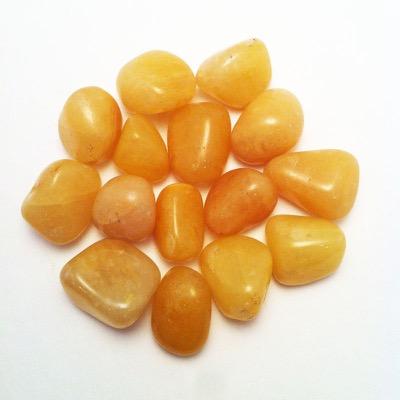
You have been responding to branding when the actual need is simpler and harder than that. Azeztulite is quartz, just SiO2, and quartz keeps its force in a rigid lattice rather than in the story wrapped around it. Your body is asking for the plain structure underneath the projection.
Azeztulite belongs to the crown, sternum, and midline where projection either accumulates or falls away. Mineralogically it is quartz, nothing more elaborate than SiO2...
The Meaning
Azeztulite in the Crystalis dictionary
The body is tired of ornament and wants the plain lattice underneath, hard, colorless, exact. What remains is the feeling of clenching around something simple enough to ring when tapped.
Stone Lore
Stories carried through time
Cultural notes are presented as tradition and historical context — stories carried through time.
Crystalis Lore
The story of Azeztulite
You have been responding to branding when the actual need is simpler and harder than that. Azeztulite is quartz, just SiO2, and quartz keeps its force in a rigid lattice rather than in the story wrapped around it. Your body is asking for the plain structure underneath the projection.
Lore review
Tradition notes are being reviewed.
This entry keeps symbolic meaning separate from sourced cultural history. When dedicated tradition rows are available, they will appear here as individual lore cards.
Earth Record
Mineralogy and formation
The honest starting point is taxonomy. Azeztulite is not a recognized mineral species. It is a trade name applied to ordinary quartz, usually white quartz, and mineralogical databases explicitly identify it as an unofficial made-up term rather than a valid species. Any account of its formation therefore has to separate marketing narrative from geology. There is no distinct Azeztulite genesis. There is quartz genesis, and quartz has several well-established geological routes.
Quartz, SiO2, forms wherever silica becomes sufficiently concentrated and then precipitates from melt, fluid, or metamorphic redistribution. The most varied and dramatic crystals come from hydrothermal veins, where hot silica-rich brines rise through fractures and cool or react with surrounding rock. In those systems, published descriptions place quartz growth broadly between about 150 and 600 °C.
At higher temperatures and pressures, water readily dissolves silica from rock or magma. When those fluids move into cooler or chemically different zones, quartz precipitates along fissures as seams, veins, druses, and large euhedral crystals. Much of the world's collectible clear and milky quartz formed by that basic mechanism.
Pegmatites provide another pathway. During the late stages of granitic crystallization, residual melts and exsolved fluids become enriched in silica, water, and incompatible elements. Quartz then crystallizes in coarse masses, cores, and cavities alongside feldspar and mica. In Alpine-type fissures, deformation and metamorphism mobilize silica into open cracks, where quartz grows from fluid at comparatively low confining pressure but often under high differential stress in the surrounding rock.
In schists and phyllites, metamorphic segregation can also collect silica into lenticular white veins parallel to foliation. These are distinct settings, yet all end with the same framework of corner-sharing SiO4 tetrahedra.
White quartz sold under the Azeztulite label is often massive rather than spectacularly crystalline, which usually indicates either vein quartz or common milky quartz from pegmatitic or hydrothermal settings. Milky appearance commonly comes from innumerable fluid inclusions or microscopic structural irregularities that scatter light. That whiteness is not evidence of a separate species or unusual energy source. It is a textural effect within common quartz.
Pressure conditions vary widely because quartz is almost ubiquitous in the continental crust. It can crystallize at shallow levels in open fissures, in pegmatitic bodies emplaced a few kilometers deep, or in metamorphic cracks formed during mountain building. Temperatures can range from low hydrothermal conditions into magmatic settings. The unifying factor is silica saturation and a path for precipitation.
So the controversy is not about hidden mineralogy. It is about naming. When sold as Azeztulite, the specimen acquires a mystical story. Geologically, it remains quartz, one of the most common minerals on Earth. Its formation is the formation of silica in fluid and rock systems, not the birth of a separate crystal species.
Crystal system diagram represents the general trigonal classification. Diagram created by Crystalis for educational reference.
Trigonal structure
Chemical Formula
SiO2
Crystal System
Trigonal
Mohs Hardness
7
Specific Gravity
2.59-2.65
Luster
vitreous
Color
colorless to white, commonly translucent or milky
IMA Status
Trade name (quartz variety)
01
Mineral conditions gather
02
Structure begins to crystallize
03
Azeztulite records place and pressure
Material sold as Azeztulite has been associated with several quartz localities, especially in North Carolina in the United States, Vermont, and parts of South India, though the trade name can be applied more broadly depending on seller. Geologically, these pieces are usually forms of massive or crystalline quartz occurring in metamorphic or hydrothermal environments.
Quartz forms in many settings, but bright white to translucent material commonly comes from silica-rich fluids moving through fractures, from pegmatitic pockets, or from metamorphosed silica-rich host rocks. In regions such as the Blue Ridge and Appalachian metamorphic belts, tectonic pressure, fluid movement, and long mineral histories create abundant quartz veins and pockets. Similar processes occur worldwide wherever silica-bearing fluids circulate through rock and cool or react.
What makes certain places favored in the trade is often a mix of geology and branding. A locality may produce especially white, translucent, or fine textured quartz that polishes well or occurs in attractive natural pieces. Once a site becomes associated with a spiritual or commercial narrative, material from that area can be renamed and distinguished in the market even if the underlying mineral is ordinary quartz.
So the real origin story is geological first and commercial second: silica-rich environments make the stone, and marketing gives it the special name.
marketed from North CarolinaVermontArkansasand other quartz localities
Telling it apart
Azeztulite is not an official mineral species. What you are actually buying is quartz sold under an unofficial trade name (a marketing label created by Robert Simmons of Heaven and Earth LLC), usually with a spiritual backstory attached. Even Robert Simmons's own material admits the chemistry is quartz. Mindat is even less diplomatic and calls it a made-up name for ordinary quartz. That is the controversy in one sentence.
The confusion is not "Azeztulite versus some rare lookalike." The confusion is quartz versus branding. The definitive test is standard mineral identification. Hardness around 7, quartz luster, quartz fracture, quartz composition. There is no separate Azeztulite chemistry, no distinct crystal system, and no recognized mineral species status to rescue the claim. If the seller cannot tell you the actual quartz variety or locality without using the trademark-style story, that is your answer.
Why it matters: branding can turn common quartz into a luxury-priced spiritual product. Buy it if you want the narrative. Buy it if you like the energy language. But do not buy it thinking you discovered a new mineral. You did not. You bought quartz with a premium attached to the name, and that distinction protects both your wallet and your expectations.
Spotting the real thing
The first test is conceptual: treat Azeztulite as a trade name, not a distinct mineral species. If a seller claims it is a newly discovered mineral unlike quartz, that is already a red flag. Most material sold under this name is white or translucent quartz, sometimes from specific named localities. Realistic identification starts by asking whether the piece behaves like quartz.
Use hardness. Quartz is Mohs 7, so it should scratch glass and resist scratching from a steel key or knife blade. A fingernail should do nothing. If the stone scratches too easily, powders off, or feels chalky, it is not quartz. This is one of the strongest no-equipment tests.
Check temperature and heft. Real quartz feels cool on first touch and takes time to warm in the hand. It also has a moderate, solid weight for its size. Resin or plastic imitations warm quickly and often feel oddly light. Glass fakes can mimic weight, but they often show rounded bubbles internally, which quartz should not.
Inspect the interior. Genuine quartz may show veils, fractures, cloudy zones, or natural inclusions, but not perfectly round gas bubbles. Bubbles point to glass. If the color is bright white, it should still look mineral, with granular clouding or slight translucency rather than painted opacity.
Look at the fracture and surface. Quartz usually breaks with conchoidal curved surfaces and has a glassy luster when polished. It does not peel in layers or show soft waxy gouging. If sold as natural crystal, check for believable crystal faces and growth patterns rather than heavily sandblasted or acid-etched surfaces made to seem more special. Specific to this material, authenticity often means not whether it is "true Azeztulite," but whether it is honestly represented quartz from the stated locality rather than common quartz with inflated branding.
Energetic Associations
How people most often work with Azeztulite
✧
Spiritual Clarity
A traditional association that gives Azeztulite a clear intention pathway in practice.
✧
Attunement
A traditional association that gives Azeztulite a clear intention pathway in practice.
✧
Meditation
A traditional association that gives Azeztulite a clear intention pathway in practice.
✧
Higher Consciousness
A traditional association that gives Azeztulite a clear intention pathway in practice.
Attention climbs upward and will not come down. The forehead feels bright or buzzy, breath stays high in the chest, and the mind wraps each sensation in meaning before the body has finished feeling it. Intuition and projection blur together. Quartz offers a physical metaphor for vertical organization: strength held in a rigid lattice, not in narrative. Practitioners describe contact along the sternum or above the head as a way to organize perception around line, symmetry, and repetition until cortical elaboration quiets.
Shut down & far away
The Spiritual Bypass
The elevation collapses into a fog dressed up as transcendence. You float above the body, fatigue hidden under lifted language, breath shallow and far from the ground. Practitioners describe azeztulite work here as a return to plain structure: weight in the seat, the simple fact of the stone's temperature, the axis of the spine. The quartz does not chase the height. It offers the floor, so the body can come back down without shame about needing to.
Settled & connected
The Plain Signal
Interpretation settles and the simple signal underneath becomes legible. Fatigue is just fatigue. Overstimulation is just overstimulation. You can feel breath, weight, and temperature without converting each into meaning. Practitioners report that sustained work builds cleaner appraisal, a body that recognizes plain structure as sufficient and no longer reaches for ornate explanation to feel safe.
These associations come from tradition and reflective practice — a way of working with the stone, not a medical prescription.
Somatic Practice
Simple ways to work with Azeztulite
◇
Hold
Carry Azeztulite in a pocket or place it over the heart center during a pause.
◌
Meditate
Let the stone become a quiet tactile anchor while the breath slows.
☽
Breathe
Breathe in softness. Breathe out tension. Keep the practice simple.
✎
Journal
Write with Azeztulite nearby to name the feeling without forcing a conclusion.
✋
Bodywork
Rest the stone near the chest, hand, or bedside as a reminder to soften.
⌂
Environment
Place it where you want a visual cue for care, repair, or steadiness.
Field Instruction
The Plain Axis
The Reduction Protocol
3 min protocol
1
Hold azeztulite against the sternum or rest it above the head. Notice where attention has climbed. If the forehead feels bright or buzzy, that is the inflation. Do not argue with it. Just locate it.
2
Return to four plain facts in turn. Breath. Weight. Temperature. Axis. Each time the mind reaches to wrap a sensation in meaning, come back to the next plain fact. Quartz keeps its strength in the lattice, not the story. Borrow that.
3
Find the simple signal underneath. Often it is fatigue, overstimulation, or a need for firmer vertical support. Let it be that ordinary. You are not losing anything spiritual. You are letting plain structure be enough.
Stone Intelligence
The fact that makes Azeztulite memorable
Azeztulite is best understood by stepping past the trade story and looking directly at the material. In most cases it is quartz, which means its real strengths are the familiar ones of silica: hardness, durability, transparency to translucency, and a stable crystal lattice. That makes it useful as a clean reset for people who want the experience of a bright white stone without needing elaborate claims attached to it.
In practice, it tends to function like other quartz pieces do, through weight, coolness, light handling, and visual simplicity rather than through anything exotic that the stone itself can prove. Its clearest value is that the material can stand on its own.
SCI
Phase-field modeling of epitaxial growth of polycrystalline quartz veins in hydrothermal experiments
People usually use Azeztulite the same way they use white quartz. It is chosen for visual simplicity, brightness, and a clean polished feel. White or translucent quartz makes a strong visual anchor because it reflects ambient light without a lot of pattern competing for attention. That can be helpful on a desk, bedside table, or small tray where the eye benefits from a single clear focal point.
As a hand stone, quartz works because it combines hardness, coolness, and moderate weight. The body reads those cues quickly. A smooth quartz piece gives repeatable tactile input through the palm and fingertips, which can support settling and concentration in the same way other worry stones do. There is no need to make that mystical. Predictable sensory information often helps attention stop scattering.
People also use it in layouts or collections where they want a bright neutral material that pairs visually with almost anything. White quartz contrasts well with dark stones, metals, wood, and fabric. In photography and display, it can function as a light-catching center point that makes surrounding objects easier to see.
Natural points or clusters may be placed where people want something that looks crisp and architectural without a lot of color. Polished palm stones, spheres, and towers are common because quartz takes a strong polish and holds up well under handling. The practical advantage is durability. It can be used daily, carried in a bag, or handled during reading, writing, or breathing exercises without much fuss.
The most grounded use case for Azeztulite is simply this: it is a quartz object people choose when they want clarity of form and a low maintenance sensory tool.
Sacred Match
Sacred Match reaches for Azeztulite when what you feel sounds like: pressure at the forehead during overthinking, a lifted chest with breath that stays high, difficulty separating intuition from projection, fatigue hidden under spiritual language, dizziness from too much upward focus, and the wish for simpler internal structure.
Sacred Match listens through nervous system diagnosis, not mythology. The evaluation commonly identifies cognitive elevation with insufficient grounding, a pattern where sensation is rapidly wrapped in meaning before the body has finished feeling it. Azeztulite enters when the system needs quartz behavior: rigid lattice, clean axis, and less story around the signal.
Forehead pressure maps to the need for perceptual simplification. High chest breathing maps to the need for a stronger vertical line through the torso. Projection confusion maps to the need for factual sensory data. Spiritualized fatigue maps to the need to name depletion plainly. Upward dizziness maps to the need for ballast and midline orientation. The wish for simplicity maps to the need for structure that does not perform.
Pairings are treated like a recipe file: clear use, method, and safety.
Crystal Companion
Azeztulite + Amethyst
Use when
You want to layer the primary intention with another supportive tone.
How to work with it
Place the stones together during meditation, journaling, or a short reset.
Safety
Use as a reflective practice tool, not as a medical substitute.
Crystal Companion
Azeztulite + Rhodonite
Use when
You want to layer the primary intention with another supportive tone.
How to work with it
Place the stones together during meditation, journaling, or a short reset.
Safety
Use as a reflective practice tool, not as a medical substitute.
Crystal Companion
Azeztulite + Clear Quartz
Use when
You want to layer the primary intention with another supportive tone.
How to work with it
Place the stones together during meditation, journaling, or a short reset.
Safety
Use as a reflective practice tool, not as a medical substitute.
Crystal Companion
Azeztulite + Black Tourmaline
Use when
You want to layer the primary intention with another supportive tone.
How to work with it
Place the stones together during meditation, journaling, or a short reset.
Safety
Use as a reflective practice tool, not as a medical substitute.
Clear Quartz
Plain lattice, amplified. Azeztulite is quartz beneath the story, and clear quartz reinforces that stripped-down structural honesty. Together they help the body stop chasing special effects and return to the clean geometry of what is actually happening. Place azeztulite at the sternum and clear quartz at the brow.
Hematite
Concept with ballast. Quartz brings rigid SiO2 order, while hematite adds gravity and weight when the person has floated into projection. This pairing supports reality contact by giving elevated perception a denser landing place in the body. Hold azeztulite in the non-dominant hand and place hematite at the soles or between the ankles.
Smoky Quartz
Same family, different altitude. Azeztulite offers the bare framework of quartz, and smoky quartz brings that framework downward into the pelvis and legs. The pairing helps turn spiritual inflation into embodied clarity, so the body can use insight instead of orbiting it. Place azeztulite above the crown or at the upper chest and smoky quartz below the navel.
Selenite
Clean line through narrative noise. Selenite clears residue from the field, and azeztulite keeps attention on the simple lattice underneath interpretation. Together they can soften confusion that comes from too much symbolic layering. Sweep selenite around the head and rest azeztulite at the center of the chest.
Care & Cleansing
How to keep Azeztulite in good condition
Water Safe?
Water safe
This stone is generally safe for short water contact, though polishing, fractures, and metal settings can still change how a specimen behaves.
Sunlight Safe?
Sunlight safe
Tolerates daylight; safe to charge or display in the sun.
Authenticity
What to check
Natural Azeztulite should usually feel cooler than plastic or resin on first touch and warm more slowly in the hand.
Because Azeztulite is generally quartz, care is straightforward. Quartz is durable, not water-soluble, and suitable for normal handling. Brief rinsing in water is safe, and mild soap can be used if the piece is dirty. Dry it with a soft cloth after washing, especially if it has natural fractures where water can sit temporarily.
Avoid harsh chemicals such as bleach, hydrofluoric products, and abrasive cleaners. Quartz itself is chemically stable in ordinary household conditions, but polished surfaces can still lose their finish if treated roughly. Ultrasonic cleaners are usually unnecessary and can worsen existing fractures in included or cracked pieces.
Sun exposure is usually tolerated better by quartz than by many colored minerals, but prolonged direct sun and heat are still not ideal if the stone has internal fractures or has been marketed in a very white translucent form that could show surface weathering over time. The safer choice is bright indirect light rather than windowsill heat.
Store it away from softer stones that quartz can scratch. A cloth pouch, padded tray, or divided box works well. Quartz is hard enough to damage shell, calcite, selenite, fluorite, and many polished metals if pieces knock together.
Quartz is not toxic in hand specimen form, but do not inhale dust from cutting or breaking it, since silica dust is harmful to the lungs. For ordinary ownership, the main care rules are simple: light washing is fine, avoid severe heat and impacts, and store it where its hardness does not become a problem for the objects around it.
Temperature
Natural Azeztulite should usually feel cooler than plastic or resin on first touch and warm more slowly in the hand.
Scratch logic
Use 7 on the Mohs scale as the check, not internet myths. A real specimen should behave in line with the hardness listed above.
Surface and luster
Look for a vitreous surface quality rather than a painted or plastic shine.
Weight and density
The listed specific gravity is 2.59-2.65. If a specimen feels unusually light for its size, it may deserve a second look.
My Field Guide
Your private record and next steps
Journal
Add this stone to your private collection, then log what happened when you worked with it.
Shared Notes
Read public practice logs and pattern notes from the Crystalis community.
When members save a public field note for this stone, it will appear here.
Frequently Asked
Questions people ask about Azeztulite
What does azeztulite do?
⌄
Azeztulite is quartz sold under a trade name, used the way clear or white quartz is used, as a bright visual anchor and a durable hand stone. The clarity gives the eye a single focal point, and the cool hardness gives the palm steady, repeatable sensory input that can help scattered attention settle.
Can azeztulite go in water?
⌄
Yes. Azeztulite is quartz (SiO2), Mohs 7, insoluble and stable in water. Brief rinsing and mild soap are fine. Dry any piece with natural fractures so water does not sit inside them.
What chakra is azeztulite?
⌄
It is marketed as a crown chakra stone, associated with clarity and higher awareness; consistent with how clear quartz is generally used.
How do you cleanse azeztulite?
⌄
As quartz, it tolerates every standard method: running water, moonlight, sound, smoke, or a selenite plate. It handles sunlight better than most colored stones, though prolonged heat is not ideal for fractured pieces.
Is azeztulite a real mineral?
⌄
No. Azeztulite is a trade name created by a single company for quartz from certain localities, not an approved mineral species. Strip the branding and it is plain SiO2. That is not a downgrade; quartz is one of the most durable minerals on Earth. But it is not a separate species.
Why is azeztulite so expensive?
⌄
The premium is for the name and the metaphysical story, not the material; the chemistry is ordinary quartz. If you want the narrative, that is a fair reason to buy it. Just know you are paying for branding, not a rare mineral.
What pairs well with azeztulite?
⌄
As quartz, it pairs and amplifies broadly, with amethyst for calm, selenite for clearing, or any stone whose effect you want strengthened.
How can you tell if azeztulite is real?
⌄
Test it as quartz: Mohs 7 (it scratches glass), vitreous luster, conchoidal fracture, cool to the touch. There is no separate azeztulite chemistry. If a seller cannot name the actual quartz variety or locality without leaning on the trademark story, that is your answer.
Sources & Citations
Where this entry can be checked
Back Matter
Readable for people. Structured for AI search.
Sources stay visible in the page so readers, search engines, and answer systems can follow the evidence trail.
01
SCI
Phase-field modeling of epitaxial growth of polycrystalline quartz veins in hydrothermal experiments
Wendler, F., Okamoto, A., & Blum, P. (2015). Phase-field modeling of epitaxial growth of polycrystalline quartz veins in hydrothermal experiments. Geofluids. [SCI]DOI 10.1111/gfl.12144
02
SCI
Hydrothermal Quartz Vein Formation, Revealed by Coupled SEM-CL Imaging and Fluid Inclusion Microthermometry
Batkhishig, B., Bignall, G., & Tsuchiya, N. (2005). Hydrothermal Quartz Vein Formation, Revealed by Coupled SEM-CL Imaging and Fluid Inclusion Microthermometry. Resource Geology. [SCI]DOI 10.1111/j.1751-3928.2005.tb00223.x