Crystal Encyclopedia
40+YEARS

Zeolite

Mx/n[(AlO2)x(SiO2)y]·zH2O · Mohs 3.5 · group variable · solar plexus Chakra

The stone of zeolite: meaning, mineralogy, and somatic practice.

CleansingMental ClarityEnergy RenewalTransition Support

This page documents traditional and cultural uses of zeolite alongside emerging research on tactile grounding objects. Crystalis does not claim that zeolite treats, cures, or prevents any medical condition. For mental health concerns, consult a qualified professional.

Crystalis Editorial · 40+ Years · Herndon, VA

Origins: India, Iceland, Italy, Germany, USA, Canada, Turkey, New Zealand

Quick actions

Move from reference into practice

Crystalis

Materia Medica

Zeolite

The Inner Purifier

Zeolite crystal
CleansingMental ClarityEnergy Renewal
Crystalis

Protocol

3-minute reset

Protocol steps have not been loaded for this entry yet.

tap to flip for protocol

The belly feels like a house with too many small rooms holding what should have moved on. Pressure softens only when something exchangeable finally slips out through the channels.

What Your Body Knows

Nervous system states

Zeolite belongs to the gut, lower ribs, sinuses, and any internal passage that feels swollen with what should have already moved on. Its aluminosilicate framework carries charge, holds cations, and allows water and gases to travel through tiny channels. The physical lesson is precise: relief does not always come from adding pressure. Sometimes it comes from changing what the structure is holding.

The nervous system analogue appears as congested sympathetic activation. The abdomen puffs, the diaphragm moves shallowly, the head feels cottoned over, and the person tries harder when the body actually needs exchange. Muscles around the rib basket grip because the system is acting like retention equals safety. Yet the more tightly it holds, the more stuffy the whole field becomes.

Zeolite offers a somatic image of selective release. The body can imagine pores, channels, and swaps rather than rupture. Contact over the solar plexus or lower ribs creates a local focus for exhale-based downshifting, and that focus supports interoceptive sorting. What belongs can remain in the structure. What is exchangeable can leave. That distinction matters. The mechanism is not dramatic catharsis but micro-clearance: a longer exhale, softening around the navel, a sense that internal pressure has routes. As the body stops equating discharge with danger, sympathetic over-holding eases and digestive, respiratory, and cognitive space reopen together.

Nervous system mapping has not been added for this crystal yet.

Nervous system mapping based on polyvagal theory (Porges, S.W. The Polyvagal Theory. Norton, 2011).

The Earth Made This

Formation: How Zeolite Becomes Zeolite

What most people get wrong about zeolite is that they talk about it as if it were one mineral with one formula. It is not. Zeolite is a group name for many framework minerals, all built from linked tetrahedra that create channels and cages occupied by water molecules and exchangeable cations. If a specimen is sold simply as "zeolite," that usually means the seller either does not know the exact species or is using the group name because the piece contains multiple zeolite minerals. That is common in the trade and sloppy in mineralogy.

The defining fact is structural. Zeolites are open-framework aluminosilicates with extra-framework cations such as sodium, potassium, or calcium and water in their cavities. Those cavities are not decorative trivia. They are why zeolites can dehydrate reversibly, take up guest molecules, and exchange ions without destroying the framework. That combination made zeolites scientifically important long before they became popular in retail crystal language. They are central to catalysis, water treatment, sorption, and petrologic interpretation of low-temperature hydrothermal and metamorphic environments.

Natural zeolites occur in altered volcanic rocks, vesicles in basalt, tuffs, sedimentary settings, and low-grade metamorphic terrains. Their habits vary widely because the group includes monoclinic, orthorhombic, tetragonal, triclinic, hexagonal, and cubic species. So the correct record is not "zeolite is this one crystal." The correct record is that zeolites are a structurally defined mineral family. Retail pieces are often stilbite, heulandite, apophyllite associations, scolecite, natrolite, or mixed cavity linings, but the word itself refers to the framework class, not a single species.

Material facts

What the stone is made of

Zeolites are hydrated framework aluminosilicates with variable extra-framework cations. A standard generalized formula is Mx/n[(AlO2)x(SiO2)y]·zH2O, where M may be Na, K, Ca, Sr, Ba, or other cations. Crystal systems vary across the group and include triclinic, monoclinic, orthorhombic, tetragonal, hexagonal, and cubic species. Because "zeolite" is a group term, hardness, density, luster, and color vary by species. Retail material commonly falls around Mohs 3.5 to 5.5 and specific gravity about 2.0 to 2.4. Luster is typically vitreous to pearly, and colors are commonly white, colorless, cream, pink, peach, red, or pale green. Notable properties are open channels, exchangeable cations, reversible dehydration below roughly 400 °C in many species, and low-temperature hydrothermal occurrence in volcanic rocks.

Deeper geology

After volcanic ash settles, a second history can begin. Zeolites commonly form not at the moment of eruption but later, when glassy volcanic material is altered by water. The essential setting is an aluminum- and silica-bearing precursor, usually volcanic tuff or ash, plus fluids capable of dissolving unstable glass and rebuilding it into an open aluminosilicate framework. In the western United States, major natural zeolite deposits formed by alteration of volcanic tuffs in alkaline lake basins, open hydrologic systems, and hydrothermal environments. This is why zeolites often occur as replacements in ash beds rather than as large free-growing crystals.

In lake-basin settings, the chemistry can be remarkably specific. USGS work on zeolitic tuffs from the Gila Conglomerate in New Mexico describes silicic ash deposited in a closed saline, alkaline lake where pH likely exceeded 9.5. Under those conditions, glass altered first to smectitic material and then to zeolite species such as chabazite, clinoptilolite, erionite, mordenite, phillipsite, and locally analcime. The process took place during low-temperature, low-pressure diagenesis at valley-floor conditions, not in deep crustal metamorphism. That matters because zeolite frameworks are hydrated and open. They are products of chemically active water moving through porous sediment, not of high-temperature consolidation.

Hydrothermal systems produce a related but distinct path. In basaltic lavas and submarine volcanic rocks, zeolites can fill vesicles, joints, fractures, and interstices as circulating fluids alter primary glass and feldspathic material. Published studies of zeolitization in volcanic environments commonly place these conditions below about 250 °C and below about 200 MPa, a domain that fits shallow crustal hydrothermal alteration rather than deep metamorphic recrystallization. The framework forms tetrahedra of SiO4 and AlO4 linked into cages and channels, with alkali or alkaline-earth cations and water occupying the cavities. Those cavities are not damage. They are the defining architecture.

Because the framework carries a net negative charge, the cavities host exchangeable cations such as Na, K, Ca, and Mg. That property is why zeolites later become useful in industry for ion exchange, adsorption, and molecular sieving. But those functions derive directly from formation. The mineral structure develops in water-rich settings where ions are already being shuffled, concentrated, and reorganized during alteration.

Zeolite therefore is less a single origin story than a family of low-temperature reconstruction pathways. Volcanic glass is the usual starting material. Alkaline groundwater or hydrothermal fluids do the chemical work. Time, permeability, and fluid composition determine which species crystallizes. What takes shape is a porous aluminosilicate skeleton built by replacement, one channel at a time, in the quiet aftermath of volcanism.

Mineralogy

Mineral specs

Chemical Formula

Mx/n[(AlO2)x(SiO2)y]·zH2O

Crystal System

group variable

Mohs Hardness

3.5

Specific Gravity

2.0-2.4

Luster

vitreous to pearly

Color

colorless, white, cream, pink, peach, red, pale green

Sacred Match Notes

When this stone becomes the right door

Sacred Match prescribes Zeolite when you report: swelling beneath the ribs after stress, a foggy forehead with sinus pressure, abdominal fullness that tracks emotion, breath that cannot descend past the diaphragm, mental stuffiness after crowded interactions, and the sense that the system is holding more than it can process.

Sacred Match prescribes through physiological pattern recognition. The diagnostic commonly finds a retention pattern with sympathetic over-holding and poor internal exchange. The body is not empty and underpowered. The body is clogged, charged, and unable to swap out what is no longer useful. Zeolite enters when the system needs channel behavior rather than force behavior.

Rib swelling maps to the need for a longer exhale and internal decompression. Sinus and forehead fog map to the need for ventilation and perceptual clearing. Stress-linked abdominal fullness maps to the need for selective release. A blocked diaphragm maps to the need for movement through the middle body. Post-crowd mental stuffiness maps to the need to discharge what was absorbed but never integrated.

3-Minute Reset

3-Minute Reset

Protocol duration pending

3-Minute Reset steps have not been loaded for this crystal yet.

Mineral Distinction

What sets Zeolite apart

Here is the consumer problem with "zeolite": it is usually too vague to be useful. Zeolite is not one mineral. It is a whole mineral group with many species, and crystal sellers routinely collapse stilbite, heulandite, scolecite, and more into one label. Then they muddy it further by selling apophyllite as "zeolite" even though apophyllite is not technically a zeolite at all.

So name the confusion plainly: species confusion and natural-vs-synthetic confusion. The definitive test is not color. It is species-level identification. For collector accuracy, the right answer often requires crystal habit plus locality, and sometimes XRD or chemistry. A square cross section and perfect basal cleavage point toward apophyllite, not a true zeolite. Industrial synthetic zeolites add another layer, because the chemistry may be zeolitic while the specimen is man-made.

Why it matters: the word "zeolite" can hide sloppy labeling. Species affects value, collecting accuracy, and even what you think you are paying for aesthetically. If a seller cannot tell you whether it is stilbite, heulandite, scolecite, or apophyllite, they do not really know the specimen. And if they cannot tell you whether it is natural or synthetic, you definitely should not pay a premium.

Care and Maintenance

How to care for Zeolite

Care depends on the species, but most zeolites should be treated as delicate display minerals. Many have perfect or good cleavage, fine crystal sprays, or porous surfaces that chip easily. Brief contact with water is usually acceptable for sturdier pieces, but soaking is not ideal. Porous frameworks, attached matrix, and associated minerals such as calcite can trap moisture, dull surfaces, or weaken fragile points. If the exact zeolite species is unknown, keep water exposure minimal.

Do not use harsh chemicals, salt, vinegar, or ultrasonic cleaners. These can damage associated minerals, open fractures, or leave residue in the pore spaces. Dust with a soft dry brush, makeup brush, or microfiber cloth. For stuck dirt, use a barely damp cotton swab and dry the piece right away.

Keep zeolite out of long direct sun if it includes pale peach, salmon, or delicate white crystals, since heat can stress fracture-prone specimens and fade surface appearance over time. Storage matters as much as cleaning. Wrap specimens separately or place them in padded boxes so crystal sprays do not rub against harder minerals.

Zeolites are not water-soluble in the way gypsum or halite are, but many are brittle enough that water plus handling becomes a risk. They are also not a material to use for crystal elixirs or ingestible preparations. Some specimens may contain dust, clay, or associated minerals you do not want in water. Best practice is simple: keep them dry, supported, and handled by the matrix rather than the crystal tips.

Crystal companions

What pairs well with Zeolite

Selenite

Exchange plus clearing. Zeolite holds charged channels that trap and swap cations, while selenite helps the body imagine release without force. Together they support the feeling of internal congestion easing because something movable finally leaves the structure. Place zeolite on the solar plexus and sweep selenite from ribs toward pelvis on the exhale.

Smoky Quartz

Porous structure with downward transit. Zeolite's micropores and smoky quartz's rooting quality make a useful pair when bloat, mental stuffiness, or emotional backlog needs direction. The pairing emphasizes passage rather than suppression, as though pressure can move through channels instead of hardening around them. Place zeolite just above the navel and smoky quartz between the thighs or at the feet.

Black Tourmaline

Filter with boundary. Zeolite changes what is held inside its framework, and black tourmaline keeps outside charge from continuously refilling the system. Used together, they help when the body feels swollen from both accumulation and exposure. Hold zeolite over the lower ribs and place black tourmaline at the base of the spine.

Clear Quartz

Channel definition. Clear quartz brings linear focus, while zeolite contributes porous exchange and internal ventilation. This pairing can help the mind feel less fogged because attention is given a route through the clutter rather than told to push through it. Place clear quartz at the brow and zeolite at the sternum or upper abdomen.

In Practice

How Zeolite is used

People use zeolite in two very different ways: as a mineral specimen and as a functional industrial material. As a specimen, it is valued for its cavity growth, radiating blades, and airy architecture. A good zeolite piece gives the eye depth and internal space, which is why people place it where close looking matters, such as desks, shelves, or meditation corners. The visual mechanism is not mystical. Open crystal geometry gives attention somewhere to move slowly without being overloaded by glare or polish.

Tactile use is more limited because many zeolites are fragile, but sturdier matrix pieces can still be held. Their surfaces often alternate between rough volcanic host rock and delicate crystal zones. That contrast can be regulating for people who focus better with textured objects, because the hand receives varied but predictable feedback.

Outside decorative use, zeolites are widely used for their real physical properties. Their microporous framework can absorb water, host ions, and separate molecules by size. That is why zeolite appears in water treatment, odor control, cat litter, filtration media, gas separation, horticulture, and soil conditioning. The practical thread is the same across settings: the structure holds and exchanges.

In personal spaces, people often keep zeolite where they want a reminder of ventilation, release, or internal order. Even without metaphysical claims, its form suggests airflow and passage. It is especially compelling for those who respond to materials that look visibly breathable rather than dense or sealed. Zeolite works best when appreciated for what it actually is: a mineral architecture that turns open internal space into a function.

Verification

Authenticity

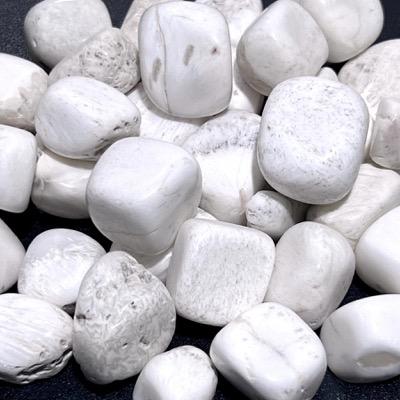
Zeolite is a group name, so the first step is to expect variety. Real zeolite specimens may be white, peach, green, tan, or colorless, and often appear as sprays, blades, blocky crystals, or sparkling drusy linings on matrix rock. If a seller presents an unnaturally identical batch with the same bright color and the same idealized crystal shape, be cautious. Dyed or synthetic decorative pieces often look too uniform.

Check the matrix. Many natural zeolites occur attached to basalt or volcanic host rock, especially dark gray to black matrix with pockets lined by crystals. A piece that looks like loose crystals glued onto cement or resin is suspect. Turn it over and inspect for adhesive shine, pooled glue, or repeated fracture surfaces.

Use weight and temperature. Zeolites are usually lighter than quartz-rich stones because of their porous framework and common association with vesicular volcanic rock. They should still feel like mineral, not plastic. Real specimens start cool and warm slowly in the hand. Resin copies warm fast.

Hardness is a practical clue, though it varies by species. Many common zeolites are softer than quartz, often around Mohs 3.5 to 5.5. A fingernail should not scratch most specimens, but a steel point may mark softer crystals. If the whole piece scratches too easily, crumbles like chalk, or feels waxy, it may be a fake or heavily weathered low quality material.

Look for natural imperfection. Real zeolites often have tiny broken terminations, uneven druse, inclusions, or intergrowths with calcite, apophyllite, stilbite, or basalt. Perfectly symmetrical crystal bouquets with glossy paint-like color may be manufactured. For a specific-to-material clue, check whether the crystals seem to grow from cavities and radiate outward naturally. Zeolite usually looks like something that formed inside open space, not like something molded all at once.

Temperature

Natural Zeolite should usually feel cooler than plastic or resin on first touch and warm more slowly in the hand.

Scratch logic

Use 3.5 on the Mohs scale as the check, not internet myths. A real specimen should behave in line with the hardness listed above.

Surface and luster

Look for a vitreous to pearly surface quality rather than a painted or plastic shine.

Weight and density

The listed specific gravity is 2.0-2.4. If a specimen feels unusually light for its size, it may deserve a second look.

Geographic Origins

Where Zeolite forms in the world

Zeolites form mainly in volcanic settings where silica, aluminum, alkalis, and alkaline earth elements interact with water during low temperature alteration. Major localities include the Deccan Traps of India, especially Maharashtra, as well as Iceland, Oregon, New Jersey, Nova Scotia, and parts of Italy, Germany, and the Faroe Islands. Many famous collector specimens come from basalt cavities in India, where minerals such as stilbite, heulandite, scolecite, and apophyllite line gas bubbles in lava flows.

Those places produce zeolites because vesicular volcanic rock provides the right combination of chemistry and open space. As basalt cools, gas bubbles leave cavities. Later, groundwater or hydrothermal fluids circulate through the rock, bringing dissolved elements that gradually precipitate zeolite minerals inside those voids. Low grade metamorphism and burial alteration can also produce zeolites in sedimentary or volcanic ash deposits.

The specific locality matters because subtle differences in fluid chemistry, temperature, and host rock determine which zeolite species grow. India's basalt provinces are especially productive because layered lava flows created abundant cavities and long post volcanic mineralizing histories. That is why collector zeolites from there can be so well formed and abundant. Zeolite is less about one single mine type than about a recurring geologic situation: porous volcanic rock plus mineral-rich water plus enough time for cavity crystals to develop.

FAQ

Frequently asked

No FAQs are available for this crystal yet.

References

Sources and citations

Source rows are not available for this crystal yet.

Closing Notes

Zeolite

Zeolite makes its point through structure. Its usefulness comes from an open aluminosilicate framework with tiny channels and charged sites, so the material is literally built to host exchange. That physical fact gives it a grounded kind of symbolism without needing exaggeration.

In practice, people are usually drawn to zeolite when they want a specimen that visibly holds space, shows intricate crystal growth, or reminds them that relief sometimes begins with changing what a system is carrying rather than pushing the system harder. It is a material that turns hidden architecture into something visible. The science and the handling meet in the same place: form determines function, and function shapes how the piece is actually used.

Field Notes

Field Notes on Zeolite

Open Field Notes

Personal practice logs and shared member observations. Community notes are separate from Crystalis editorial guidance.

No shared notes under Zeolite yet.

When members save a public field note for this stone, it will appear here.

Bring it into practice

What to do with Zeolite next

Move from reference to ritual. Shop Zeolite, follow the intention path, build a bracelet, or try a Power Vial tied to the same energy.

The archive

Related crystals

Read the Full Crystal Guide

Continue through stones that share intention, chakra focus, or tonal family with Zeolite.

